Centre for Complement and Inflammation Research, Imperial College London, London, W12 0NN, UK.
Centre for Complement and Inflammation Research, Imperial College London, London, W12 0NN, UK; Mobiofood Research Group, Department of Biochemistry and Biotechnology, Universitat Rovira i Virgili, 43007, Tarragona, Spain.
Mol Metab. 2018 May;11:18-32. doi: 10.1016/j.molmet.2018.03.003. Epub 2018 Mar 9.
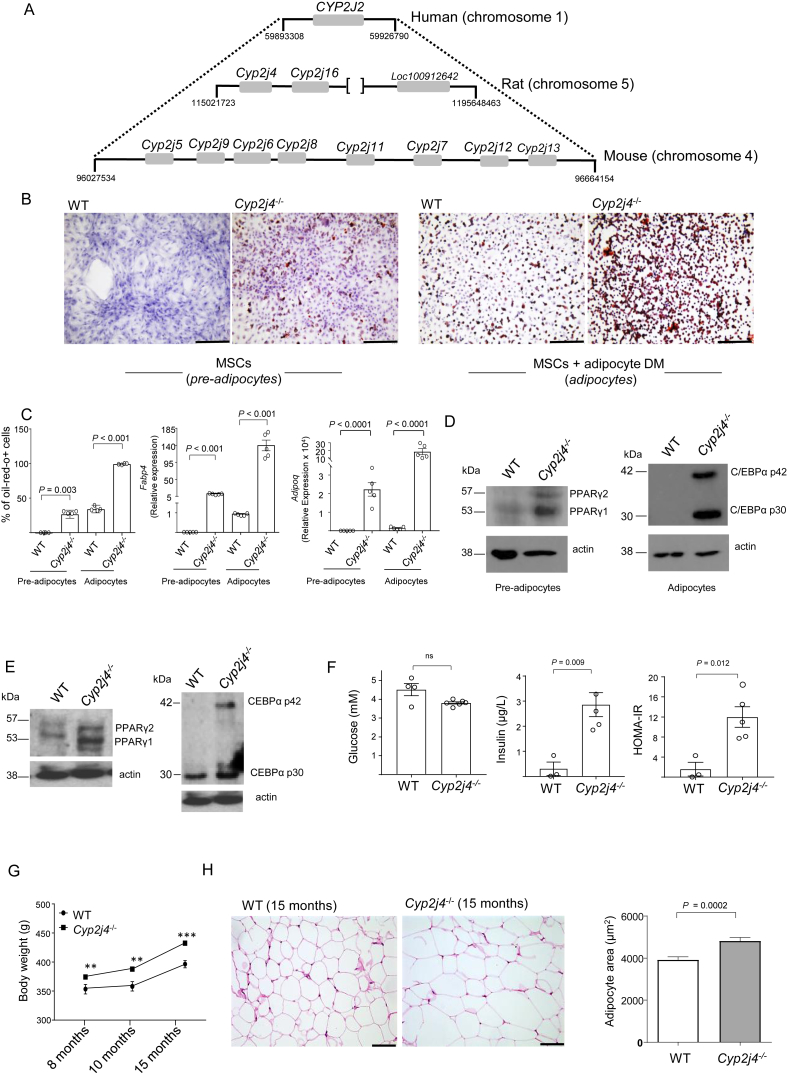
When molecular drivers of healthy adipogenesis are perturbed, this can cause hepatic steatosis. The role of arachidonic acid (AA) and its downstream enzymatic cascades, such as cyclooxygenase, in adipogenesis is well established. The exact contribution of the P450 epoxygenase pathway, however, remains to be established. Enzymes belonging to this pathway are mainly encoded by the CYP2J locus which shows extensive allelic expansion in mice. Here we aimed to establish the role of endogenous epoxygenase during adipogenesis under homeostatic and metabolic stress conditions.
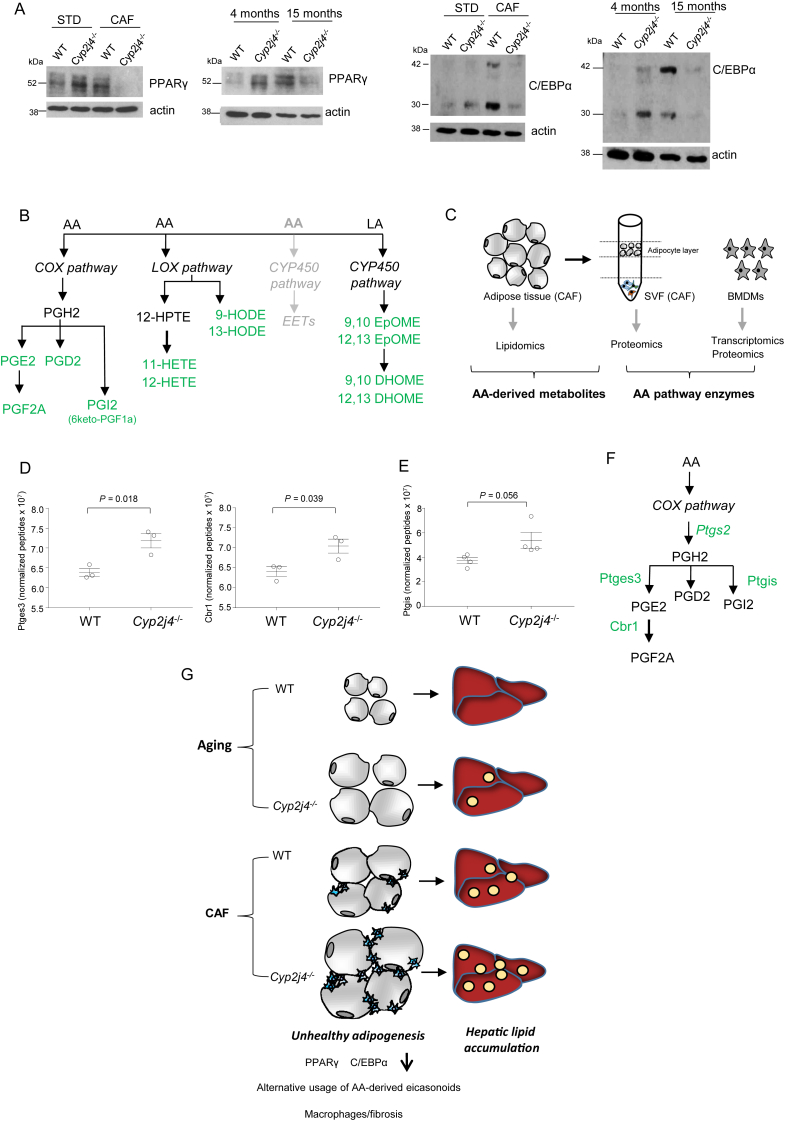
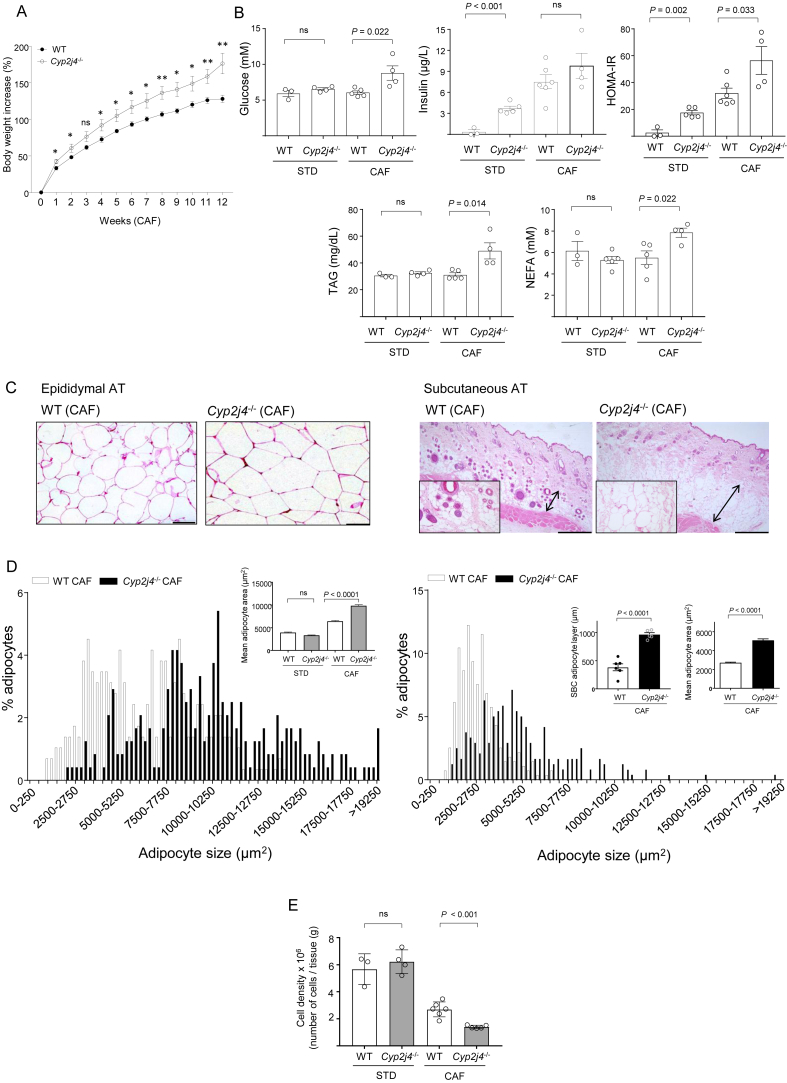
We took advantage of the simpler genetic architecture of the Cyp2j locus in the rat and used a Cyp2j4 (orthologue of human CYP2J2) knockout rat in two models of metabolic dysfunction: physiological aging and cafeteria diet (CAF). The phenotyping of Cyp2j4 rats under CAF was integrated with proteomics (LC-MS/MS) and lipidomics (LC-MS) analyses in the liver and the adipose tissue.
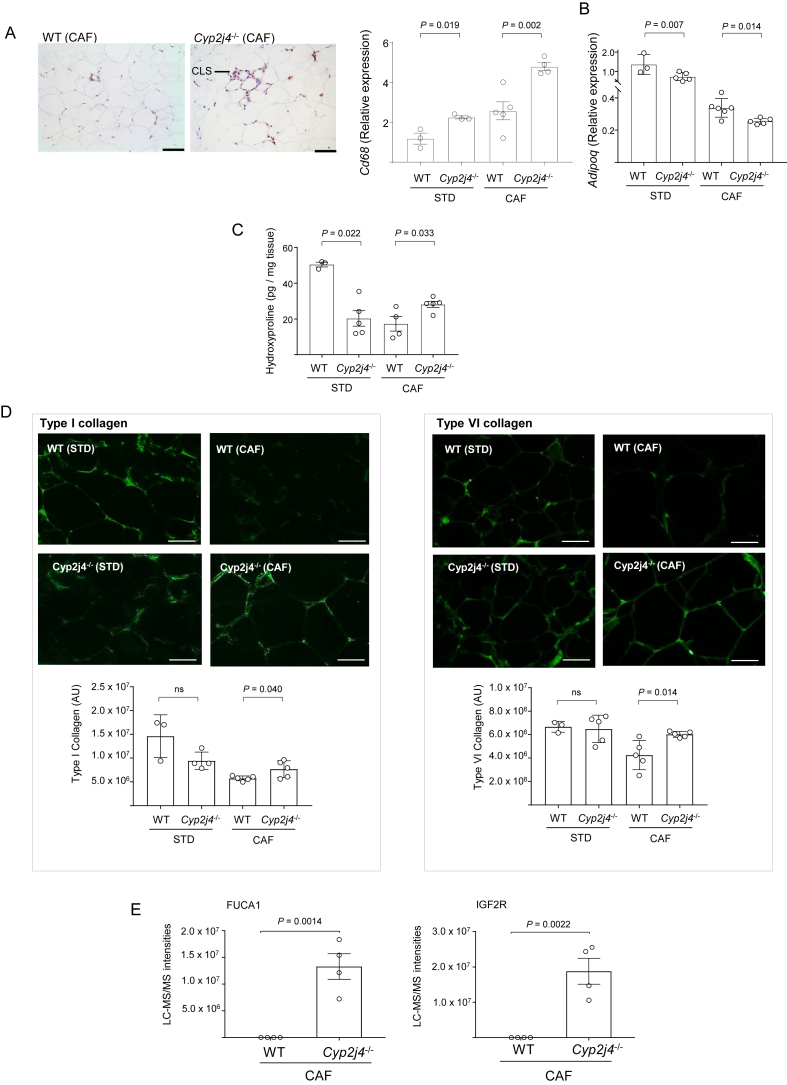
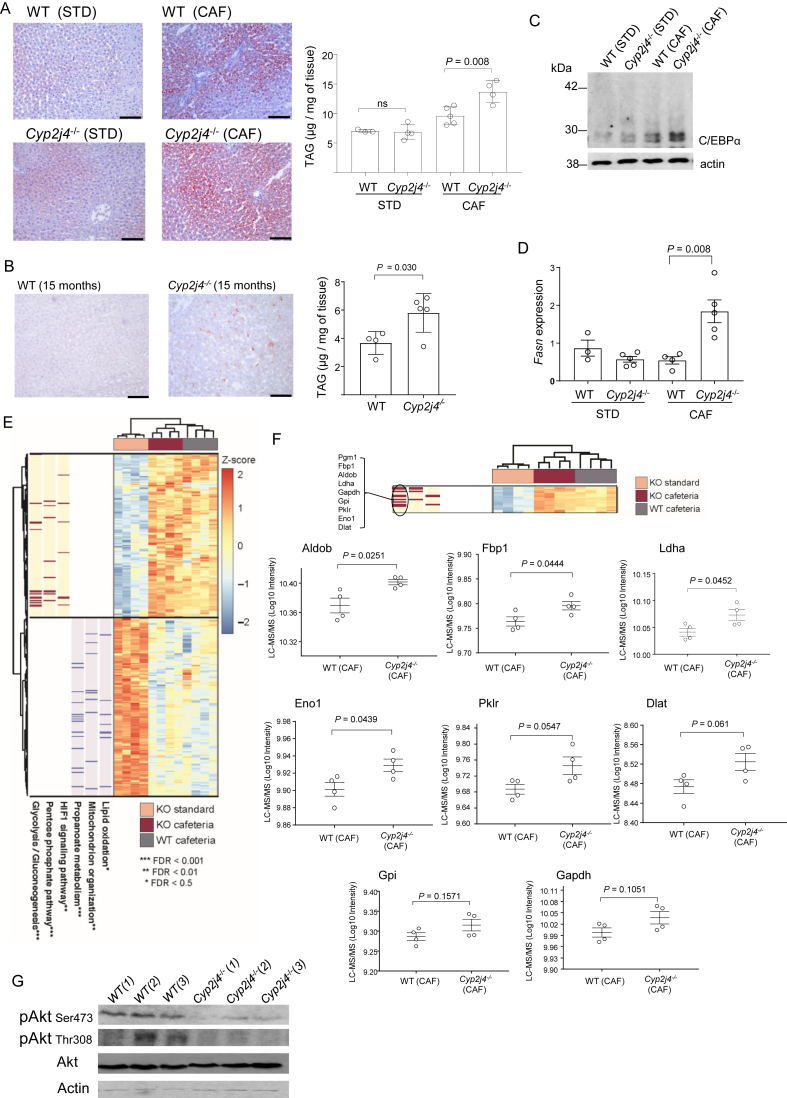
We report that Cyp2j4 deletion causes adipocyte dysfunction under metabolic challenges. This is characterized by (i) down-regulation of white adipose tissue (WAT) PPARγ and C/EBPα, (ii) adipocyte hypertrophy, (iii) extracellular matrix remodeling, and (iv) alternative usage of AA pathway. Specifically, in Cyp2j4 rats treated with a cafeteria diet, the dysfunctional adipogenesis is accompanied by exacerbated weight gain, hepatic lipid accumulation, and dysregulated gluconeogenesis.
These results suggest that AA epoxygenases are essential regulators of healthy adipogenesis. Our results uncover their synergistic role in fine-tuning AA pathway in obesity-mediated hepatic steatosis.
当健康脂肪生成的分子驱动因素受到干扰时,可能会导致肝脂肪变性。花生四烯酸(AA)及其下游酶级联反应,如环氧化酶,在脂肪生成中的作用已得到充分证实。然而,P450 环氧合酶途径的确切作用仍有待确定。属于该途径的酶主要由 CYP2J 基因座编码,该基因座在小鼠中表现出广泛的等位基因扩展。在这里,我们旨在在稳态和代谢应激条件下确定内源性环氧合酶在脂肪生成中的作用。
我们利用大鼠 Cyp2j 基因座更简单的遗传结构,利用 Cyp2j4(人类 CYP2J2 的同源物)敲除大鼠在两种代谢功能障碍模型中:生理衰老和 cafeteria 饮食(CAF)。Cafeteria 饮食下 Cyp2j4 大鼠的表型与肝脏和脂肪组织中的蛋白质组学(LC-MS/MS)和脂质组学(LC-MS)分析相结合。
我们报告说,Cyp2j4 缺失会导致代谢挑战下的脂肪细胞功能障碍。其特征为(i)白色脂肪组织(WAT)PPARγ 和 C/EBPα 的下调,(ii)脂肪细胞肥大,(iii)细胞外基质重塑,以及(iv)AA 途径的替代使用。具体来说,在接受 cafeteria 饮食的 Cyp2j4 大鼠中,功能失调的脂肪生成伴随着体重增加、肝脂肪堆积和糖异生失调的加剧。
这些结果表明 AA 环氧合酶是健康脂肪生成的重要调节剂。我们的研究结果揭示了它们在肥胖介导的肝脂肪变性中精细调节 AA 途径的协同作用。