Department of Oncology, University of Alberta, Edmonton, Canada.
Cancer Sci. 2018 Jun;109(6):1876-1888. doi: 10.1111/cas.13612. Epub 2018 May 23.
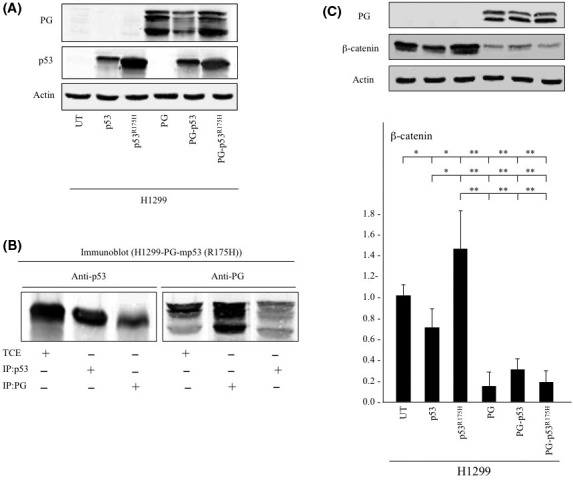
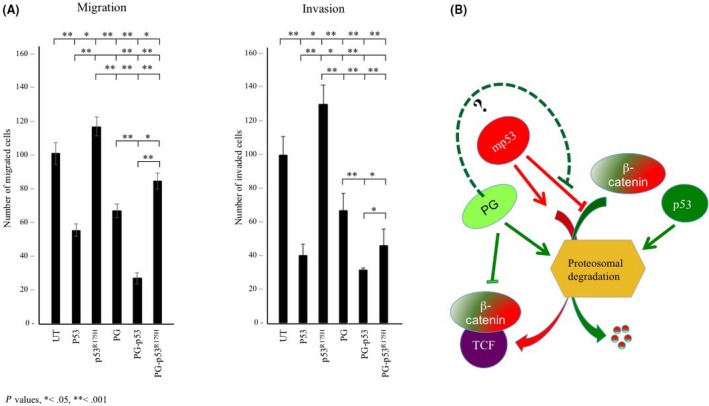
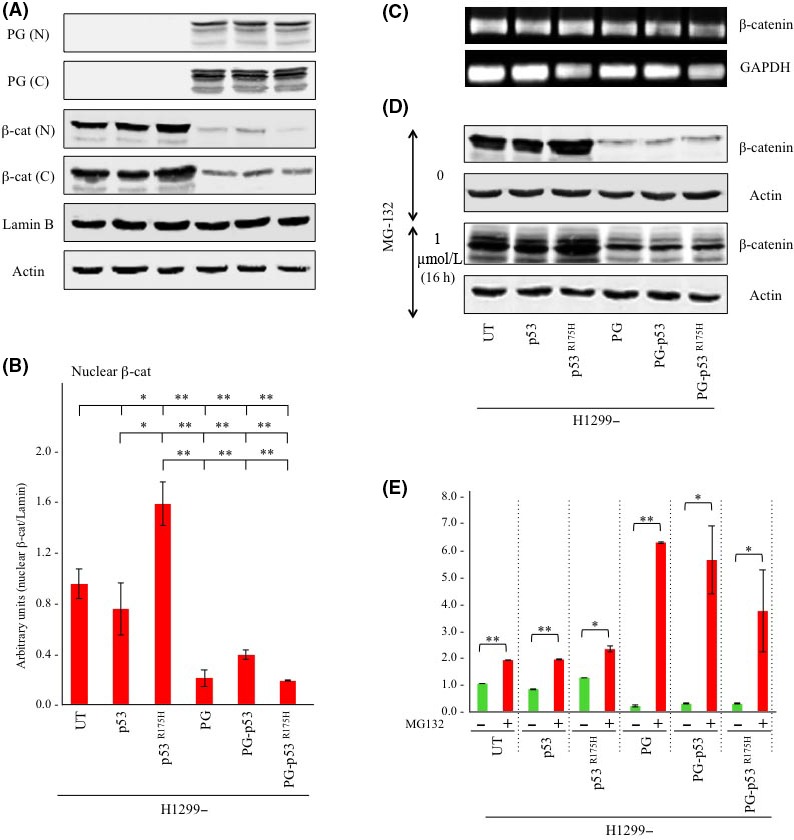
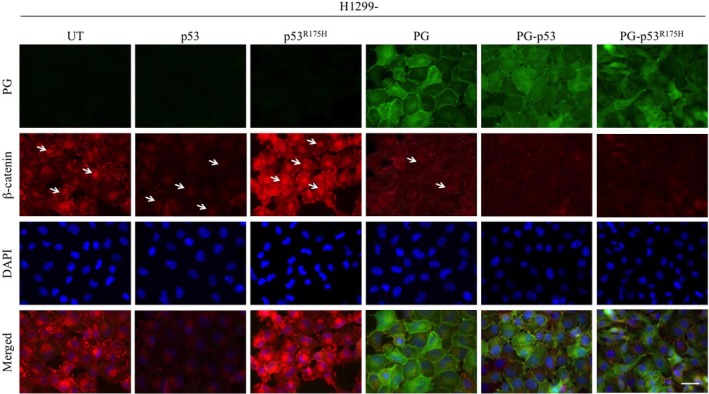
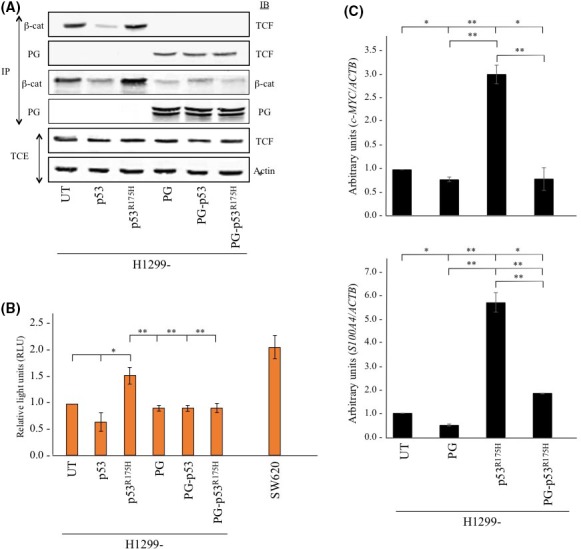
Tumor suppressor/transcription factor p53 is mutated in over 50% of all cancers. Some mutant p53 proteins have not only lost tumor suppressor activities but they also gain oncogenic functions (GOF). One of the most frequently expressed GOF p53 mutants is Arg175His (p53 ) with well-documented roles in cancer development and progression. Plakoglobin is a cell adhesion and signaling protein and a paralog of β-catenin. Unlike β-catenin that has oncogenic function through its role in the Wnt pathway, plakoglobin generally acts as a tumor/metastasis suppressor. We have shown that plakoglobin interacted with wild type and a number of p53 mutants in various carcinoma cell lines. Plakoglobin and mutant p53 interacted with the promoter and regulated the expression of several p53 target genes. Furthermore, plakoglobin interactions with p53 mutants restored their tumor suppressor/metastasis activities in vitro. GOF p53 mutants induce accumulation and oncogenic activation of β-catenin. Previously, we showed that one mechanism by which plakoglobin may suppress tumorigenesis is by sequestering β-catenin's oncogenic activity. Here, we examined the effects of p53 expression on β-catenin accumulation and transcriptional activation and their modifications by plakoglobin coexpression. We showed that p53 expression in plakoglobin null cells increased total and nuclear levels of β-catenin and its transcriptional activity. Coexpression of plakoglobin in these cells promoted β-catenin's proteasomal degradation, and decreased its nuclear levels and transactivation. Wnt/β-catenin targets, c-MYC and S100A4 were upregulated in p53 cells and were downregulated when plakoglobin was coexpressed. Plakoglobin-p53 cells also showed significant reduction in their migration and invasion in vitro.
肿瘤抑制因子/转录因子 p53 在超过 50%的所有癌症中发生突变。一些突变的 p53 蛋白不仅失去了肿瘤抑制活性,而且还获得了致癌功能(GOF)。表达最频繁的 GOF p53 突变体之一是 Arg175His(p53),其在癌症的发展和进展中具有很好的作用。桥粒斑蛋白是一种细胞黏附和信号蛋白,是 β-连环蛋白的同源物。与通过在 Wnt 途径中的作用具有致癌功能的 β-连环蛋白不同,桥粒斑蛋白通常作为肿瘤/转移抑制因子发挥作用。我们已经表明,桥粒斑蛋白与各种癌细胞系中的野生型和多种 p53 突变体相互作用。桥粒斑蛋白与野生型和多种 p53 突变体相互作用,调节了几种 p53 靶基因的表达。此外,桥粒斑蛋白与 p53 突变体的相互作用在体外恢复了它们的肿瘤抑制/转移活性。GOF p53 突变体诱导 β-连环蛋白的积累和致癌激活。此前,我们表明,桥粒斑蛋白抑制肿瘤发生的一种机制是通过隔离 β-连环蛋白的致癌活性。在这里,我们研究了 p53 表达对 β-连环蛋白积累和转录激活的影响,以及桥粒斑蛋白共表达对其的修饰。我们表明,在桥粒斑蛋白缺失细胞中表达 p53 会增加 β-连环蛋白的总核水平及其转录活性。在这些细胞中共同表达桥粒斑蛋白会促进 β-连环蛋白的蛋白酶体降解,并降低其核水平和反式激活。Wnt/β-连环蛋白靶标 c-MYC 和 S100A4 在 p53 细胞中上调,而当共表达桥粒斑蛋白时下调。桥粒斑蛋白-p53 细胞在体外的迁移和侵袭能力也显著降低。