Department of Medical Biotechnology, Faculty of Advanced Medical Sciences, Tabriz University of Medical Sciences, Tabriz, Iran.
Department of Chemistry, University of Neyshabour, Khorasan Razavi Province, Neyshabour, Iran.
Oncogene. 2018 Jul;37(29):3967-3980. doi: 10.1038/s41388-018-0213-4. Epub 2018 Apr 17.
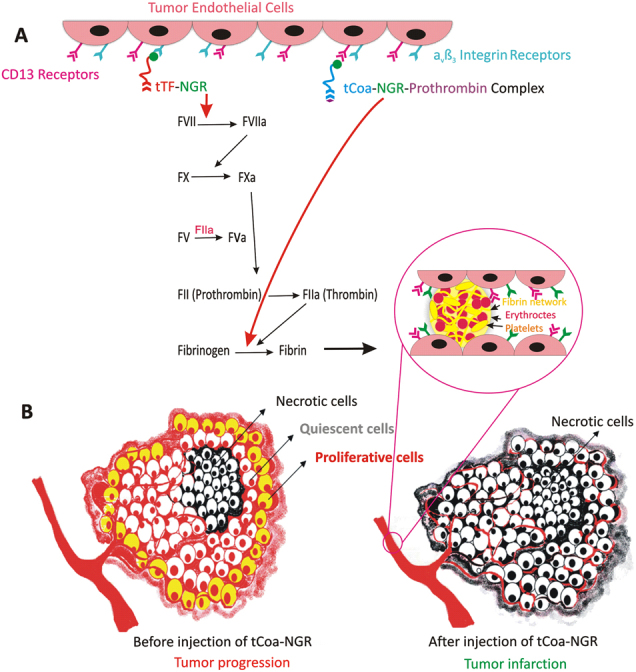
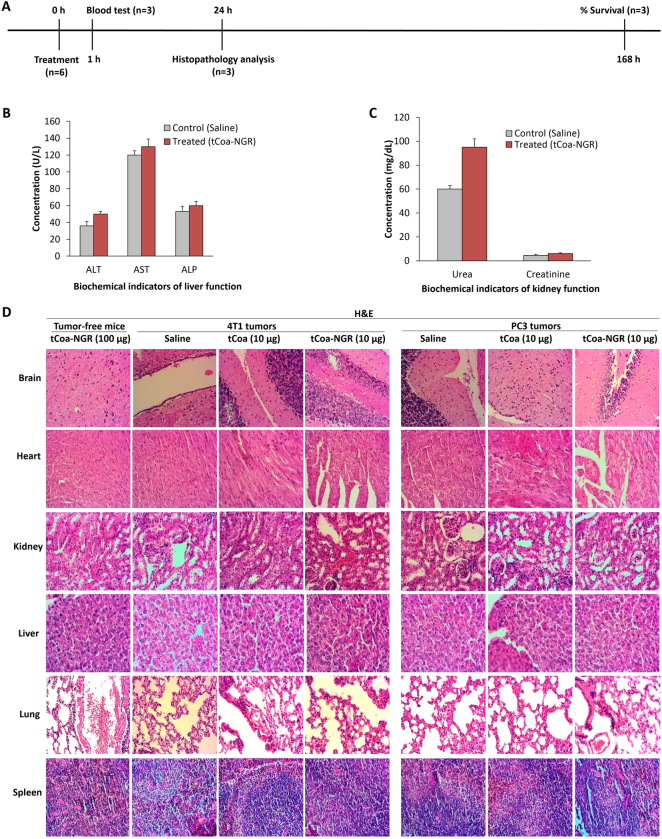
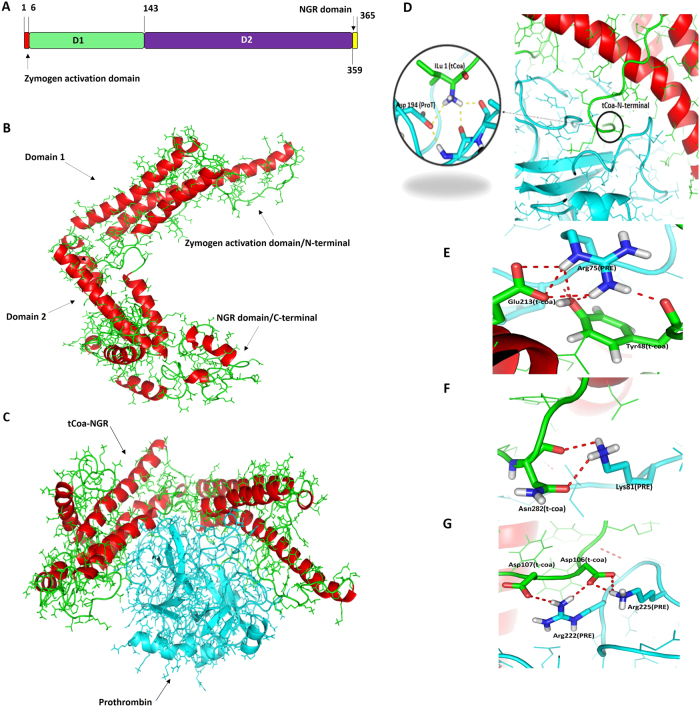
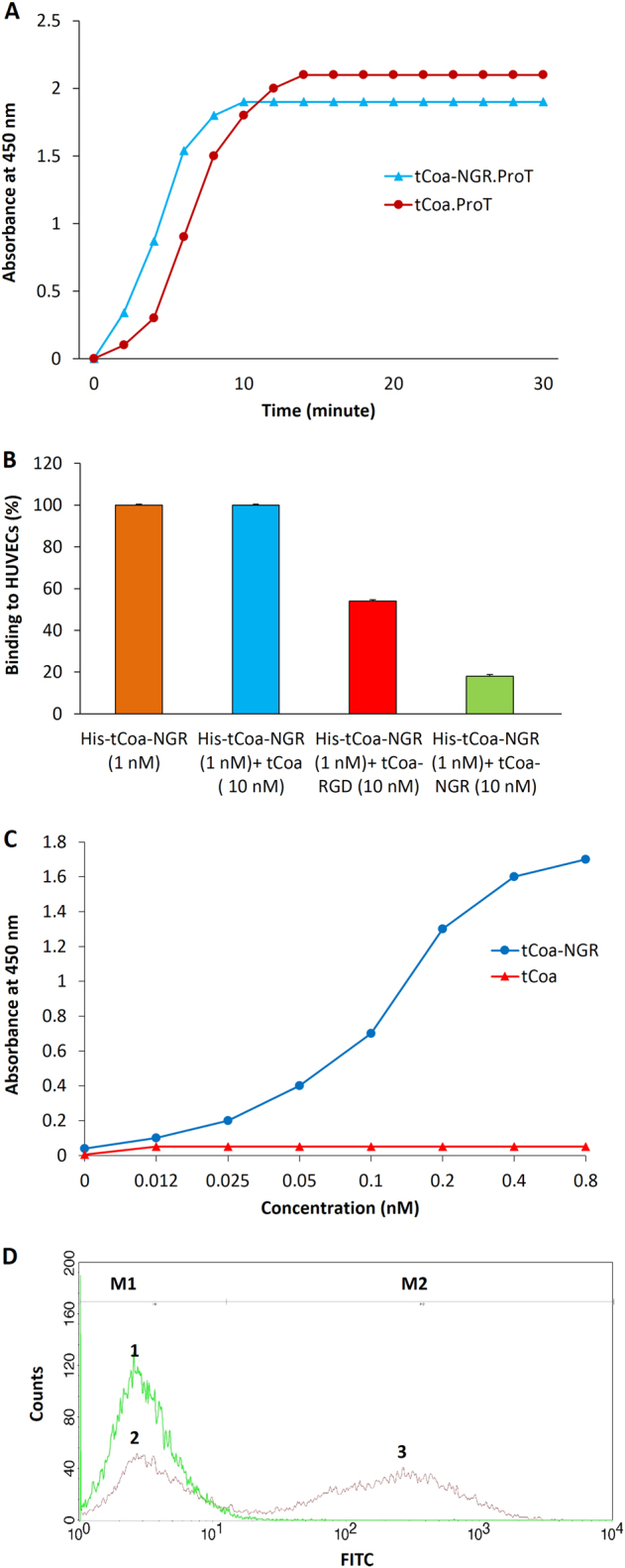
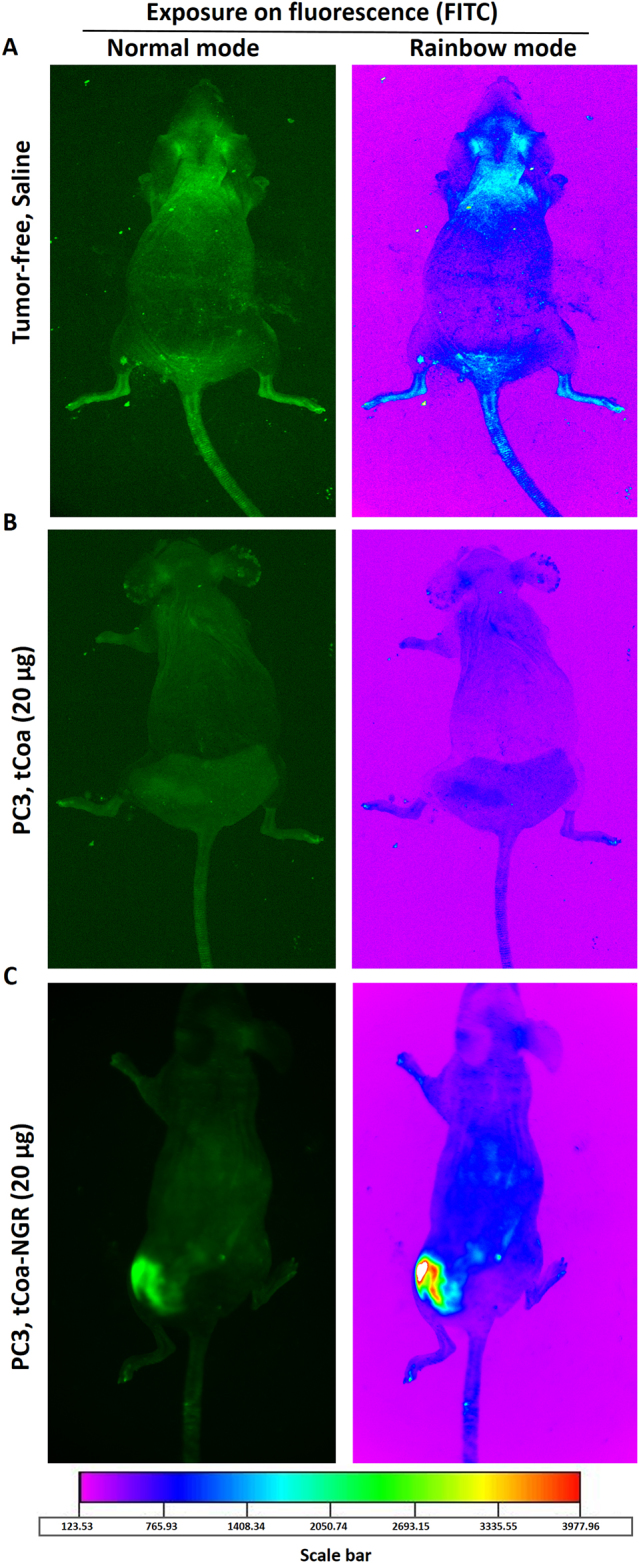
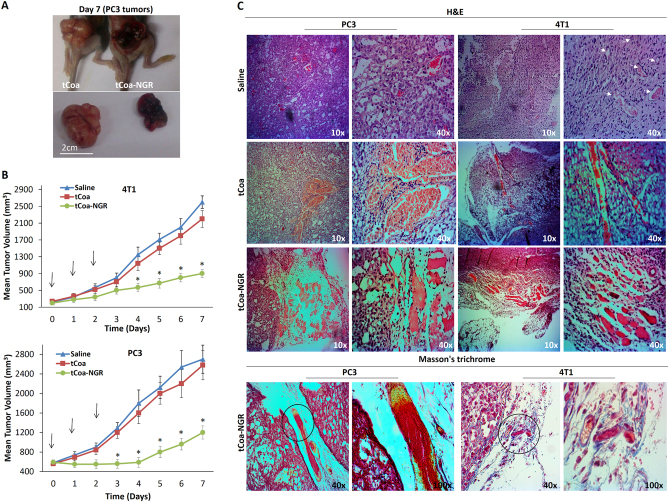
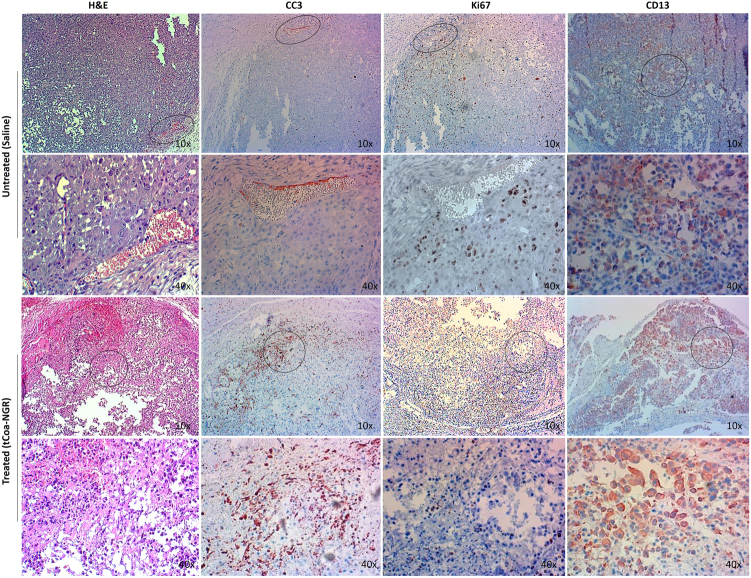
Induction of selective thrombosis and infarction in tumor-feeding vessels represents an attractive strategy to combat cancer. Here we took advantage of the unique coagulation properties of staphylocoagulase and genetically engineered it to generate a new fusion protein with novel anti-cancer properties. This novel bi-functional protein consists of truncated coagulase (tCoa) and an NGR (GNGRAHA) motif that recognizes CD13 and αβ integrin receptors, targeting it to tumor endothelial cells. Herein, we report that tCoa coupled by its C-terminus to an NGR sequence retained its normal binding activity with prothrombin and aβ integrins, as confirmed in silico and in vitro. Moreover, in vivo biodistribution studies demonstrated selective accumulation of FITC-labeled tCoa-NGR fusion proteins at the site of subcutaneously implanted PC3 tumor xenografts in nude mice. Notably, systemic administration of tCoa-NGR to mice bearing 4T1 mouse mammary xenografts or PC3 human prostate tumors resulted in a significant reduction in tumor growth. These anti-tumor effects were accompanied by massive thrombotic occlusion of small and large tumor vessels, tumor infarction and tumor cell death. From these findings, we propose tCoa-NGR mediated tumor infarction as a novel and promising anti-cancer strategy targeting both CD13 and integrin αβ positive tumor neovasculature.
诱导肿瘤供养血管选择性血栓形成和梗死是一种有吸引力的抗癌策略。在这里,我们利用葡萄球菌凝固酶的独特凝血特性,对其进行基因工程改造,生成一种具有新型抗癌特性的新型融合蛋白。这种新型双功能蛋白由截断的凝固酶(tCoa)和识别 CD13 和 αβ 整合素受体的 NGR(GNGRAHA)基序组成,将其靶向肿瘤内皮细胞。在此,我们报告说,通过其 C 端与 NGR 序列偶联的 tCoa 保留了其与凝血酶原和 αβ 整合素的正常结合活性,这在计算机模拟和体外得到了证实。此外,体内分布研究表明,在裸鼠皮下植入的 PC3 肿瘤异种移植物部位,FITC 标记的 tCoa-NGR 融合蛋白选择性积聚。值得注意的是,tCoa-NGR 对携带 4T1 小鼠乳腺异种移植物或 PC3 人前列腺肿瘤的小鼠进行全身性给药,导致肿瘤生长显著减少。这些抗肿瘤作用伴随着小和大肿瘤血管的血栓闭塞、肿瘤梗死和肿瘤细胞死亡。从这些发现中,我们提出 tCoa-NGR 介导的肿瘤梗死是一种针对 CD13 和整合素 αβ 阳性肿瘤新生血管的新型有前途的抗癌策略。