Sideris Alexandra, Khan Fahad, Boltunova Alina, Cuff Germaine, Gharibo Christopher, Doan Lisa V
Department of Anesthesiology, Perioperative Care and Pain Medicine, New York University Langone Health, New York, New York.
Cannabis Cannabinoid Res. 2018 Mar 1;3(1):74-84. doi: 10.1089/can.2017.0046. eCollection 2018.
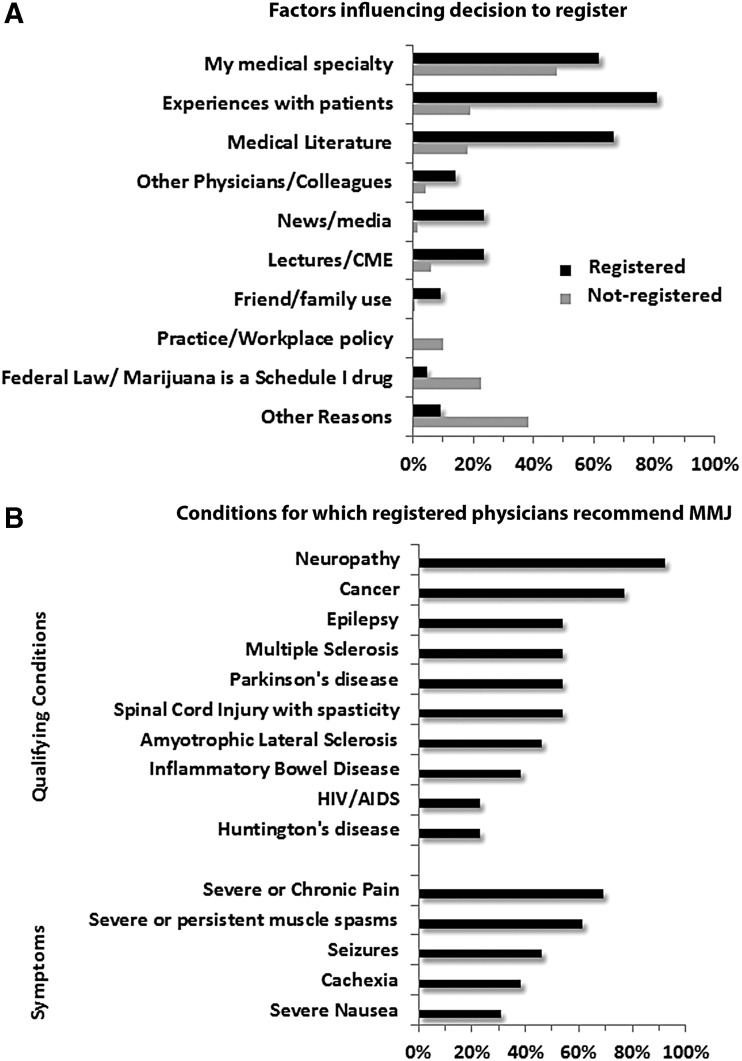
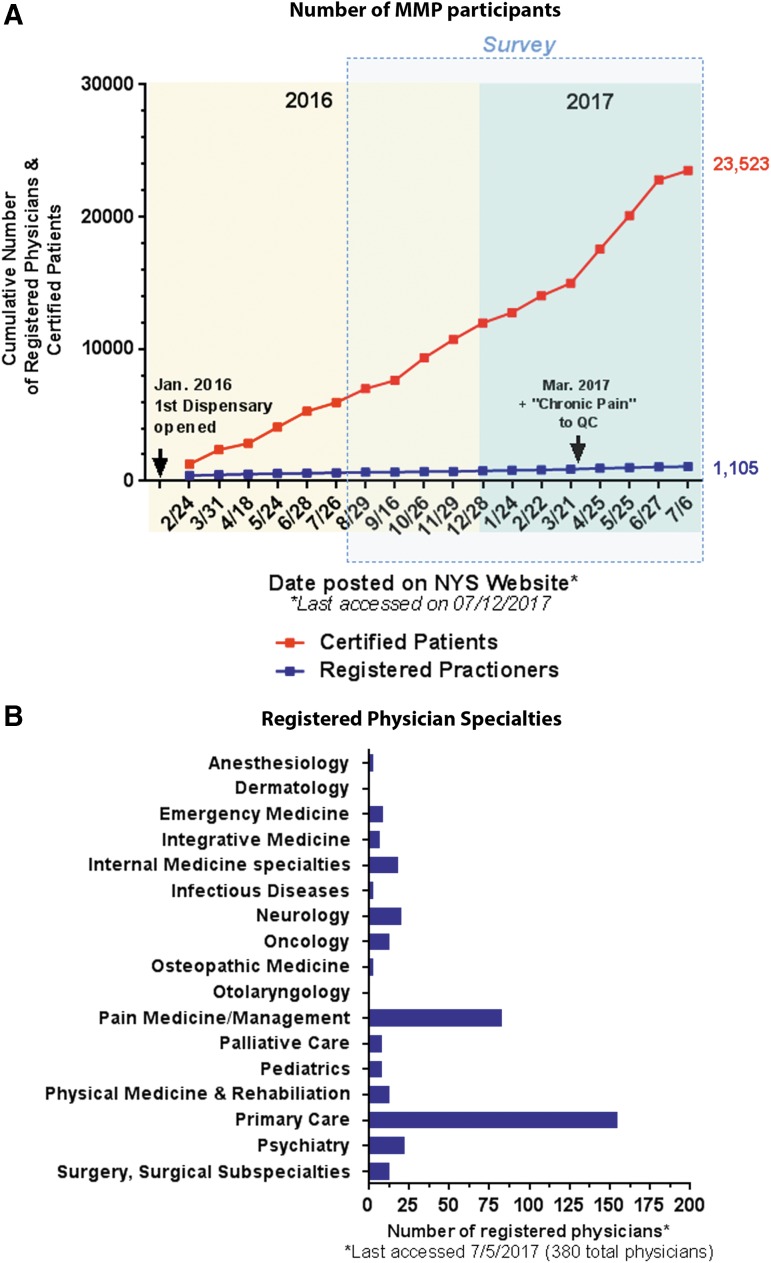
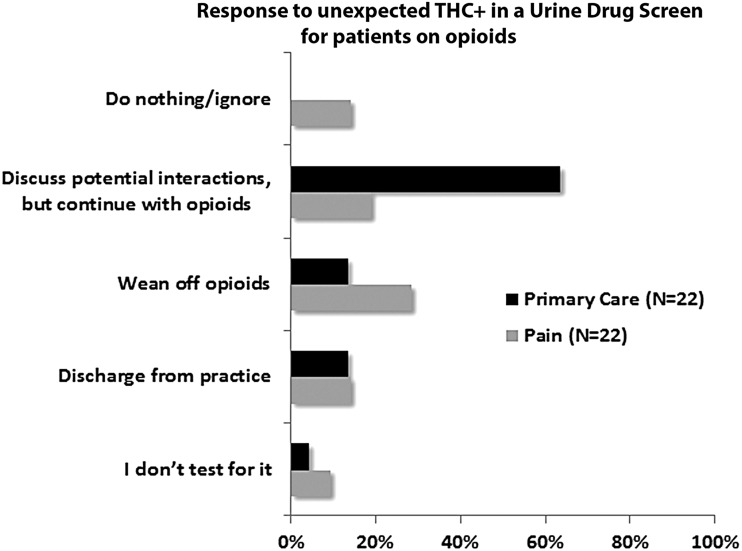
In 2014, New York (NY) became the 23rd state to legalize medical marijuana (MMJ). The purpose of this survey was to collect data about practicing NY physicians' comfort level, opinions, and experience in recommending or supporting patient use of MMJ. An anonymous web-based survey was distributed to medical societies and to academic departments in medical schools within NY. A total of 164 responses were analyzed. Physician participants were primarily located in New York City and surrounding areas. The majority (71%) agreed that MMJ should be an option available to patients. Most respondents were not registered to certify MMJ in NY, but were willing to refer patients to registered physicians. Common reasons for not registering included specialty and federal status of cannabis. More than 75% reported having patients who used cannabis for symptom control, and 50% reported having patients who inquired about MMJ within the past year. Most respondents are willing to discuss MMJ with their patients, but had little familiarity with the state program and a modest knowledge of the endocannabinoid system. Pain was a common symptom for which cannabis was recommended by registered physicians (69%) and purportedly used by patients (83%). Most respondents would consider MMJ as an adjuvant to opioids, and 84% believed opioids have greater risks than MMJ. Given that the majority of surveyed physicians support MMJ as an option for patients, few are registered and have adequate knowledge of MMJ. Although our study sample is small and geographically limited, our survey results highlight key physician issues that are likely applicable to practitioners in other states. Concerted efforts are needed at the federal, state, and academic levels to provide practitioners with evidence-based guidelines for the safe use of MMJ.
2014年,纽约州成为第23个将医用大麻合法化的州。本次调查旨在收集有关纽约执业医生在推荐或支持患者使用医用大麻方面的舒适度、意见和经验的数据。通过网络向纽约州的医学协会和医学院的学术部门发放了一份匿名调查问卷。共分析了164份回复。参与调查的医生主要分布在纽约市及其周边地区。大多数(71%)医生认为医用大麻应该作为患者的一种选择。大多数受访者未在纽约州注册成为医用大麻认证医生,但愿意将患者转介给注册医生。未注册的常见原因包括专业领域和大麻的联邦管控状态。超过75%的受访者表示有患者使用大麻来控制症状,50%的受访者表示在过去一年中有患者询问过医用大麻相关问题。大多数受访者愿意与患者讨论医用大麻,但对该州的相关项目了解甚少,对内源性大麻素系统的了解也较为有限。疼痛是注册医生推荐大麻(69%)以及患者据称使用大麻(83%)的常见症状。大多数受访者会考虑将医用大麻作为阿片类药物的辅助药物,84%的受访者认为阿片类药物的风险比医用大麻更大。鉴于大多数接受调查的医生支持将医用大麻作为患者的一种选择,但注册的医生很少,且对医用大麻了解不足。尽管我们的研究样本较小且地域有限,但我们的调查结果突出了一些关键的医生问题,这些问题可能也适用于其他州的从业者。需要在联邦、州和学术层面共同努力,为从业者提供关于安全使用医用大麻的循证指南。