Centre for Biological Sciences, University of Southampton, Highfield Campus, Southampton, United Kingdom.
Vitacress Salads Ltd., Lower Link Farm, St Mary Bourne, Andover, United Kingdom.
mBio. 2018 Apr 17;9(2):e00540-18. doi: 10.1128/mBio.00540-18.
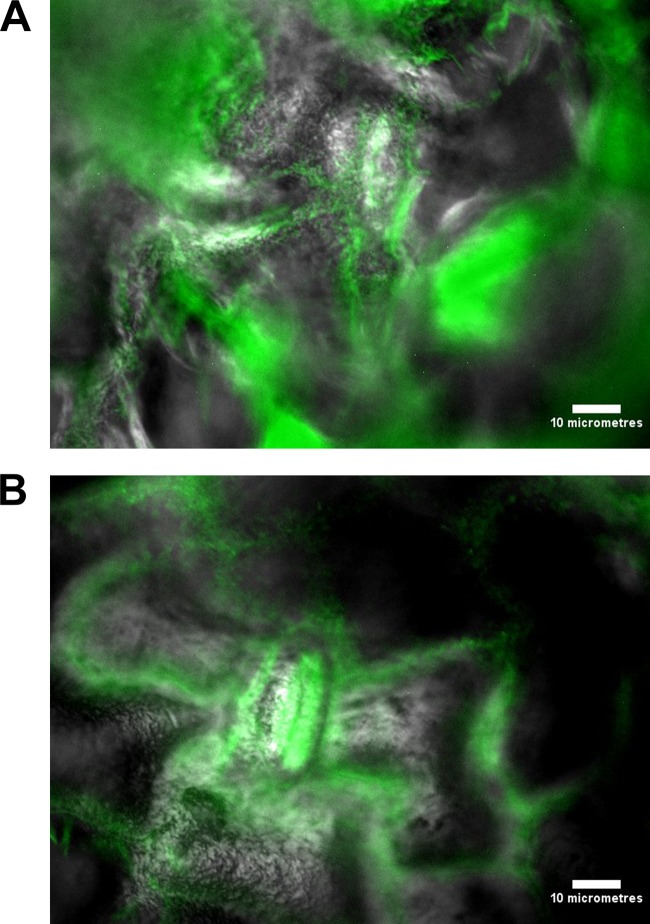
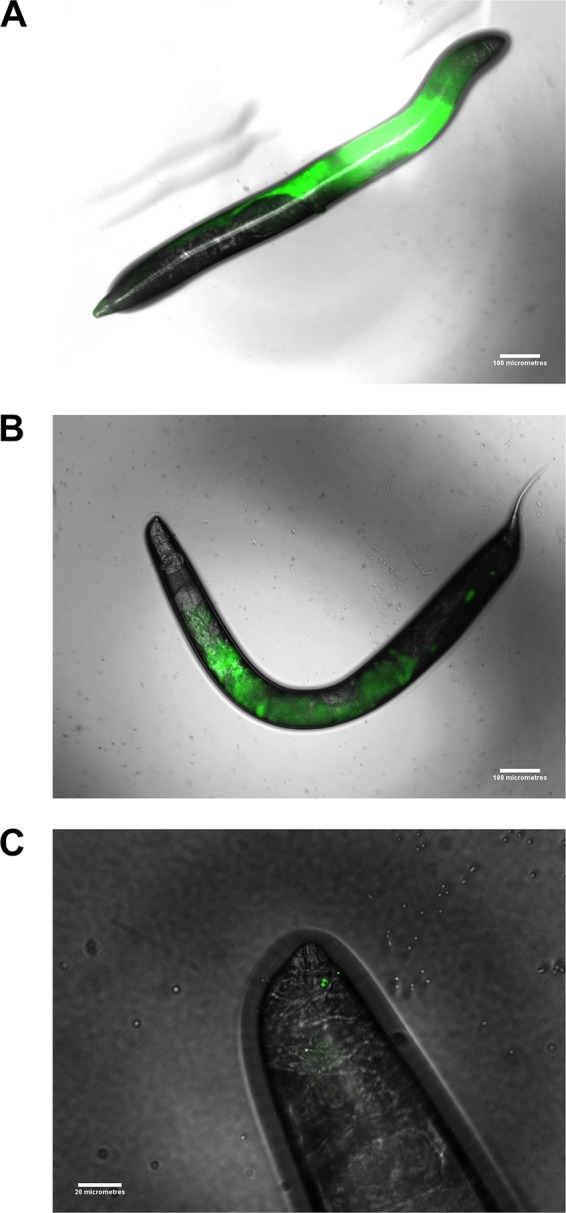
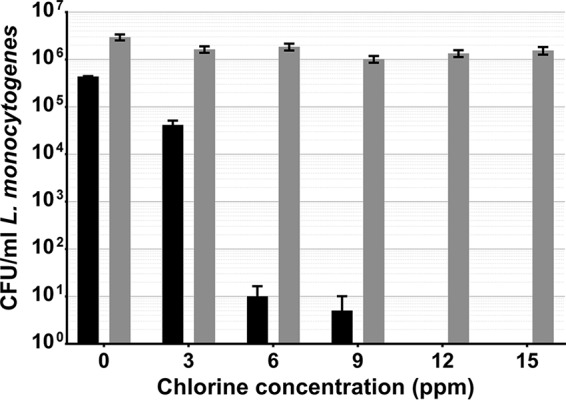
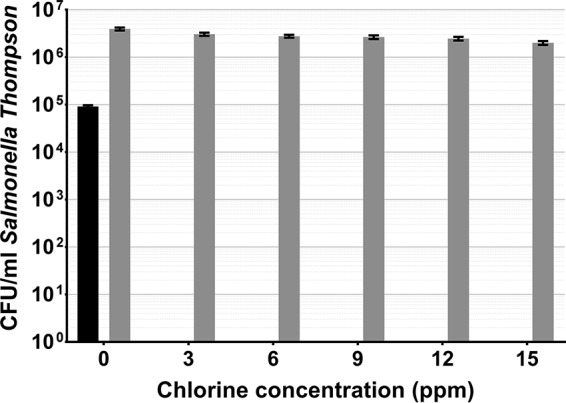
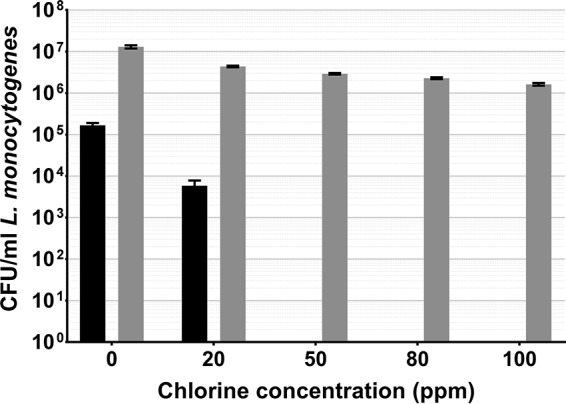
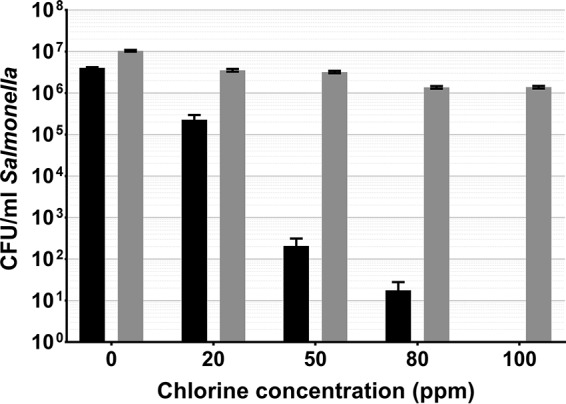
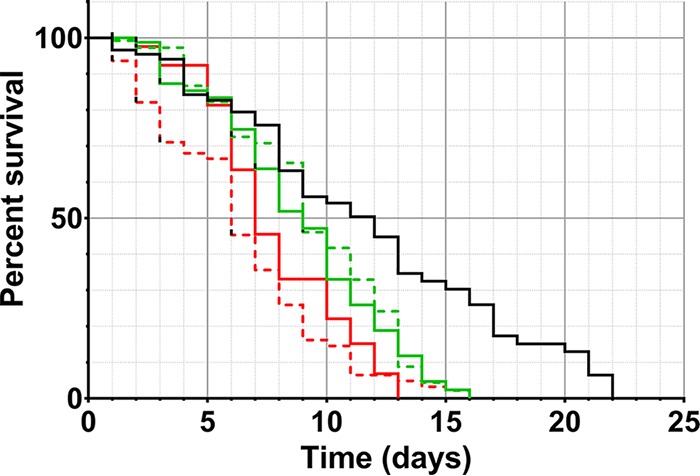
The microbiological safety of fresh produce is monitored almost exclusively by culture-based detection methods. However, bacterial food-borne pathogens are known to enter a viable-but-nonculturable (VBNC) state in response to environmental stresses such as chlorine, which is commonly used for fresh produce decontamination. Here, complete VBNC induction of green fluorescent protein-tagged and serovar Thompson was achieved by exposure to 12 and 3 ppm chlorine, respectively. The pathogens were subjected to chlorine washing following incubation on spinach leaves. Culture data revealed that total viable and Thompson populations became VBNC by 50 and 100 ppm chlorine, respectively, while enumeration by direct viable counting found that chlorine caused a <1-log reduction in viability. The pathogenicity of chlorine-induced VBNC and Thompson was assessed by using Ingestion of VBNC pathogens by resulted in a significant life span reduction ( = 0.0064 and < 0.0001), and no significant difference between the life span reductions caused by the VBNC and culturable treatments was observed. was visualized beyond the nematode intestinal lumen, indicating resuscitation and cell invasion. These data emphasize the risk that VBNC food-borne pathogens could pose to public health should they continue to go undetected. Many bacteria are known to enter a viable-but-nonculturable (VBNC) state in response to environmental stresses. VBNC cells cannot be detected by standard laboratory culture techniques, presenting a problem for the food industry, which uses these techniques to detect pathogen contaminants. This study found that chlorine, a sanitizer commonly used for fresh produce, induces a VBNC state in the food-borne pathogens and It was also found that chlorine is ineffective at killing total populations of the pathogens. A life span reduction was observed in that ingested these VBNC pathogens, with VBNC as infectious as its culturable counterpart. These data show that VBNC food-borne pathogens can both be generated and avoid detection by industrial practices while potentially retaining the ability to cause disease.
新鲜农产品的微生物安全性几乎完全通过基于培养的检测方法进行监测。然而,众所周知,细菌食源性病原体在接触到环境压力(如氯)时会进入存活但非可培养(VBNC)状态,而氯通常用于新鲜农产品的消毒。在这里,通过暴露于 12 和 3 ppm 的氯,分别实现了绿色荧光蛋白标记的 和 血清型汤普森的完全 VBNC 诱导。病原体在菠菜叶片上孵育后,用氯进行清洗。培养数据显示,总可培养的 和 汤普森种群在分别达到 50 和 100 ppm 氯时成为 VBNC,而直接活菌计数发现氯导致活菌减少 <1 个对数级。通过使用 评估氯诱导的 VBNC 和 汤普森的致病性,通过摄入 VBNC 病原体, 导致寿命显著缩短(=0.0064 和 <0.0001),并且未观察到 VBNC 和可培养处理引起的寿命缩短之间存在显著差异。 在线虫肠道腔外被可视化,表明复苏和细胞入侵。这些数据强调了 VBNC 食源性病原体如果继续未被发现,可能对公共健康构成的风险。许多细菌在响应环境压力时会进入存活但非可培养(VBNC)状态。VBNC 细胞不能通过标准实验室培养技术检测到,这给食品工业带来了一个问题,因为该工业使用这些技术来检测病原体污染物。本研究发现,氯,一种常用于新鲜农产品的消毒剂,会诱导食源性病原体 和 进入 VBNC 状态。还发现氯对杀死病原体的总种群无效。在摄入这些 VBNC 病原体的 中观察到寿命缩短,VBNC 与可培养的对应物一样具有传染性。这些数据表明,VBNC 食源性病原体可以在工业实践中产生和逃避检测,同时可能保留致病能力。