Department of Civil and Environmental Engineering, IIHR-Hydroscience and Engineering , The University of Iowa , Iowa City , Iowa 52242 , United States.
Environ Sci Technol. 2018 May 1;52(9):5154-5160. doi: 10.1021/acs.est.8b00966. Epub 2018 Apr 18.
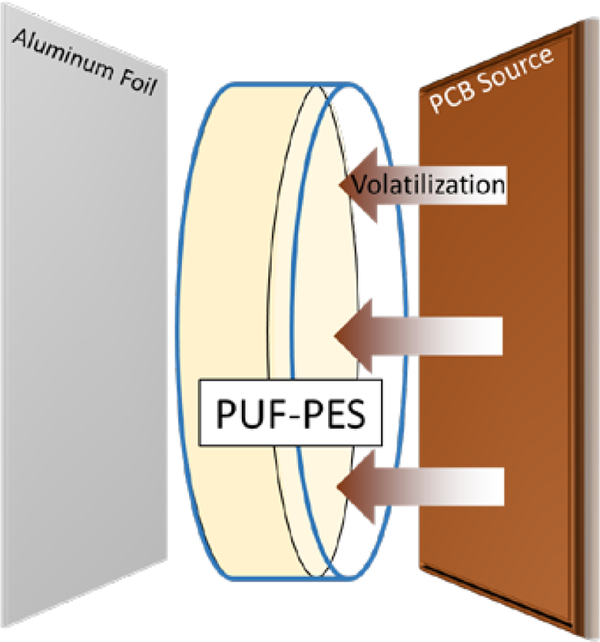
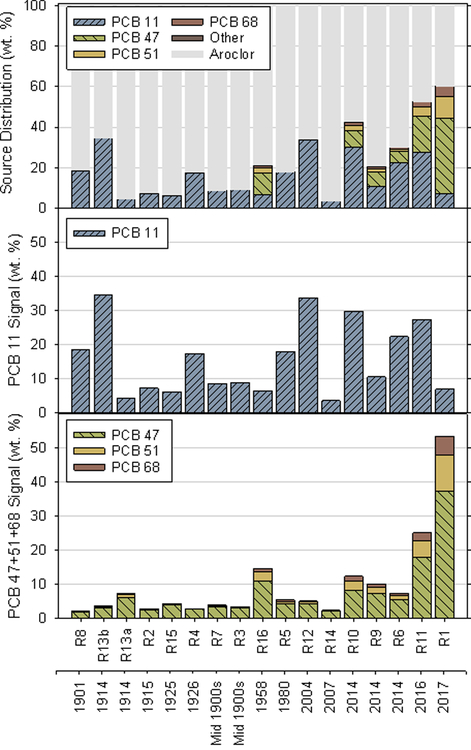
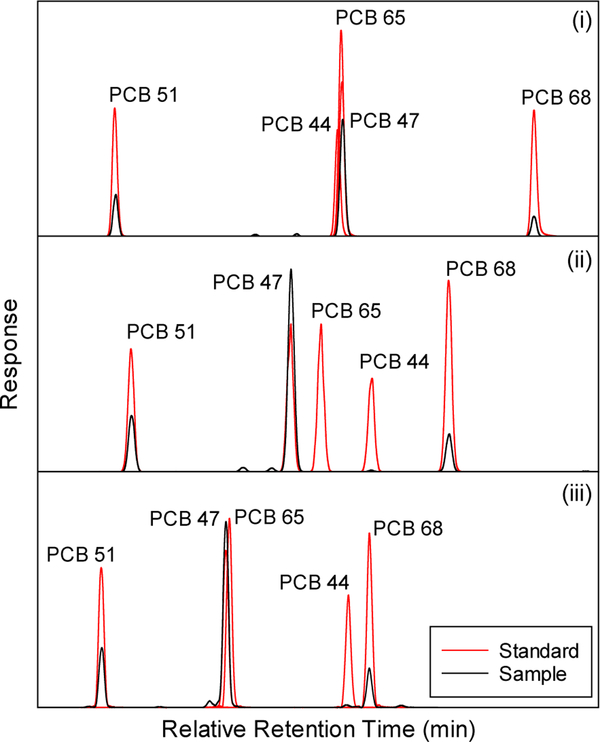
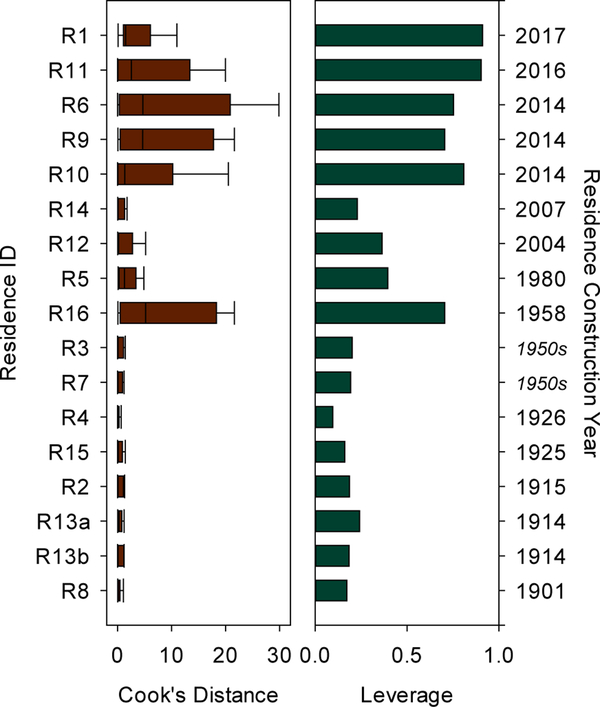
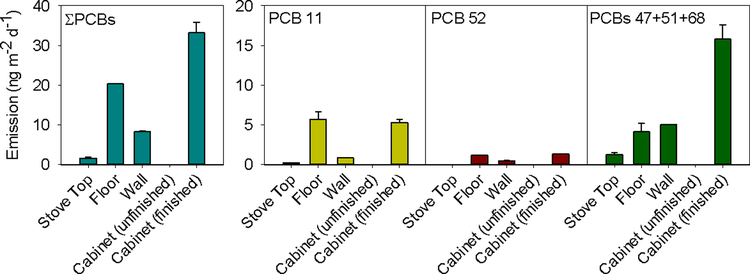
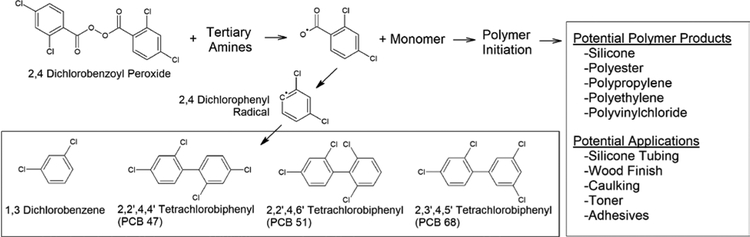
Both Aroclor and non-Aroclor sources of airborne polychlorinated biphenyls (PCBs) were found in residential homes. We deployed passive air samplers at 16 residences and found PCB-47, PCB-51, and PCB-68 to account for up to 50% of measured indoor ΣPCBs (2700 pg m). Although PCB-47 and PCB-51 are neurotoxins present in Aroclor mixtures (<2.5 and <0.3 wt %, respectively), we found them at much higher levels than expected for any Aroclor source. PCB-68 is not present in Aroclor mixtures. Another non-Aroclor congener, PCB-11, a byproduct of pigment manufacturing, was found inside and outside of every household and was frequently the predominate congener. We conducted direct measurements of surface emissions and identified finished cabinetry to be a major source of PCB-47, PCB-51, and PCB-68. We hypothesize that these congeners are inadvertent byproducts of polymer sealant manufacturing and produced from the decomposition of 2,4-dichlorobenzoyl peroxide used as an initiator in free-radical polymerization of polyester resins. The presence of these three compounds in polymer products, such as silicone, has been widely noted, but to our knowledge they have never been shown to be a significant environmental source of PCBs.
住宅空气中多氯联苯(PCBs)的来源既有 Aroclor 型也有非 Aroclor 型。我们在 16 处住宅内安置了被动式空气采样器,发现 PCB-47、PCB-51 和 PCB-68 占室内ΣPCBs(2700 pg m)的 50%。尽管 PCB-47 和 PCB-51 是 Aroclor 混合物中的神经毒素(分别为<2.5%和<0.3%),但我们发现其含量远高于任何 Aroclor 源的预期水平。PCB-68 并不存在于 Aroclor 混合物中。另一种非 Aroclor 同系物 PCB-11 是颜料制造的副产物,在每个家庭的内部和外部都有发现,而且经常是主要的同系物。我们进行了表面排放的直接测量,并确定成品橱柜是 PCB-47、PCB-51 和 PCB-68 的主要来源。我们假设这些同系物是聚合物密封剂制造过程中的无意副产物,是作为聚酯树脂自由基聚合引发剂的 2,4-二氯苯甲酰过氧化物分解产生的。这些化合物存在于聚合物产品(如硅酮)中已得到广泛证实,但据我们所知,它们从未被证明是 PCB 的重要环境来源。