Department of Microbiology and Immunology, University of Michigan, Ann Arbor, Michigan, United States of America.
Department of Ecology and Evolutionary Biology, University of Michigan, Ann Arbor, Michigan, United States of America.
PLoS Comput Biol. 2018 Apr 18;14(4):e1006099. doi: 10.1371/journal.pcbi.1006099. eCollection 2018 Apr.
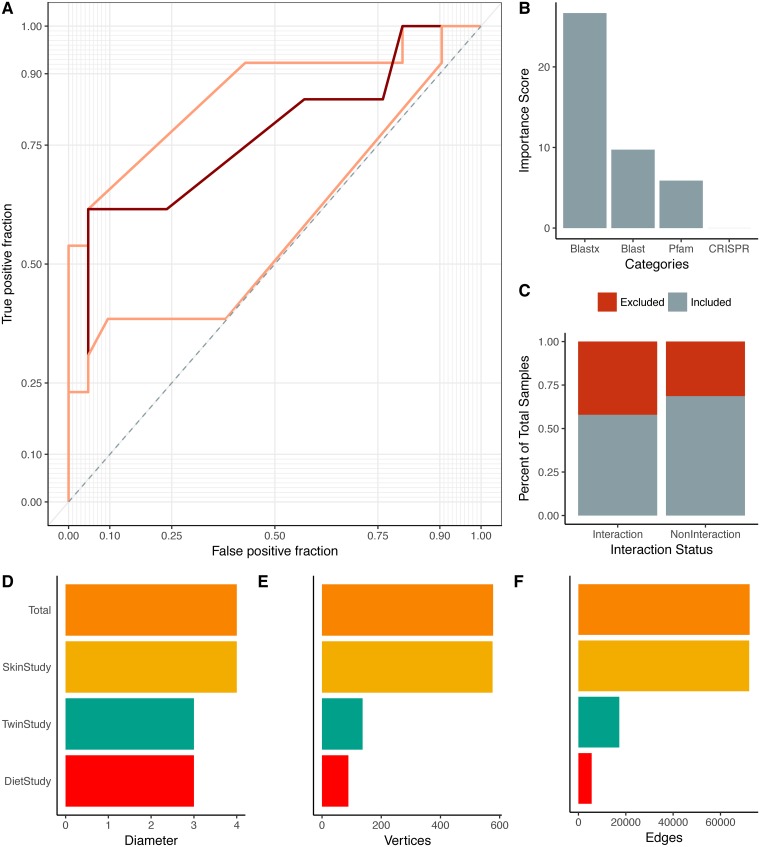
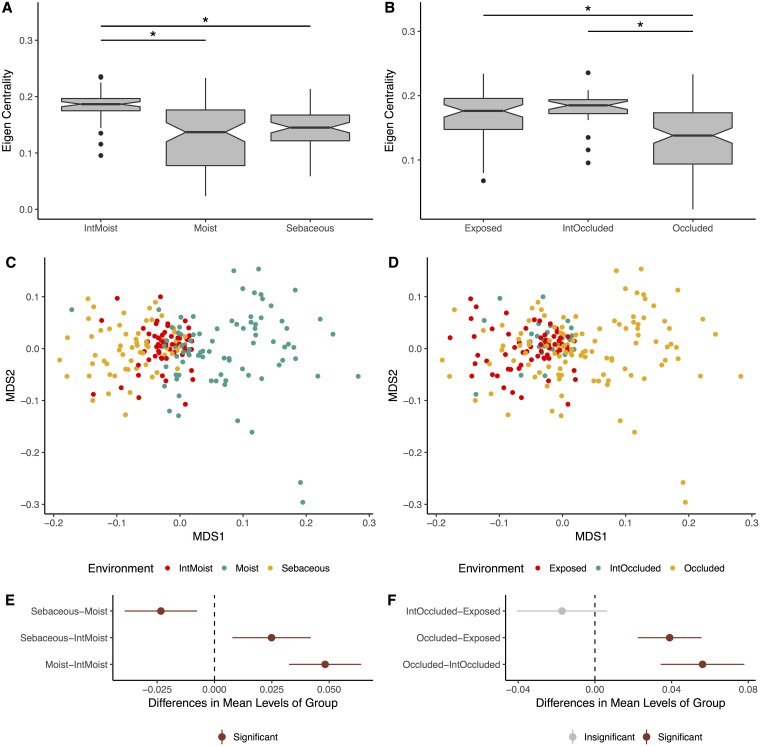
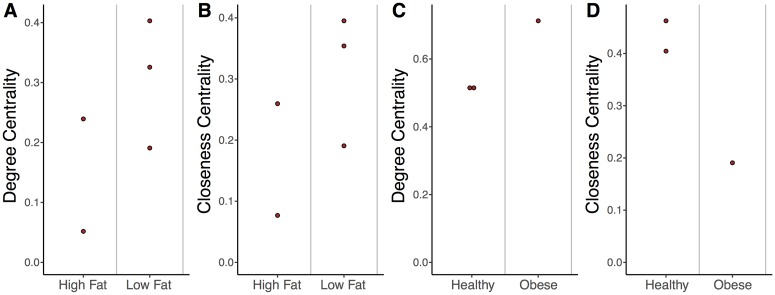
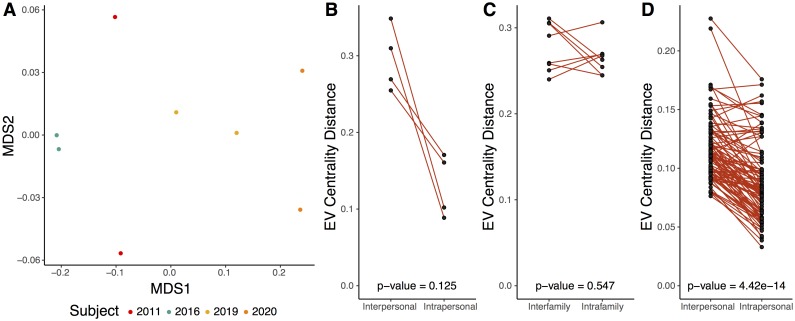
Viruses and bacteria are critical components of the human microbiome and play important roles in health and disease. Most previous work has relied on studying bacteria and viruses independently, thereby reducing them to two separate communities. Such approaches are unable to capture how these microbial communities interact, such as through processes that maintain community robustness or allow phage-host populations to co-evolve. We implemented a network-based analytical approach to describe phage-bacteria network diversity throughout the human body. We built these community networks using a machine learning algorithm to predict which phages could infect which bacteria in a given microbiome. Our algorithm was applied to paired viral and bacterial metagenomic sequence sets from three previously published human cohorts. We organized the predicted interactions into networks that allowed us to evaluate phage-bacteria connectedness across the human body. We observed evidence that gut and skin network structures were person-specific and not conserved among cohabitating family members. High-fat diets appeared to be associated with less connected networks. Network structure differed between skin sites, with those exposed to the external environment being less connected and likely more susceptible to network degradation by microbial extinction events. This study quantified and contrasted the diversity of virome-microbiome networks across the human body and illustrated how environmental factors may influence phage-bacteria interactive dynamics. This work provides a baseline for future studies to better understand system perturbations, such as disease states, through ecological networks.
病毒和细菌是人类微生物组的重要组成部分,在健康和疾病中发挥着重要作用。以前的大多数研究都依赖于独立研究细菌和病毒,从而将它们简化为两个独立的群落。这种方法无法捕捉这些微生物群落之间的相互作用,例如通过维持群落稳定性或允许噬菌体-宿主种群共同进化的过程。我们实施了一种基于网络的分析方法来描述人体中噬菌体-细菌网络的多样性。我们使用机器学习算法构建这些群落网络,以预测给定微生物群落中哪些噬菌体可以感染哪些细菌。我们的算法应用于三个先前发表的人类队列的配对病毒和细菌宏基因组序列集。我们将预测的相互作用组织成网络,使我们能够评估整个身体的噬菌体-细菌连通性。我们观察到肠道和皮肤网络结构具有个体特异性,并且在共同居住的家庭成员之间不保守的证据。高脂肪饮食似乎与连通性较差的网络有关。皮肤部位的网络结构也存在差异,那些暴露于外部环境的部位连接性较差,并且更容易受到微生物灭绝事件导致的网络退化的影响。本研究量化和对比了人体中病毒组-微生物组网络的多样性,并说明了环境因素如何影响噬菌体-细菌的相互作用动态。这项工作为未来的研究提供了一个基线,通过生态网络更好地了解系统干扰,如疾病状态。