Department of Pathology, University of California, San Diegogrid.266100.3, La Jolla, California, USA.
Department of Molecular and Cellular Biology, University of Guelphgrid.34429.38, Guelph, Ontario, Canada.
Microbiol Spectr. 2022 Jun 29;10(3):e0113522. doi: 10.1128/spectrum.01135-22. Epub 2022 May 31.
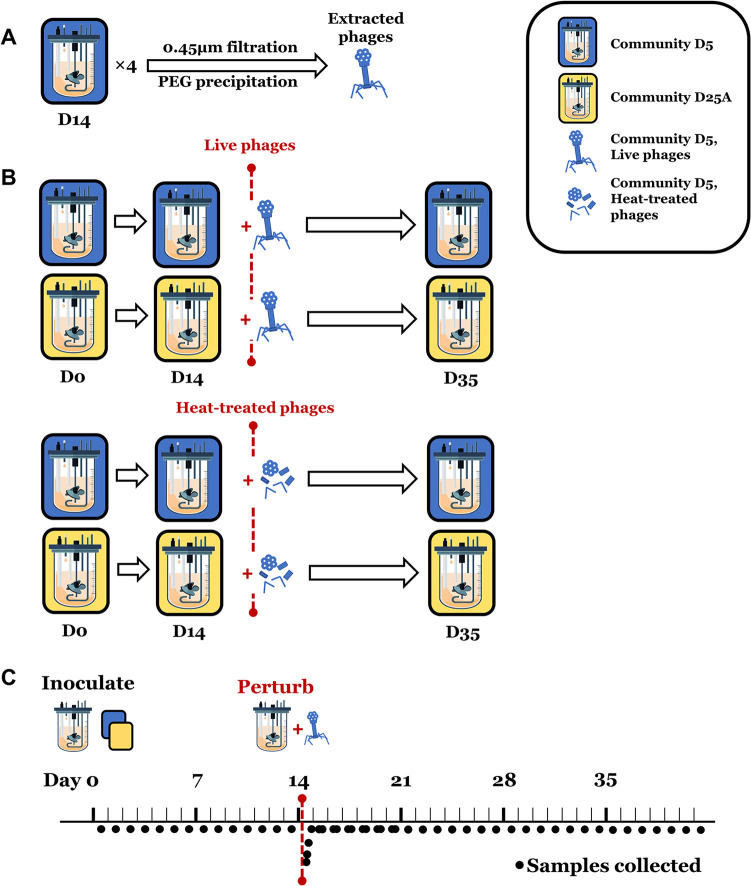
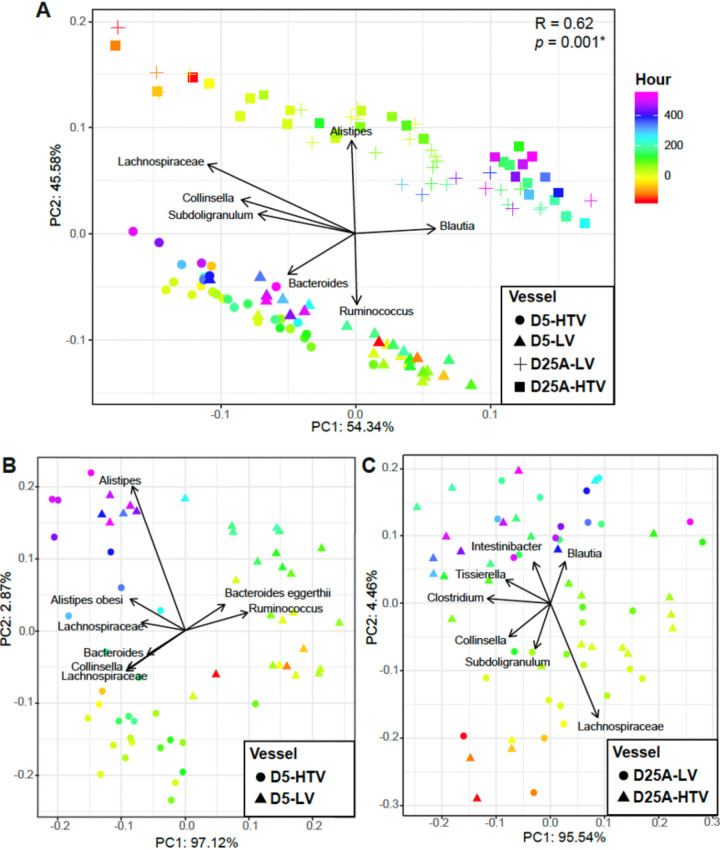
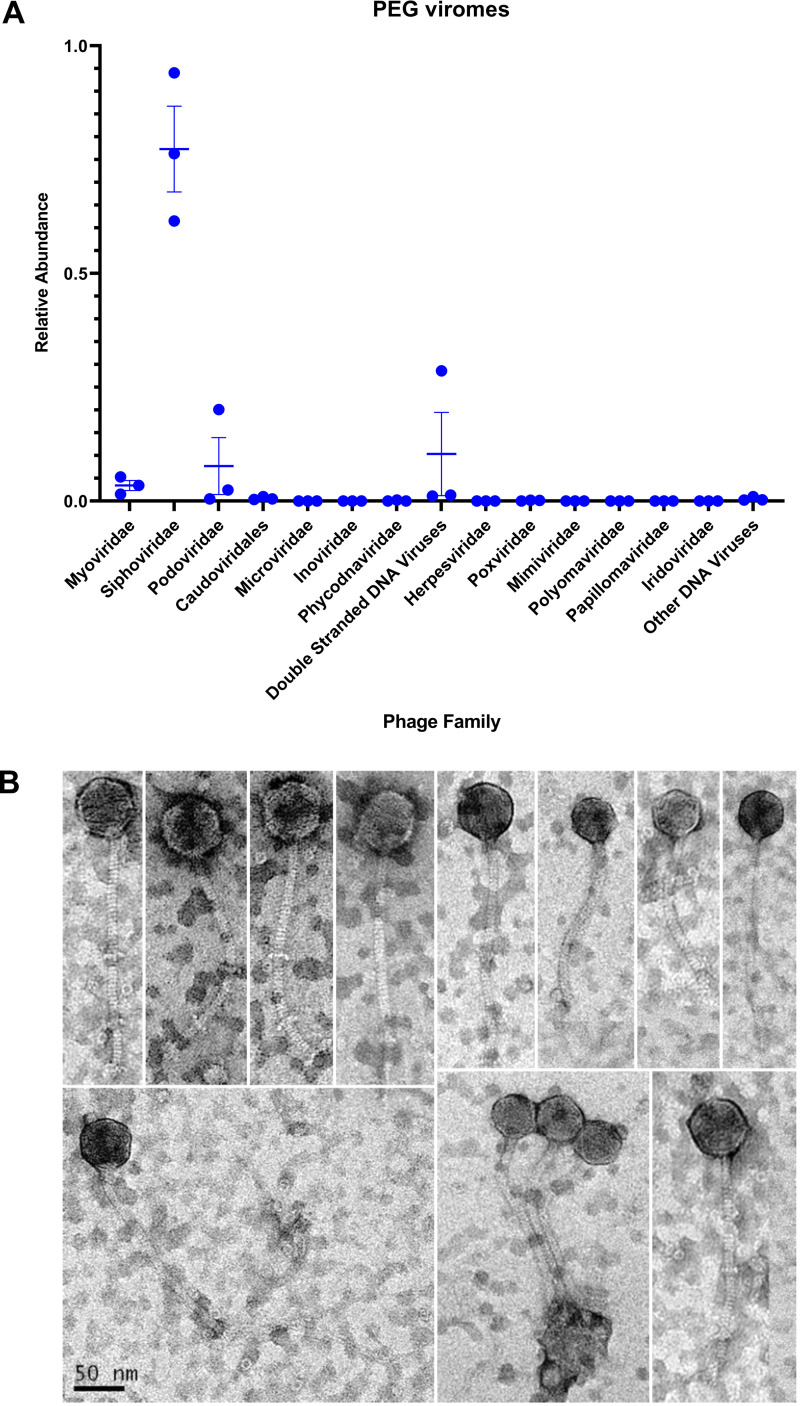
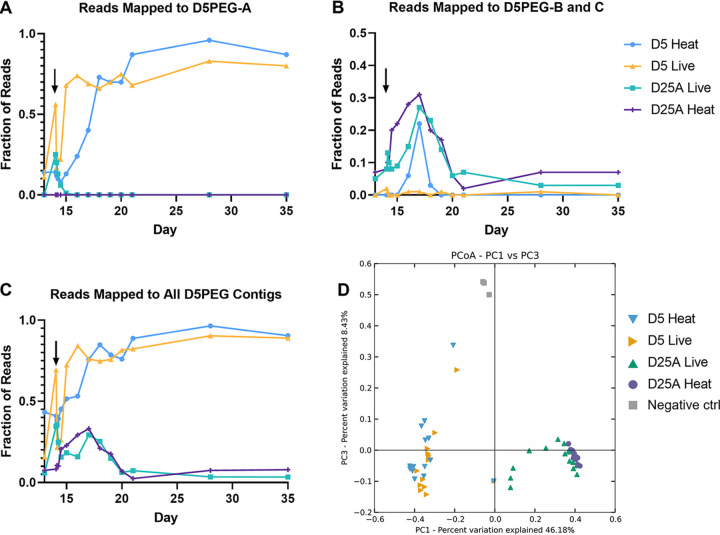
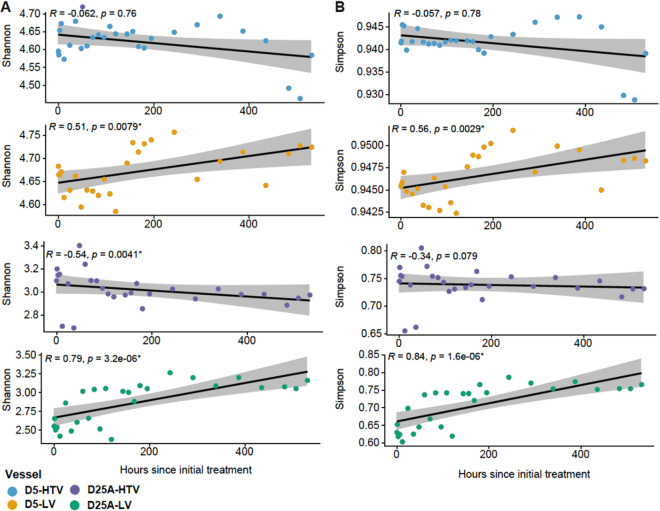
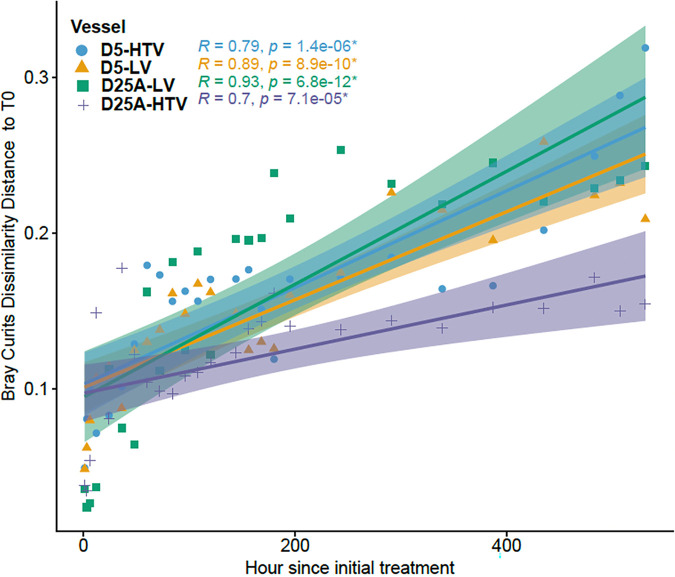
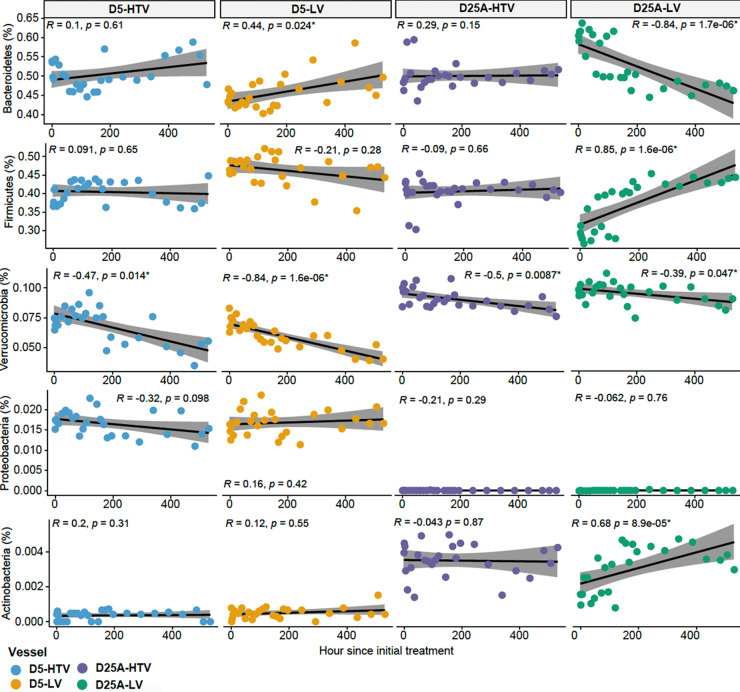
The study of bacteriophage communities reproducing in the gastrointestinal tract is limited by the quality of model systems supporting experimental manipulation . Traditionally, studies aiming to experimentally address phage-bacteria dynamics have utilized gnotobiotic mice inoculated with defined bacterial communities. While mouse models simulate complex interactions between microbes and their host, they also forestall the study of phage-bacteria dynamics in isolation of host factors. Here, we established a method for manipulating phage-bacteria dynamics using an chemostat bioreactor model of the distal human gut. We create defined communities representing a subset of bacteria in the feces of two human individuals, cultivated these communities in chemostat bioreactors, developed methods to purify the autochthonous viromes associated with each cultured community, and trialed a system for transmitting live or heat-killed viruses between chemostat bioreactors to decipher outcomes of virus-mediated perturbation. We found that allochthonous viromes were detectable via metagenomic sequencing against the autochthonous virome background and that shifts in bacterial community diversity and composition were detectable in relation to time posttreatment. These microbiome composition changes spanned multiple phyla, including , , and . We also found that compositional changes occurred when using live viruses regardless of whether intrasubject or intersubject viruses were used as the perturbation agents. Our results supported the use of chemostat bioreactors as a platform for studying complex bacteria-phage dynamics . Bacteriophages are relatively ubiquitous in the environment and are highly abundant in the human microbiome. Phages can be commonly transmitted between close contacts, but the impact that such transmissions may have on their bacteria counterparts in our microbiomes is unknown. We developed a chemostat cultivation system to simulate individual-specific features of human distal gut microbiota that can be used to transmit phages between ecosystems and measure their impacts on the microbiota. We used this system to transfer phage communities between chemostats that represented different human subjects. We found that there were significant effects on overall microbiota diversity and changes in the relative abundances of , , and , when intersubject perturbations were performed, compared to intrasubject perturbations. These changes were observed when perturbations were performed using live phages, but not when heat-killed phages were used, and they support the use of chemostat systems for studying complex human bacteria-phage dynamics.
研究在胃肠道中繁殖的噬菌体群落受到支持实验操作的模型系统的质量限制。传统上,旨在通过实验解决噬菌体-细菌动力学的研究利用了接种有定义明确细菌群落的无菌小鼠。虽然小鼠模型模拟了微生物与其宿主之间的复杂相互作用,但它们也阻止了宿主因素隔离下的噬菌体-细菌动力学研究。在这里,我们建立了一种使用远端人类肠道的恒化器生物反应器模型来操纵噬菌体-细菌动力学的方法。我们创建了代表两个人类粪便中一部分细菌的定义群落,在恒化器生物反应器中培养这些群落,开发了纯化与每个培养群落相关的本土病毒组的方法,并尝试了在恒化器生物反应器之间传输活病毒或热灭活病毒的系统,以破译病毒介导的扰动的结果。我们发现,通过针对本土病毒组背景的宏基因组测序可以检测到异源病毒组,并且可以检测到细菌群落多样性和组成的变化与处理后时间有关。这些微生物组组成变化跨越了多个门,包括 、 和 。我们还发现,无论使用的是同种内还是同种间病毒作为扰动剂,使用活病毒时都会发生组成变化。我们的结果支持将恒化器生物反应器用作研究复杂细菌-噬菌体动力学的平台。噬菌体在环境中相对普遍,在人类微生物组中高度丰富。噬菌体可以在密切接触者之间通常传播,但这种传播对我们微生物组中它们的细菌对应物可能产生的影响尚不清楚。我们开发了一种恒化器培养系统,以模拟代表不同人类个体的远端肠道微生物组的个体特定特征,该系统可用于在生态系统之间传递噬菌体并测量它们对微生物组的影响。我们使用该系统在代表不同人类受试者的恒化器之间传递噬菌体群落。我们发现,与同种内扰动相比,当进行种间扰动时,总体微生物多样性有显著影响,并且 、 和 的相对丰度发生变化。当使用活噬菌体进行扰动时观察到这些变化,但当使用热灭活噬菌体时则没有观察到这些变化,这支持使用恒化器系统研究复杂的人类细菌-噬菌体动力学。