Lyu Lei, Huang Lu-Qi, Huang Tao, Xiang Wei, Yuan Jing-Dong, Zhang Chuan-Hua
Department of Urology, Wuhan No 1 Hospital, Tongji Medical College, Huazhong University of Science and Technology, Wuhan, People's Republic of China.
Department of Neurology, Wuhan No 1 Hospital, Tongji Medical College, Huazhong University of Science and Technology, Wuhan, People's Republic of China.
Drug Des Devel Ther. 2018 Apr 5;12:743-756. doi: 10.2147/DDDT.S161821. eCollection 2018.
Gambogic acid (GA) is the main active ingredient of resin gamboges and possesses anti-cancer activity toward various human cancer cells. However, clinical application of GA has been limited by its poor aqueous solubility and dose-limiting toxicities. Cell-penetrating peptides (CPPs) are widely used to deliver anti-cancer drugs into cancer cells and to enhance the water solubility of drugs.
The object of this study was to synthesize peptide-drug conjugates in which the cell-penetrating peptide TAT (trans-activator of transcription) was conjugated to GA and evaluated the anti-cancer activity of this GA-CPP conjugate (GA-TAT) in EJ bladder cancer cells.
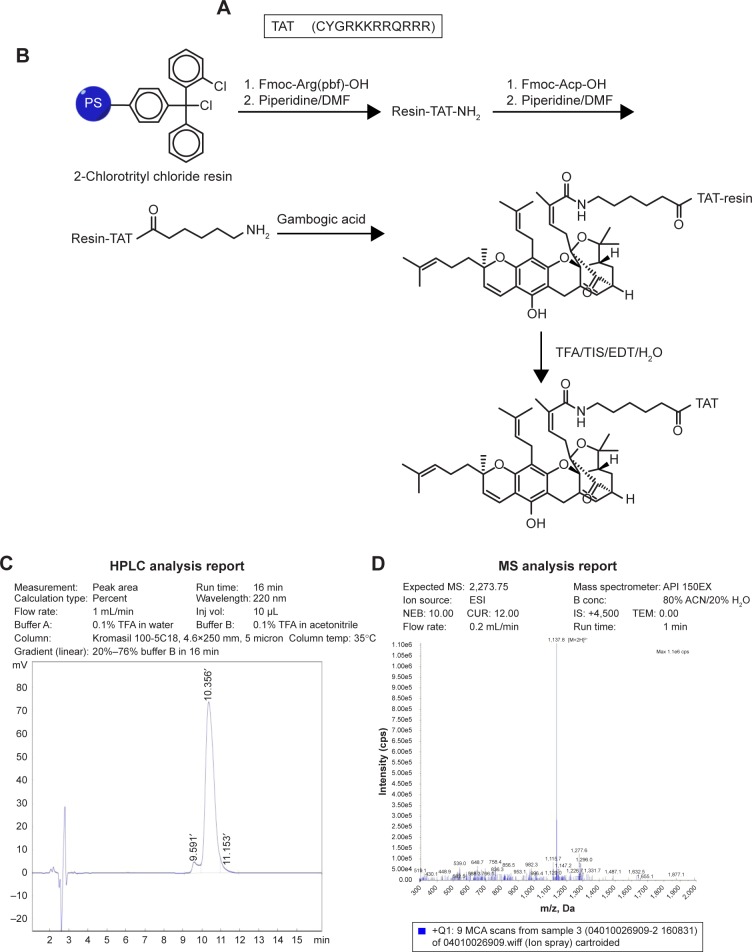
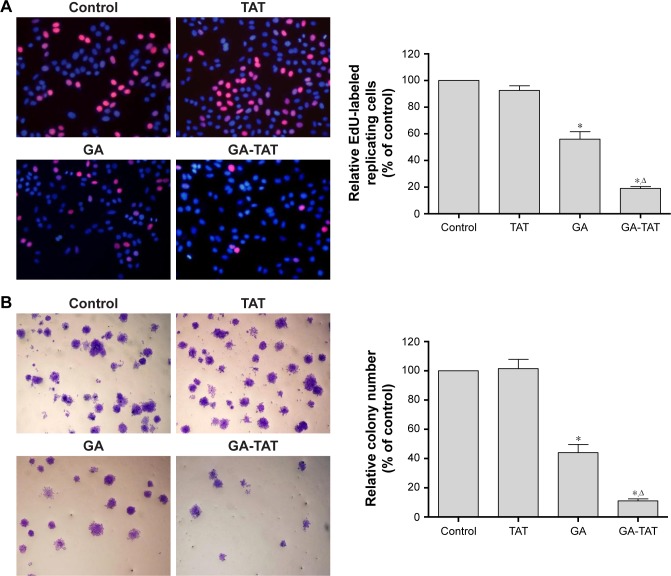
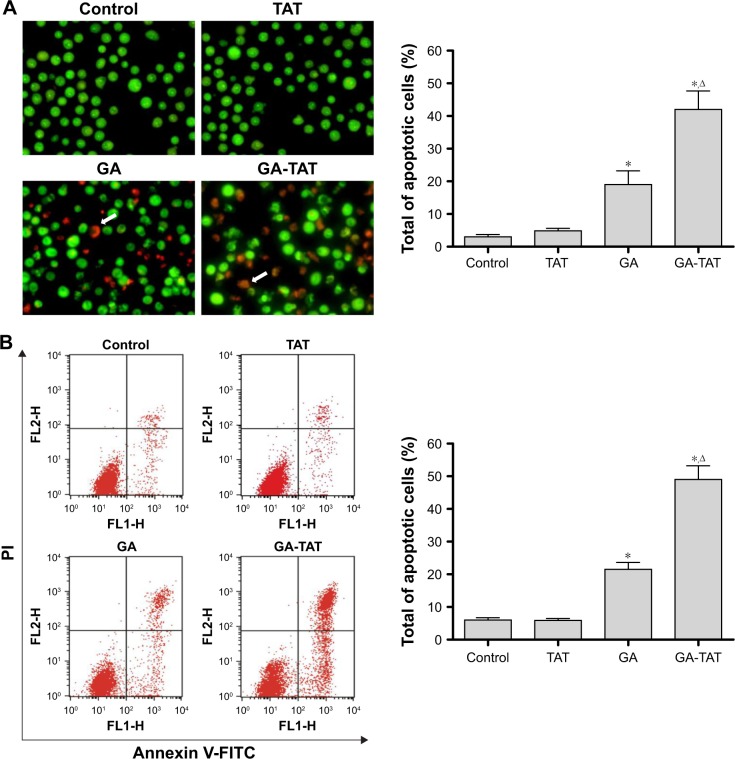
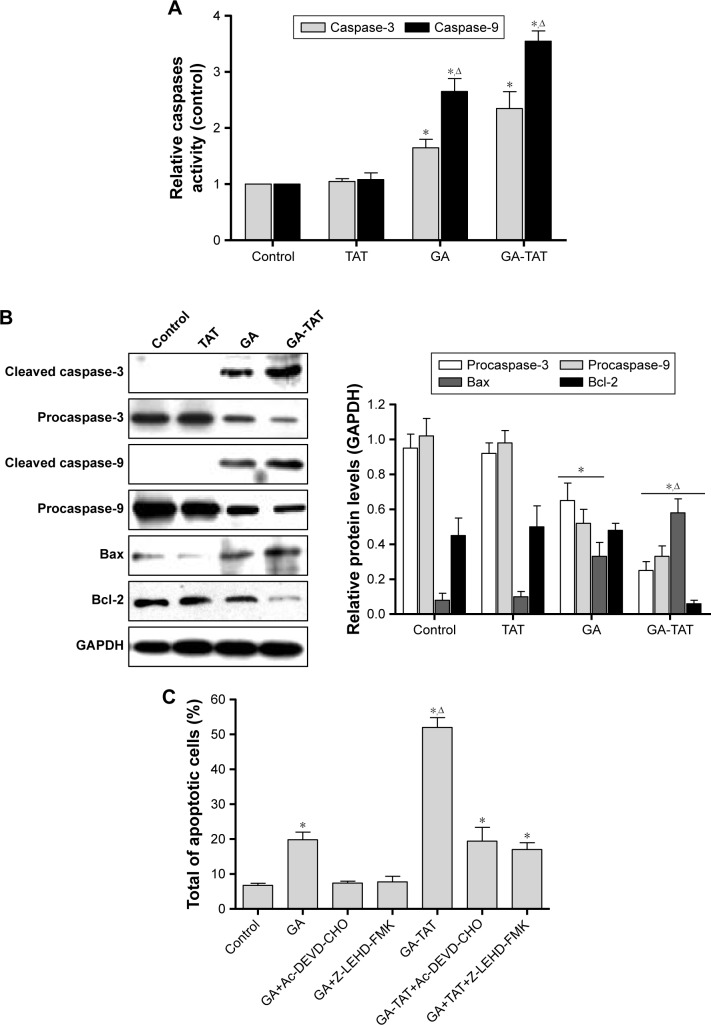
GA is built onto the TAT, and the GA-TAT conjugates are cleaved from the solid support and purified via HPLC. The equilibrium solubility of GA-TAT was measured using the shake-flask method. The effects of GA-TAT on EJ cell viability and proliferation were determined by MTT assay, Edu assay and colony formation assay, respectively. After treated with 1.0 μM GA-TAT for 24 h, the apoptosis rate of EJ cells were detected by Acridine orange/ethidium bromide (AO/EB) assay and flow cytometry assay. The proteins of caspase-3 (processing), caspase-9 (processing), Bcl-2 and Bax were analyzed by Western blotting, and the intracellular reactive oxygen species (ROS) production was evaluated by a reactive oxygen species assay.
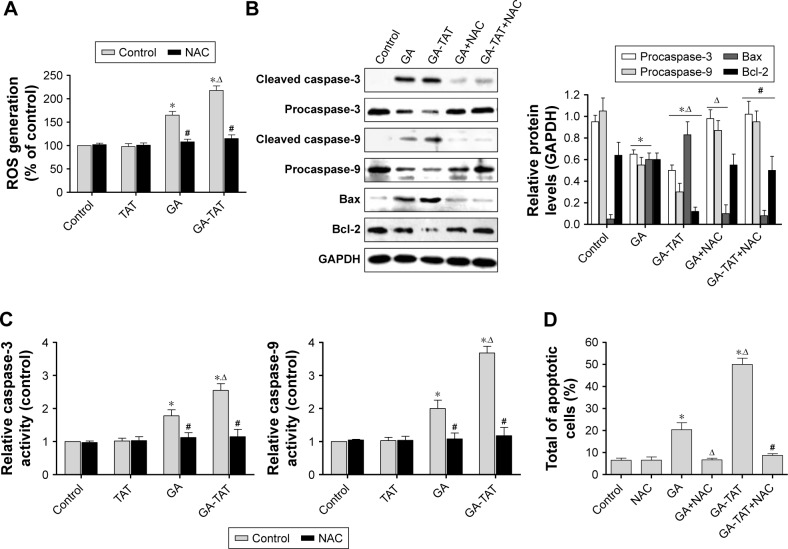
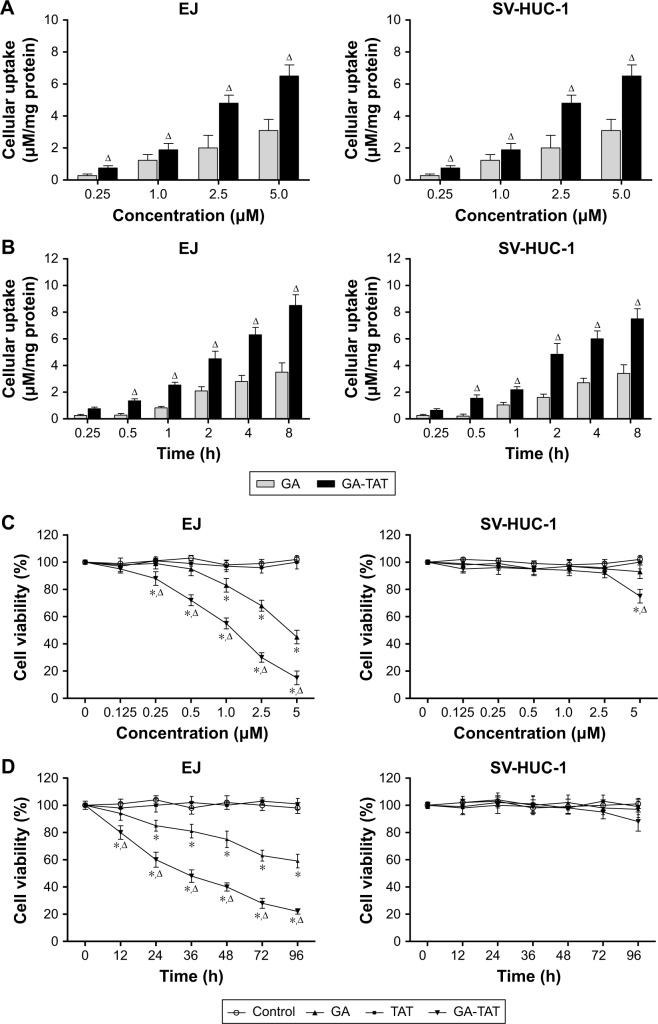
In contrast to free GA, the solubility of GA-TAT in water was significantly improved. Meanwhile, GA-TAT significantly increased EJ cellular uptake, toxicity and apoptosis. Mechanistic analysis revealed that GA-TAT enhanced the anti-cancer effect of GA against EJ cells through ROS-mediated apoptosis. The results were demonstrated that GA-TAT increased the ROS level in EJ cells, and -acetyl-L-cysteine (NAC; a well-known ROS scavenger) inhibited GA-TAT-induced ROS generation and apoptosis. Additionally, GA-TAT activated caspase-3 and caspase-9 and down-regulated the Bcl-2/Bax ratio, but these effects were largely rescued by NAC.
GA-TAT has outstanding potential for promoting tumor apoptosis and exhibits promise for use in bladder cancer therapy.
藤黄酸(GA)是藤黄树脂的主要活性成分,对多种人类癌细胞具有抗癌活性。然而,GA的临床应用受到其较差的水溶性和剂量限制性毒性的限制。细胞穿透肽(CPPs)被广泛用于将抗癌药物递送至癌细胞并提高药物的水溶性。
本研究的目的是合成细胞穿透肽TAT(转录反式激活因子)与GA偶联的肽-药物偶联物,并评估这种GA-CPP偶联物(GA-TAT)对EJ膀胱癌细胞的抗癌活性。
将GA连接到TAT上,GA-TAT偶联物从固相载体上切割下来并通过高效液相色谱法纯化。采用摇瓶法测定GA-TAT的平衡溶解度。分别通过MTT法、Edu法和集落形成试验测定GA-TAT对EJ细胞活力和增殖的影响。用1.0μM GA-TAT处理24小时后,通过吖啶橙/溴化乙锭(AO/EB)试验和流式细胞术检测EJ细胞的凋亡率。通过蛋白质印迹法分析半胱天冬酶-3(活化)、半胱天冬酶-9(活化)、Bcl-2和Bax的蛋白质表达,并通过活性氧试验评估细胞内活性氧(ROS)的产生。
与游离GA相比,GA-TAT在水中的溶解度显著提高。同时,GA-TAT显著增加EJ细胞摄取、毒性和凋亡。机制分析表明,GA-TAT通过ROS介导的凋亡增强了GA对EJ细胞的抗癌作用。结果表明,GA-TAT增加了EJ细胞中的ROS水平,而N-乙酰-L-半胱氨酸(NAC;一种著名的ROS清除剂)抑制了GA-TAT诱导的ROS生成和凋亡。此外,GA-TAT激活了半胱天冬酶-3和半胱天冬酶-9并下调了Bcl-2/Bax比值,但这些作用在很大程度上被NAC挽救。
GA-TAT在促进肿瘤凋亡方面具有突出潜力,在膀胱癌治疗中显示出应用前景。