Qian Bin, Yang Yang, Yao Yusheng, Liao Yanling, Lin Ying
Department of Anesthesiology, People's Hospital Affiliated to Fujian University of Traditional Chinese Medicine, Fuzhou, Fujian, China.
Department of Anesthesiology, West China Hospital, Sichuan University, Chengdu, Sichuan, China.
Drug Des Devel Ther. 2018 Apr 6;12:769-776. doi: 10.2147/DDDT.S162577. eCollection 2018.
Sevoflurane preconditioning (SPC) can provide myocardial protective effects similar to ischemic preconditioning. However, the exact mechanism of SPC remains unclear. Previous studies indicate that vascular endothelial growth factor receptor 1 (VEGFR-1) is involved in ischemic preconditioning-mediated cardioprotection. This study was designed to determine the significance of VEGFR-1 signaling in SPC-mediated cardioprotection.
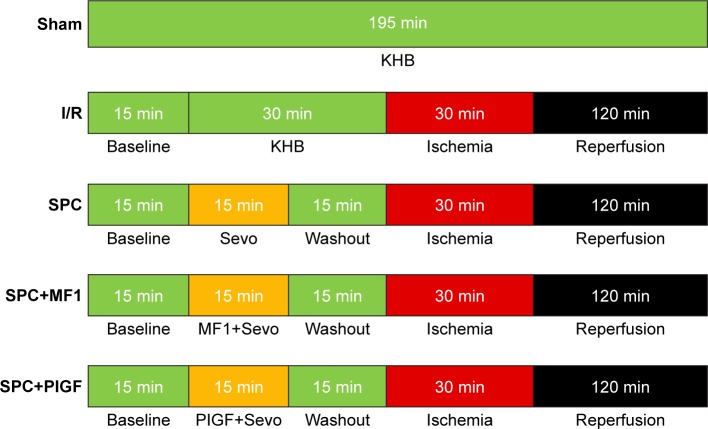
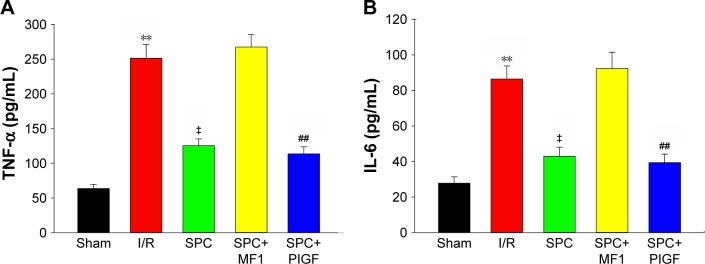
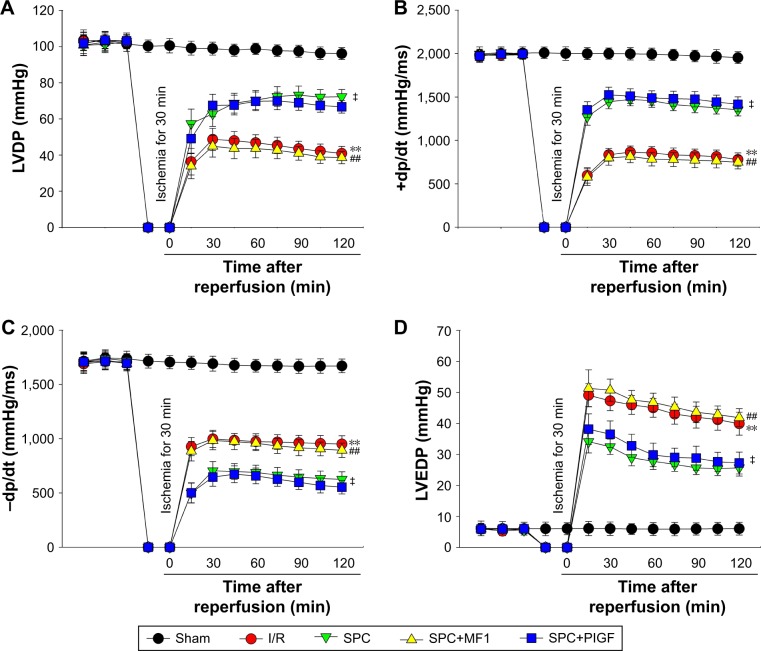
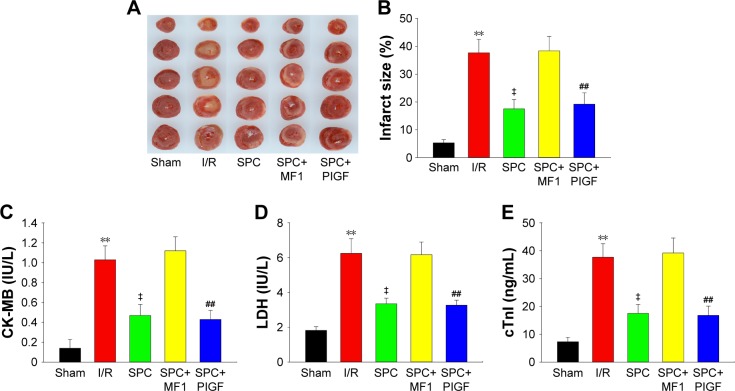
Myocardial ischemia-reperfusion (I/R) rat model was established using the Langendorff isolated heart perfusion apparatus. Additionally, after 15 min of baseline equilibration, the isolated hearts were pretreated with 2.5% sevoflurane, 2.5% sevoflurane+MF1 10 μmol/L, or 2.5% sevoflurane+placental growth factor 10 μmol/L, and then subjected to 30 min of global ischemia and 120 min of reperfusion. The changes in hemodynamic parameters, myocardial infarct size, and the levels of creatine kinase-MB, lactate dehydrogenase, cardiac troponin-I, tumor necrosis factor-α, and interleukin 6 in the myocardium were evaluated.
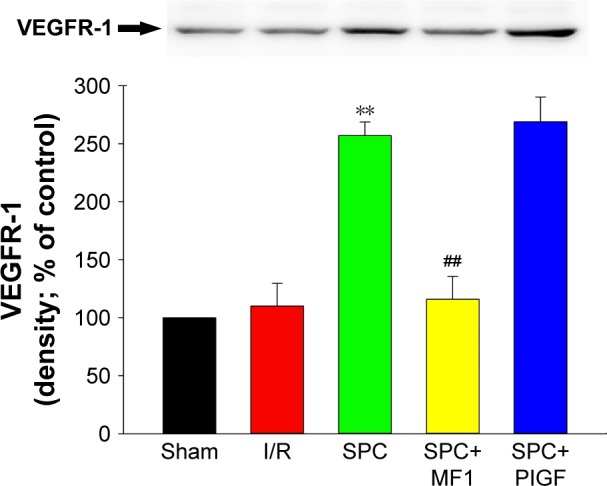
Compared to the I/R group, pretreatment with 2.5% sevoflurane significantly improved the cardiac function, limited myocardial infarct size, reduced cardiac enzyme release, upregulated VEGFR-1 expression, and decreased inflammation. In addition, the selective VEGFR-1 agonist, placental growth factor, did not enhance the cardioprotection and anti-inflammation effects of sevoflurane, while the specific VEGFR-1 inhibitor, MF1, completely reversed these effects.
Our data have demonstrated that 2.5% sevoflurane preconditioning alleviates heart I/R injury, which is probably mediated by the anti-inflammatory property and upregulation of VEGFR-1.
七氟醚预处理(SPC)可提供与缺血预处理相似的心肌保护作用。然而,SPC的确切机制仍不清楚。先前的研究表明,血管内皮生长因子受体1(VEGFR-1)参与缺血预处理介导的心脏保护作用。本研究旨在确定VEGFR-1信号通路在SPC介导的心脏保护中的意义。
采用Langendorff离体心脏灌注装置建立心肌缺血再灌注(I/R)大鼠模型。此外,在基线平衡15分钟后,将离体心脏用2.5%七氟醚、2.5%七氟醚+10μmol/L MF1或2.5%七氟醚+10μmol/L胎盘生长因子进行预处理,然后进行30分钟全心缺血和120分钟再灌注。评估血流动力学参数、心肌梗死面积以及心肌中肌酸激酶-MB、乳酸脱氢酶、心肌肌钙蛋白I、肿瘤坏死因子-α和白细胞介素6水平的变化。
与I/R组相比,2.5%七氟醚预处理显著改善了心脏功能,限制了心肌梗死面积,减少了心肌酶释放,上调了VEGFR-1表达,并减轻了炎症反应。此外,选择性VEGFR-1激动剂胎盘生长因子并未增强七氟醚的心脏保护和抗炎作用,而特异性VEGFR-1抑制剂MF1则完全逆转了这些作用。
我们的数据表明,2.5%七氟醚预处理可减轻心脏I/R损伤,这可能是由抗炎特性和VEGFR-1上调介导的。