Clinical Research Department, Celerion, 2420 W. Baseline Rd., Tempe, AZ, 85283, USA.
Biometrics, Hurley Consulting Associates, Summit, NJ, USA.
Drugs R D. 2018 Jun;18(2):129-136. doi: 10.1007/s40268-018-0232-1.
Doxylamine tablets are approved as an over-the-counter sleep aid. We developed a doxylamine succinate intranasal metered-dose delivery system with the expectation of a more rapid onset of action with reduced side-effect potential compared with the oral tablet.
This phase I study randomized 24 adults with chronic intermittent sleep impairment to receive either single doses of intranasal doxylamine succinate 3.2, 6.3, or 12.7 mg or doxylamine succinate 25-mg oral tablet. Doxylamine pharmacokinetics were assessed using noncompartmental methods; pharmacodynamics were evaluated using the Karolinska Sleepiness Scale (KSS) and numerous psychomotor tests. Adverse events (AEs) were monitored.
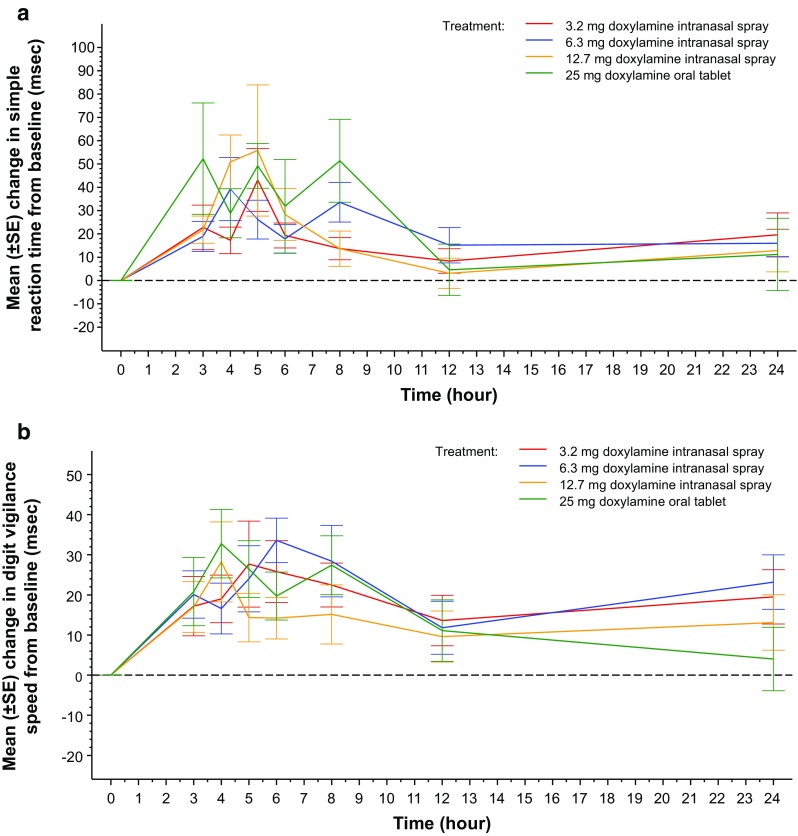
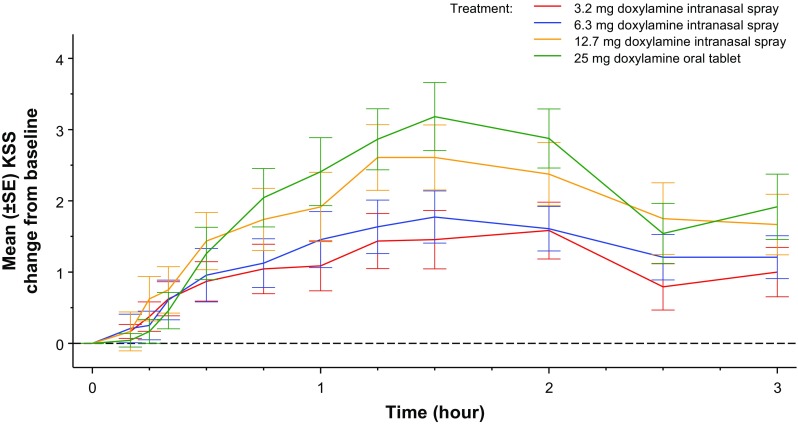
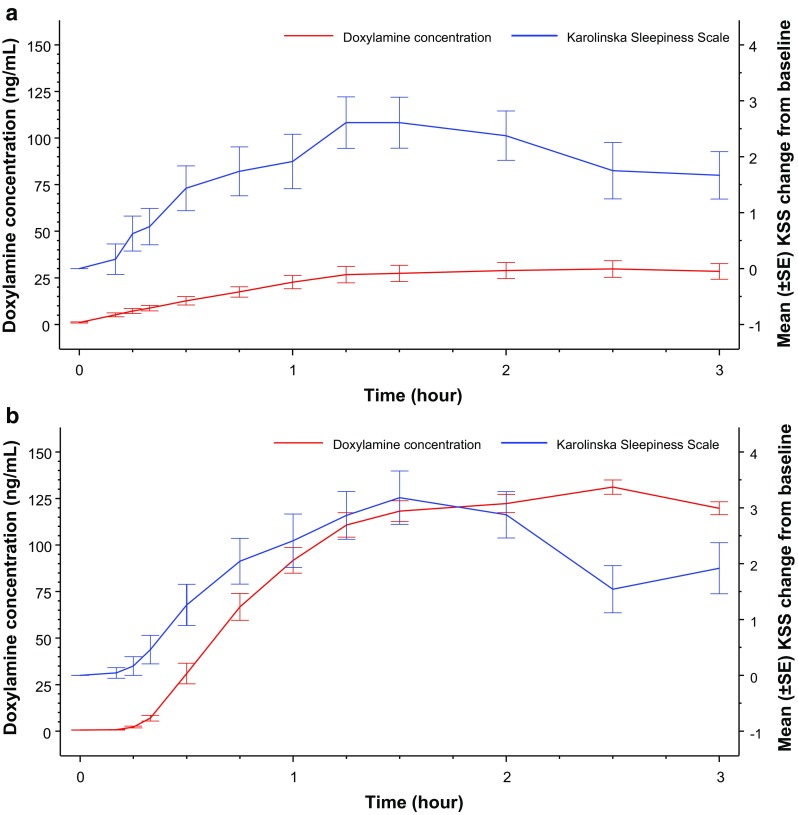
None of the intranasal dose levels produced a mean maximum plasma concentration (C) above the 50 ng/mL target level or a time to maximum concentration shorter than that of the oral tablet. At the highest intranasal dose, C and area under the doxylamine concentration-time curve were approximately 25% of the values achieved with the oral dose. Variation in most pharmacokinetic parameters was higher with intranasal compared with oral dosing. A relationship between plasma doxylamine concentration and KSS change from baseline was evident for the 25-mg tablet and, to a lesser extent, for the 12.7-mg intranasal dose. Changes from baseline in psychomotor parameters did not show a relationship to intranasal dose, and did not distinguish between intranasal versus oral dosing. The most common AEs with intranasal dosing were nasal congestion, nasal dryness, and frontal headache.
The nasal spray did not increase doxylamine absorption or systemic bioavailability compared with the oral tablet.
盐酸羟嗪片被批准为非处方助眠药。我们开发了一种琥珀酸右苯氧胺鼻用计量喷雾剂,期望与口服片剂相比,起效更快,副作用更小。
这项 I 期研究将 24 名患有慢性间歇性睡眠障碍的成年人随机分为三组,分别接受单剂量的鼻内琥珀酸右苯氧胺 3.2、6.3 或 12.7mg 或 25mg 口服片剂。采用非房室法评估右苯氧胺的药代动力学;采用 Karolinska 睡眠量表(KSS)和多项精神运动测试评估药效学。监测不良反应(AE)。
没有任何一种鼻内剂量水平产生的平均最大血浆浓度(C)超过 50ng/mL 的目标水平,也没有达到口服片剂的最短达峰时间。在最高的鼻内剂量下,C 和右苯氧胺浓度-时间曲线下面积约为口服剂量的 25%。与口服相比,鼻内给药的大多数药代动力学参数的变异性更高。25mg 片剂的血浆右苯氧胺浓度与 KSS 自基线变化之间存在相关性,而 12.7mg 鼻内剂量的相关性较弱。自基线变化的精神运动参数与鼻内剂量无关,也不能区分鼻内与口服给药。鼻内给药最常见的不良反应是鼻塞、鼻干和额头痛。
与口服片剂相比,鼻喷雾剂并未增加右苯氧胺的吸收或全身生物利用度。