Research Center for Endocrine and Metabolic Diseases, Department of Medical Science, School of Medicine, Chungnam National University, Daejeon, 35015, Korea.
Laboratory for Integrative and Systems Physiology, Institute of Bioengineering, École Polytechnique Fédérale de Lausanne, 1015, Lausanne, Switzerland.
Nat Commun. 2018 Apr 19;9(1):1551. doi: 10.1038/s41467-018-03998-z.
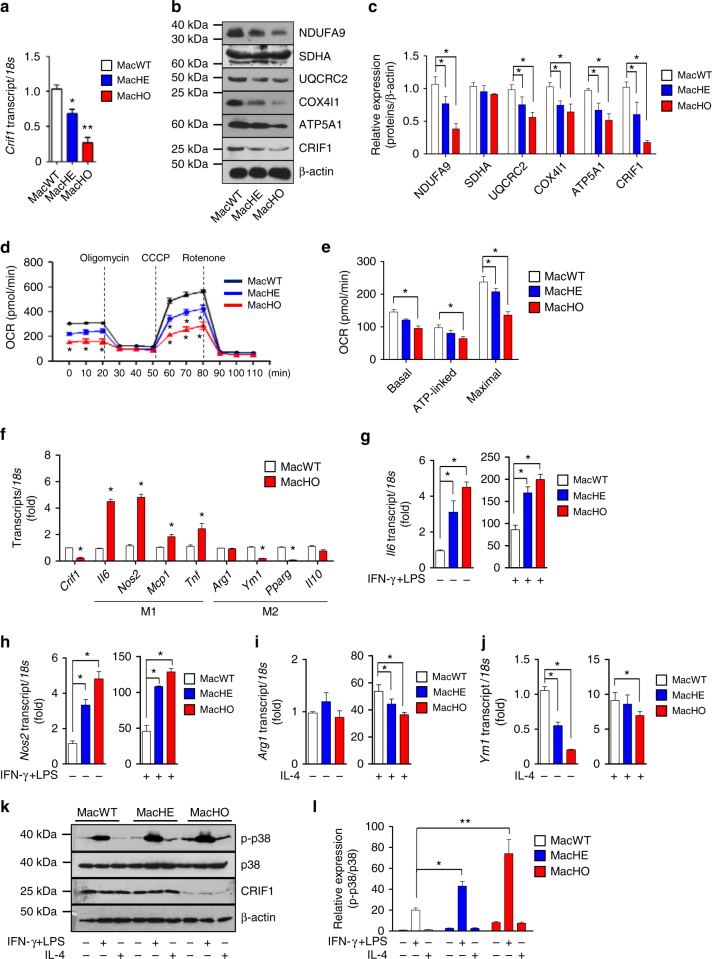
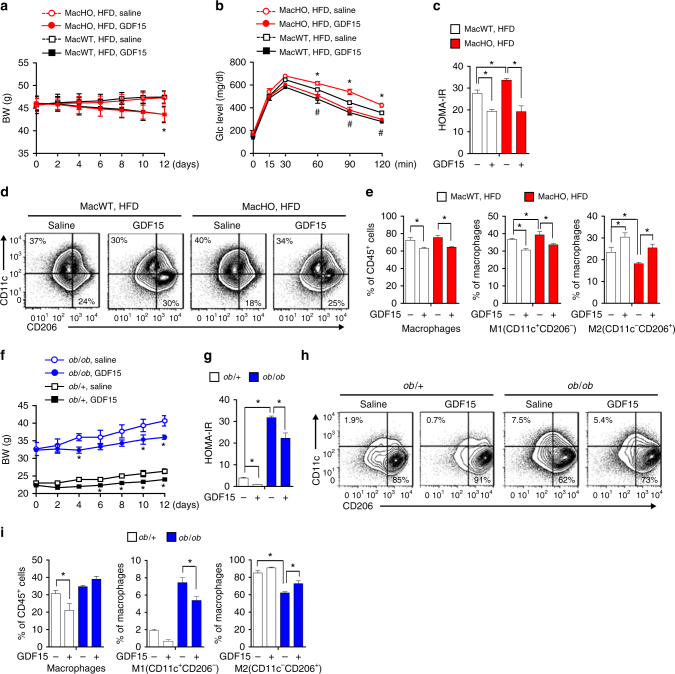
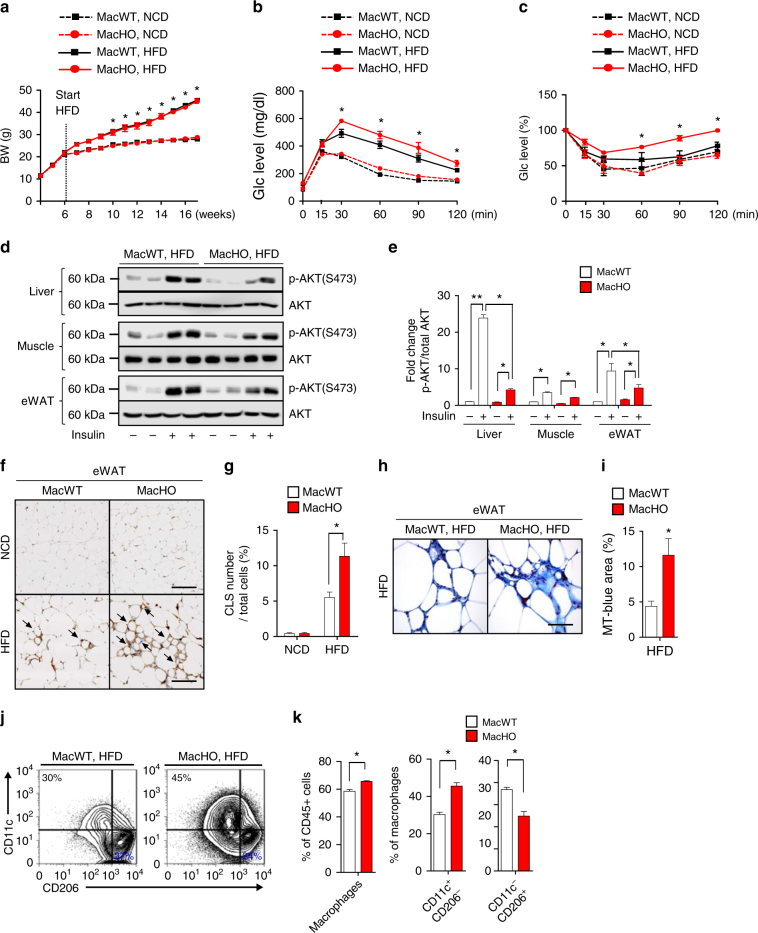
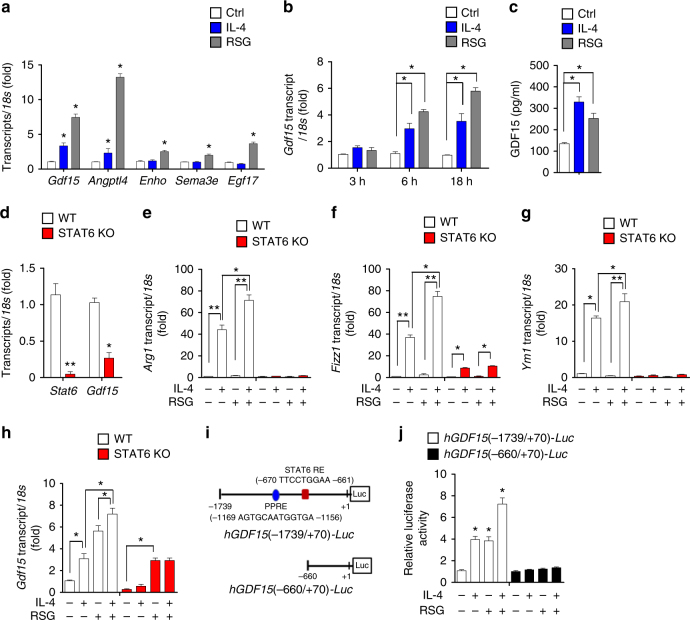
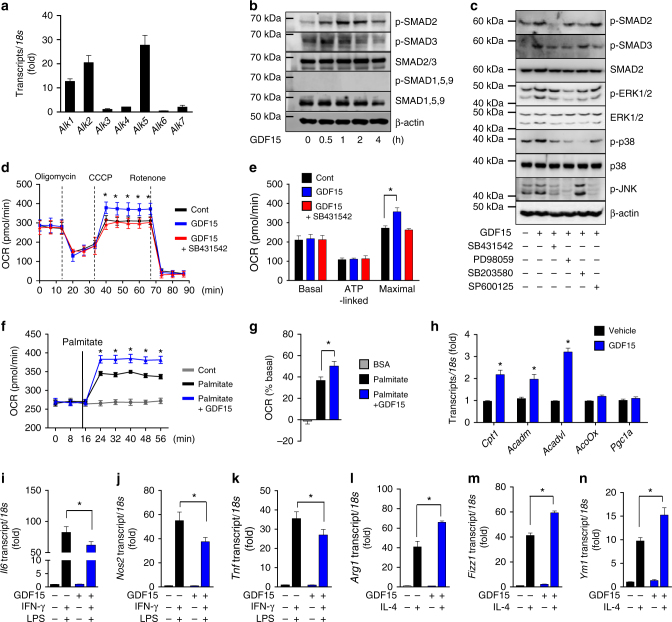
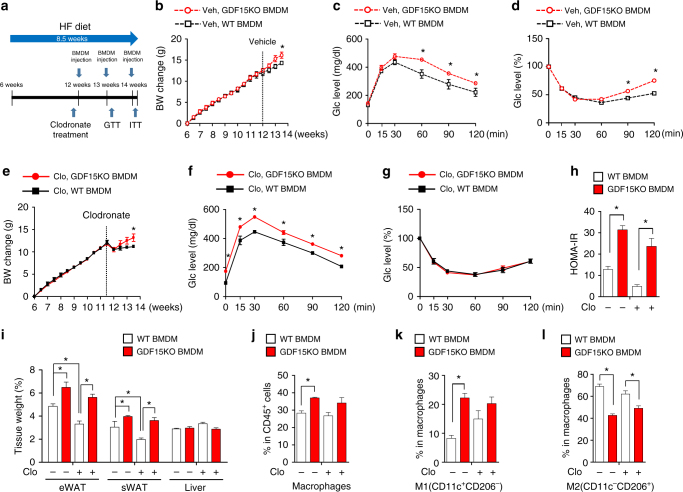
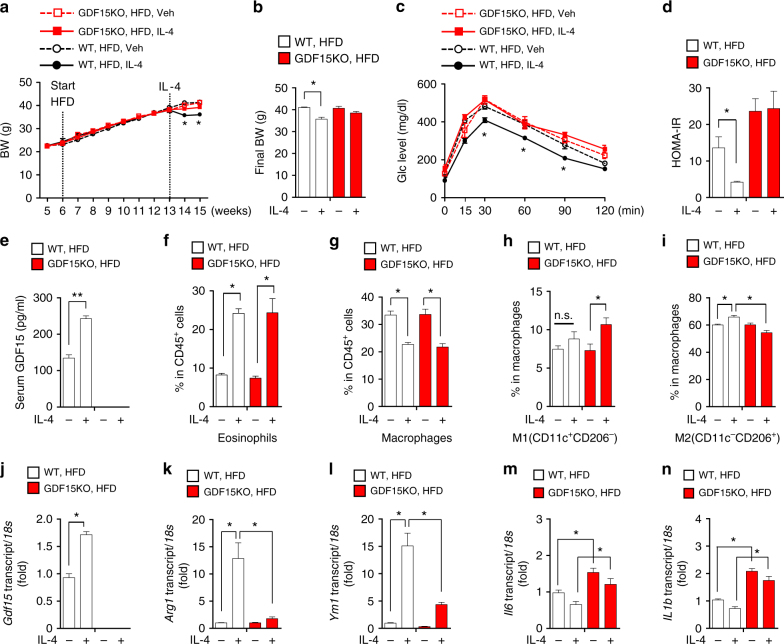
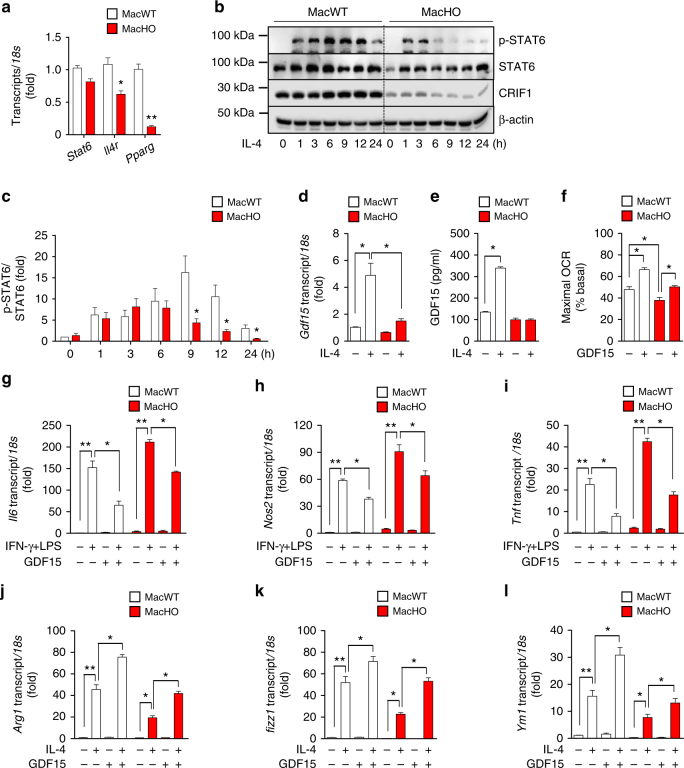
Oxidative functions of adipose tissue macrophages control the polarization of M1-like and M2-like phenotypes, but whether reduced macrophage oxidative function causes systemic insulin resistance in vivo is not clear. Here, we show that mice with reduced mitochondrial oxidative phosphorylation (OxPhos) due to myeloid-specific deletion of CR6-interacting factor 1 (Crif1), an essential mitoribosomal factor involved in biogenesis of OxPhos subunits, have M1-like polarization of macrophages and systemic insulin resistance with adipose inflammation. Macrophage GDF15 expression is reduced in mice with impaired oxidative function, but induced upon stimulation with rosiglitazone and IL-4. GDF15 upregulates the oxidative function of macrophages, leading to M2-like polarization, and reverses insulin resistance in ob/ob mice and HFD-fed mice with myeloid-specific deletion of Crif1. Thus, reduced macrophage oxidative function controls systemic insulin resistance and adipose inflammation, which can be reversed with GDF15 and leads to improved oxidative function of macrophages.
脂肪组织巨噬细胞的氧化功能控制着 M1 样和 M2 样表型的极化,但巨噬细胞氧化功能降低是否会导致体内系统性胰岛素抵抗尚不清楚。在这里,我们发现由于髓样细胞特异性缺失 CR6 相互作用因子 1(Crif1)导致线粒体氧化磷酸化(OxPhos)减少的小鼠,其巨噬细胞呈现 M1 样极化和全身胰岛素抵抗伴脂肪组织炎症。在氧化功能受损的小鼠中,巨噬细胞生长分化因子 15(GDF15)的表达减少,但在受到罗格列酮和白细胞介素 4(IL-4)刺激后会被诱导。GDF15 可上调巨噬细胞的氧化功能,导致 M2 样极化,并可逆转肥胖症(ob/ob)小鼠和骨髓细胞特异性缺失 Crif1 的高脂饮食喂养小鼠的胰岛素抵抗。因此,巨噬细胞氧化功能降低控制着全身胰岛素抵抗和脂肪组织炎症,而 GDF15 可逆转这一现象,并导致巨噬细胞氧化功能的改善。