Ailanen Liisa, Vähätalo Laura H, Salomäki-Myftari Henriikka, Mäkelä Satu, Orpana Wendy, Ruohonen Suvi T, Savontaus Eriika
Institute of Biomedicine, Research Centre for Integrative Physiology and Pharmacology, Turku Center for Disease Modeling, University of Turku, Turku, Finland.
Drug Research Doctoral Program, University of Turku, Turku, Finland.
Front Pharmacol. 2018 Apr 5;9:319. doi: 10.3389/fphar.2018.00319. eCollection 2018.
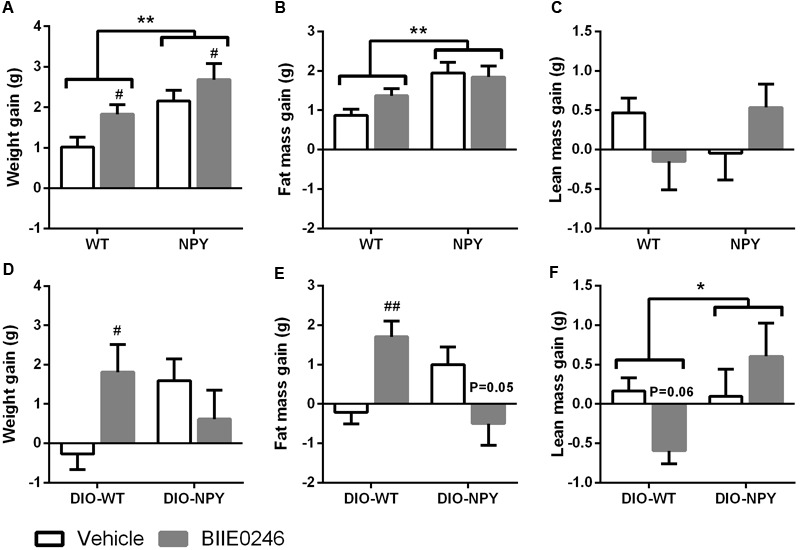
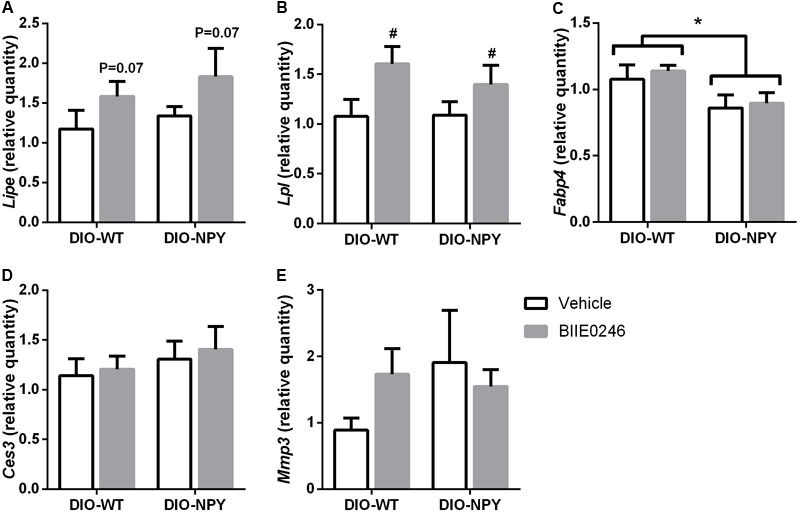
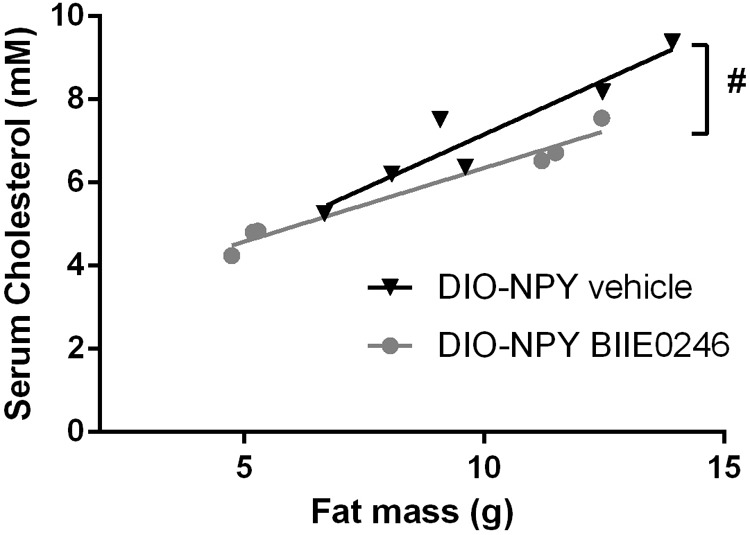
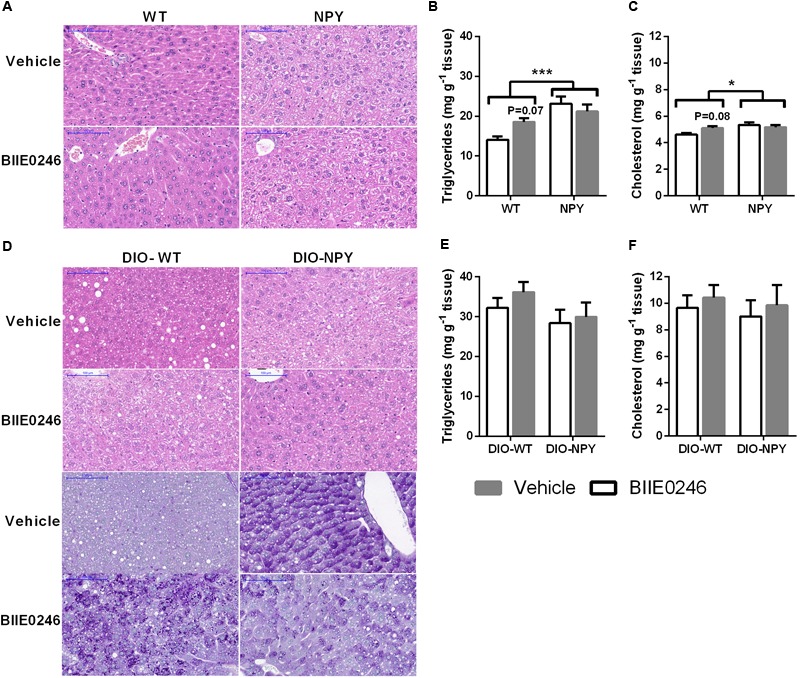
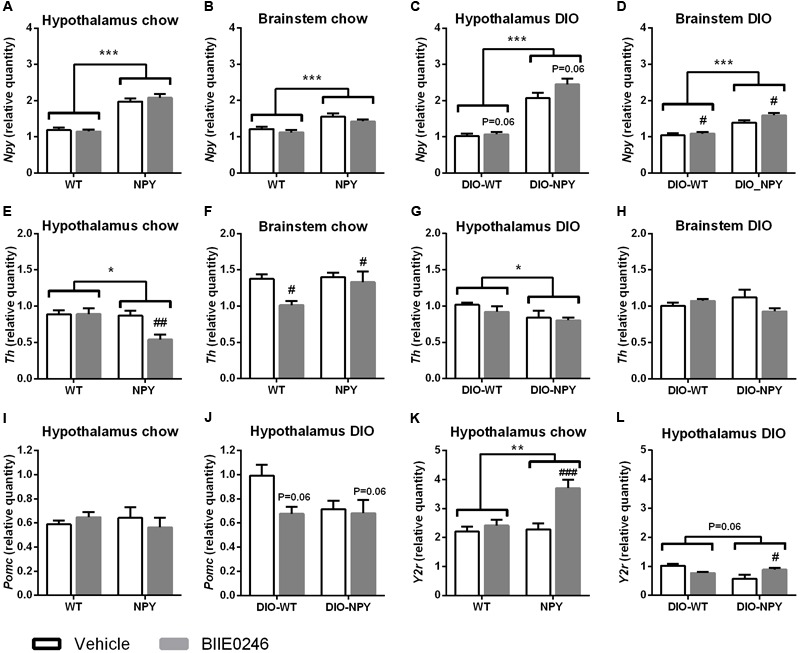
Neuropeptide Y (NPY) plays an important role in the regulation of energy homeostasis in the level of central and sympathetic nervous systems (SNSs). Genetic silencing of peripheral Y-receptors have anti-obesity effects, but it is not known whether pharmacological blocking of peripheral Y-receptors would similarly benefit energy homeostasis. The effects of a peripherally administered Y-receptor antagonist were studied in healthy and energy-rich conditions with or without excess NPY. Genetically obese mice overexpressing NPY in brain noradrenergic nerves and SNS (OE-NPY) represented the situation of elevated NPY levels, while wildtype (WT) mice represented the normal NPY levels. Specific Y-receptor antagonist, BIIE0246, was administered (1.3 mg/kg/day, i.p.) for 2 or 4.5 weeks to OE-NPY and WT mice feeding on chow or Western diet. Treatment with Y-receptor antagonist increased body weight gain in both genotypes on chow diet and caused metabolic disturbances (e.g., hyperinsulinemia and hypercholesterolemia), especially in WT mice. During energy surplus (i.e., on Western diet), blocking of Y-receptors induced obesity in WT mice, whereas OE-NPY mice showed reduced fat mass gain, hepatic glycogen and serum cholesterol levels relative to body adiposity. Thus, it can be concluded that with normal NPY levels, peripheral Y-receptor antagonist has no potential for treating obesity, but oppositely may even induce metabolic disorders. However, when energy-rich diet is combined with elevated NPY levels, e.g., stress combined with an unhealthy diet, Y-receptor antagonism has beneficial effects on metabolic status.
神经肽Y(NPY)在中枢神经系统和交感神经系统(SNS)水平上对能量平衡的调节中起重要作用。外周Y受体的基因沉默具有抗肥胖作用,但尚不清楚外周Y受体的药理学阻断是否同样有益于能量平衡。在有或没有过量NPY的健康和能量丰富的条件下,研究了外周给予Y受体拮抗剂的作用。在脑去甲肾上腺素能神经和SNS中过表达NPY的遗传性肥胖小鼠(OE-NPY)代表NPY水平升高的情况,而野生型(WT)小鼠代表正常的NPY水平。将特异性Y受体拮抗剂BIIE0246(1.3mg/kg/天,腹腔注射)给予以普通饲料或西式饮食喂养的OE-NPY和WT小鼠2周或4.5周。用Y受体拮抗剂治疗增加了两种基因型在普通饮食上的体重增加,并引起代谢紊乱(例如,高胰岛素血症和高胆固醇血症),尤其是在WT小鼠中。在能量过剩期间(即西式饮食),Y受体的阻断在WT小鼠中诱导肥胖,而OE-NPY小鼠相对于身体肥胖显示出脂肪量增加、肝糖原和血清胆固醇水平降低。因此,可以得出结论,在NPY水平正常的情况下,外周Y受体拮抗剂没有治疗肥胖的潜力,反而甚至可能诱发代谢紊乱。然而,当富含能量的饮食与升高的NPY水平相结合时,例如压力与不健康饮食相结合,Y受体拮抗作用对代谢状态具有有益影响。