Vähätalo L H, Ruohonen S T, Mäkelä S, Ailanen L, Penttinen A-M, Stormi T, Kauko T, Piscitelli F, Silvestri C, Savontaus E, Di Marzo V
1] Department of Pharmacology, Drug Development and Therapeutics and Turku Center for Disease Modeling, University of Turku, Turku, Finland [2] Drug Research Doctoral Program, University of Turku, Turku, Finland.
Department of Pharmacology, Drug Development and Therapeutics and Turku Center for Disease Modeling, University of Turku, Turku, Finland.
Nutr Diabetes. 2015 Apr 27;5(4):e151. doi: 10.1038/nutd.2015.1.
Endocannabinoids and neuropeptide Y (NPY) promote energy storage via central and peripheral mechanisms. In the hypothalamus, the two systems were suggested to interact. To investigate such interplay also in non-hypothalamic tissues, we evaluated endocannabinoid levels in obese OE-NPY(DβH) mice, which overexpress NPY in the noradrenergic neurons in the sympathetic nervous system and the brain.
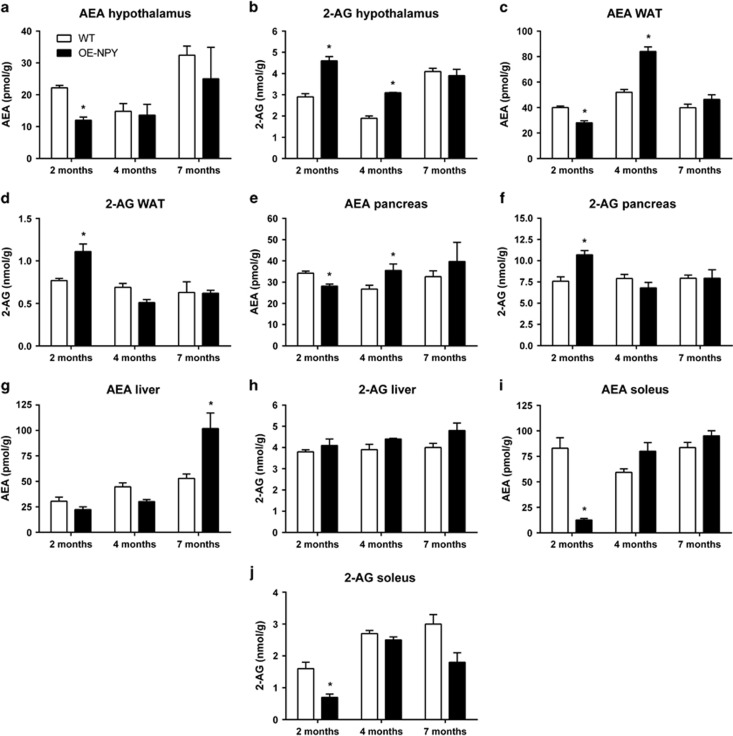
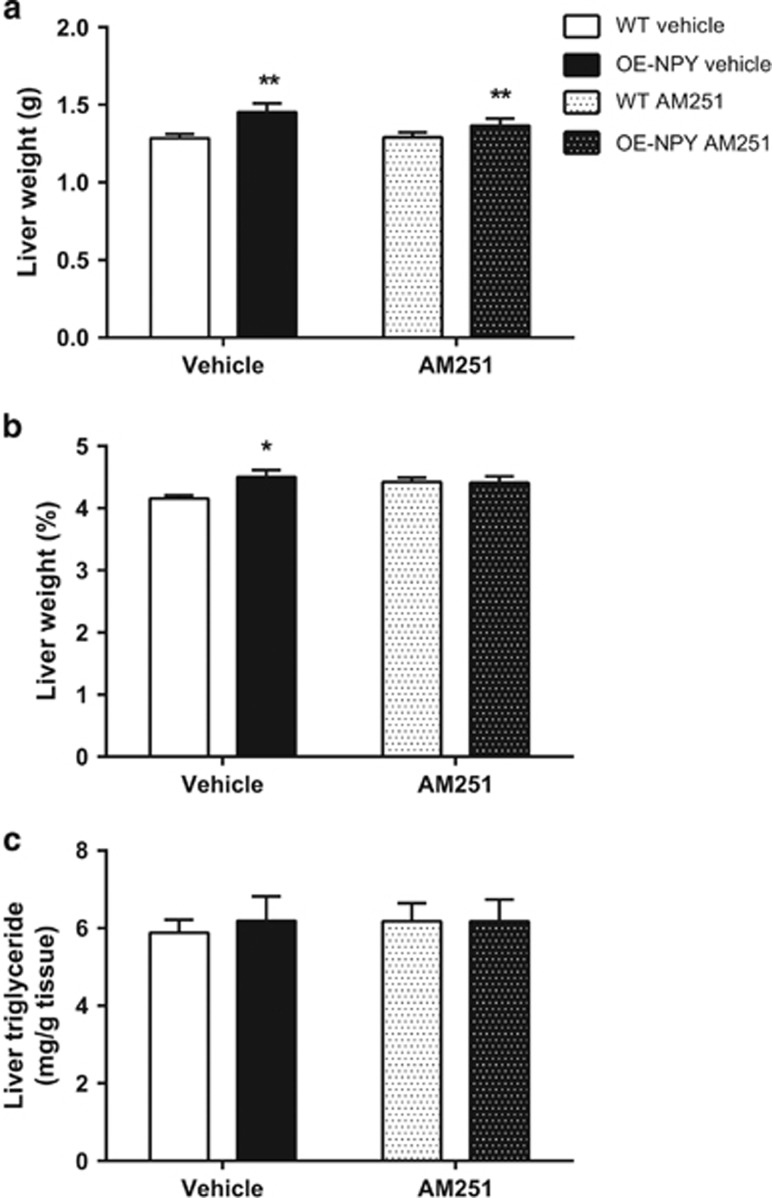
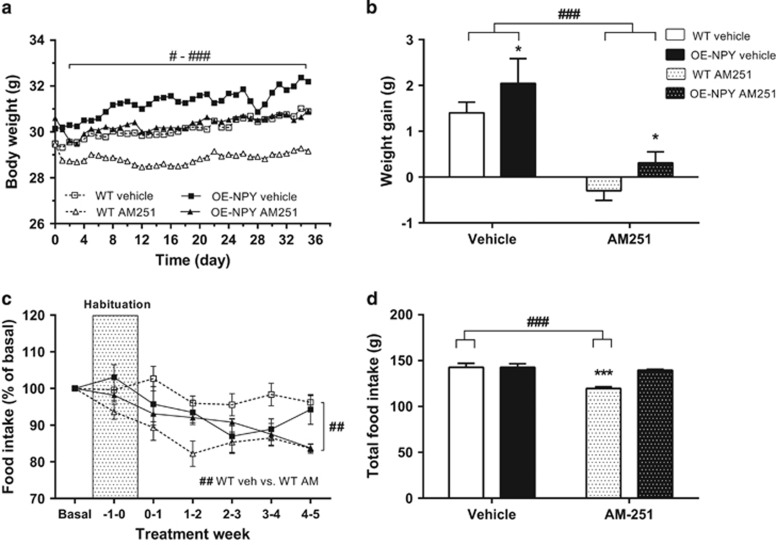
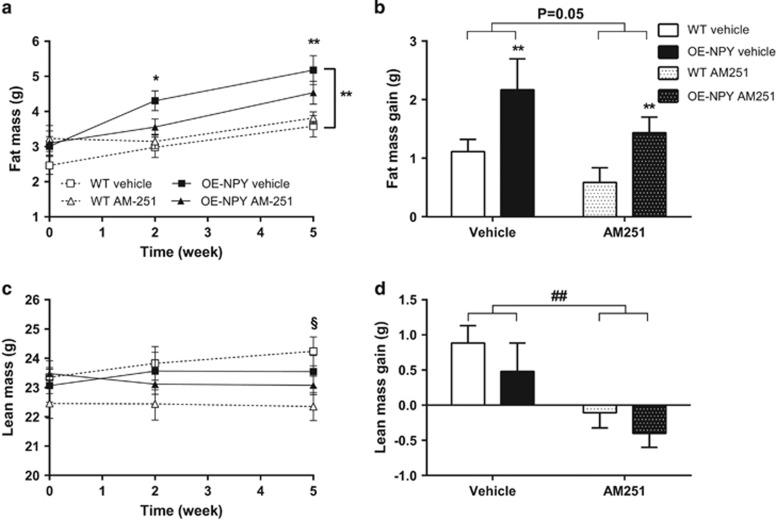
The levels of the endocannabinoids anandamide and 2-arachidonoylglycerol (2-AG) were measured in key regulatory tissues, that is, hypothalamus, pancreas, epididymal white adipose tissue (WAT), liver and soleus muscle, over the development of metabolic dysfunctions in OE-NPY(DβH) mice. The effects of a 5-week treatment with the CB1 receptor inverse agonist AM251 on adiposity and glucose metabolism were studied.
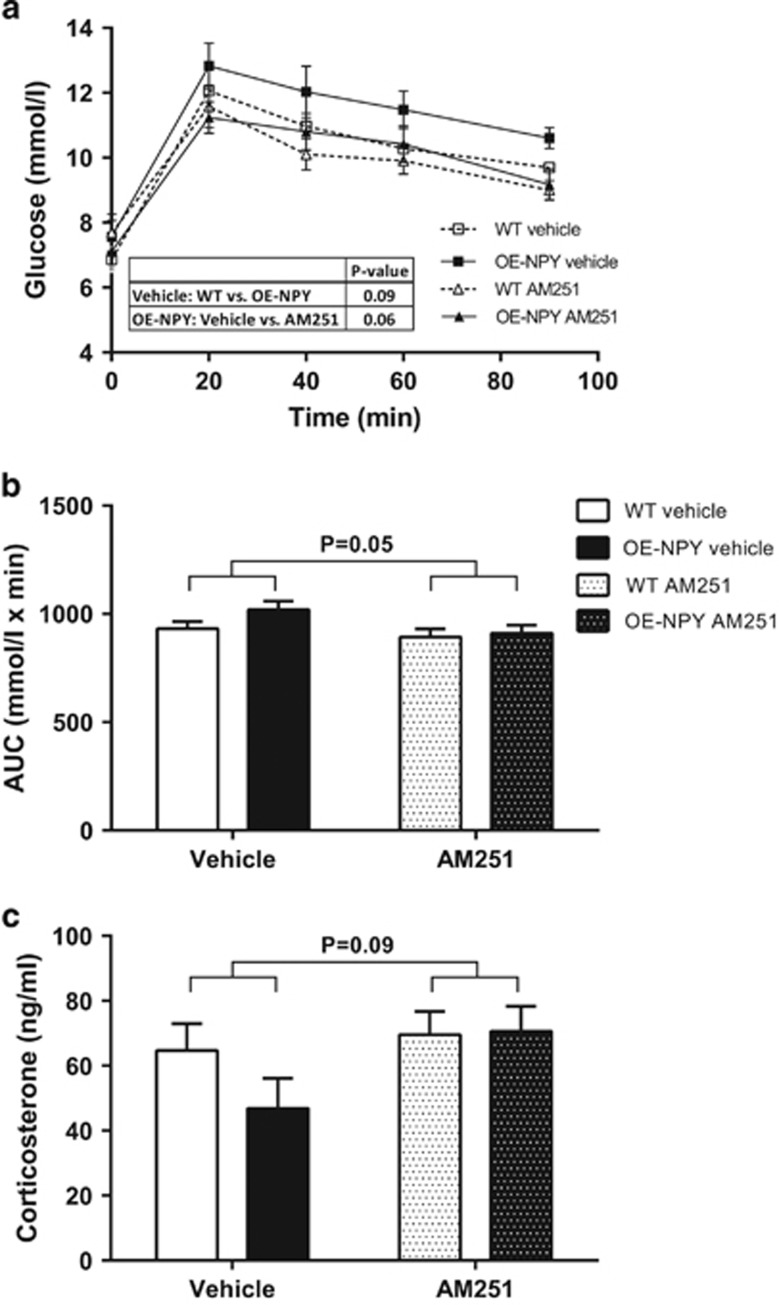
2-AG levels were increased in the hypothalamus and epididymal WAT of pre-obese and obese OE-NPY(DβH) mice. Anandamide levels in adipose tissue and pancreas were increased at 4 months concomitantly with higher fat mass and impaired glucose tolerance. CB1 receptor blockage reduced body weight gain and glucose intolerance in OE-NPY(DβH) to the level of vehicle-treated wild-type mice.
Altered endocannabinoid tone may underlie some of the metabolic dysfunctions in OE-NPY(DβH) mice, which can be attenuated with CB1 inverse agonism suggesting interactions between endocannabinoids and NPY also in the periphery. CB1 receptors may offer a target for the pharmacological treatment of the metabolic syndrome with altered NPY levels.
内源性大麻素和神经肽Y(NPY)通过中枢和外周机制促进能量储存。在下丘脑中,这两个系统被认为会相互作用。为了研究非下丘脑组织中的这种相互作用,我们评估了肥胖的OE-NPY(DβH)小鼠的内源性大麻素水平,这些小鼠在交感神经系统和大脑的去甲肾上腺素能神经元中过度表达NPY。
在OE-NPY(DβH)小鼠代谢功能障碍发展过程中,测量关键调节组织(即下丘脑、胰腺、附睾白色脂肪组织(WAT)、肝脏和比目鱼肌)中的内源性大麻素花生四烯乙醇胺和2-花生四烯酸甘油酯(2-AG)水平。研究了CB1受体反向激动剂AM251为期5周的治疗对肥胖和葡萄糖代谢的影响。
肥胖前期和肥胖的OE-NPY(DβH)小鼠的下丘脑和附睾WAT中的2-AG水平升高。4个月时,脂肪组织和胰腺中的花生四烯乙醇胺水平升高,同时脂肪量增加和葡萄糖耐量受损。CB1受体阻断可将OE-NPY(DβH)小鼠的体重增加和葡萄糖不耐受降低至载体处理的野生型小鼠的水平。
内源性大麻素张力改变可能是OE-NPY(DβH)小鼠某些代谢功能障碍的基础,CB1反向激动作用可减轻这些障碍,这表明外周组织中内源性大麻素和NPY之间也存在相互作用。CB1受体可能为治疗NPY水平改变的代谢综合征提供一个药理学靶点。