Henke Sebastian, Wharmby Michael T, Kieslich Gregor, Hante Inke, Schneemann Andreas, Wu Yue, Daisenberger Dominik, Cheetham Anthony K
Anorganische Chemie , Fakultät für Chemie & Chemische Biologie , Technische Universität Dortmund , Otto-Hahn-Str. 6 , 44227 Dortmund , Germany . Email:
Diamond Light Source Ltd. , Harwell Science & Innovation Campus , Didcot , Oxfordshire OX11 0DE , UK.
Chem Sci. 2018 Jan 4;9(6):1654-1660. doi: 10.1039/c7sc04952h. eCollection 2018 Feb 14.
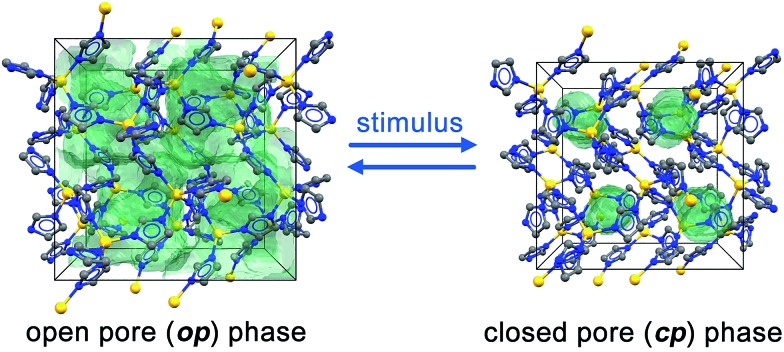
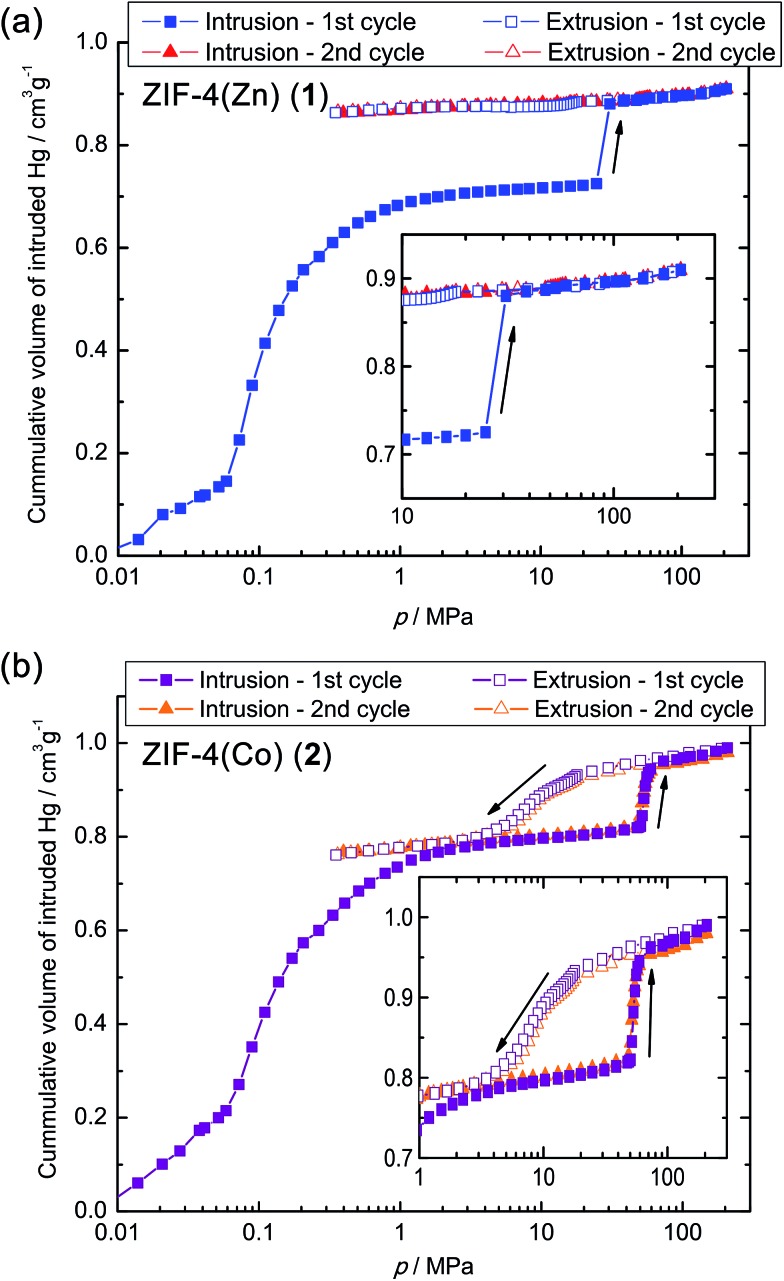
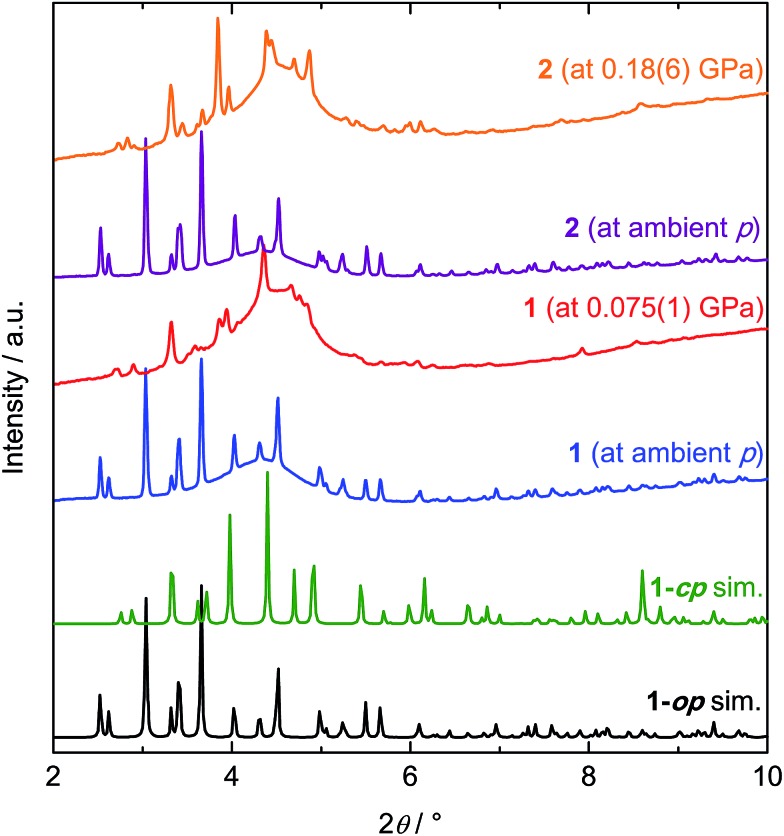
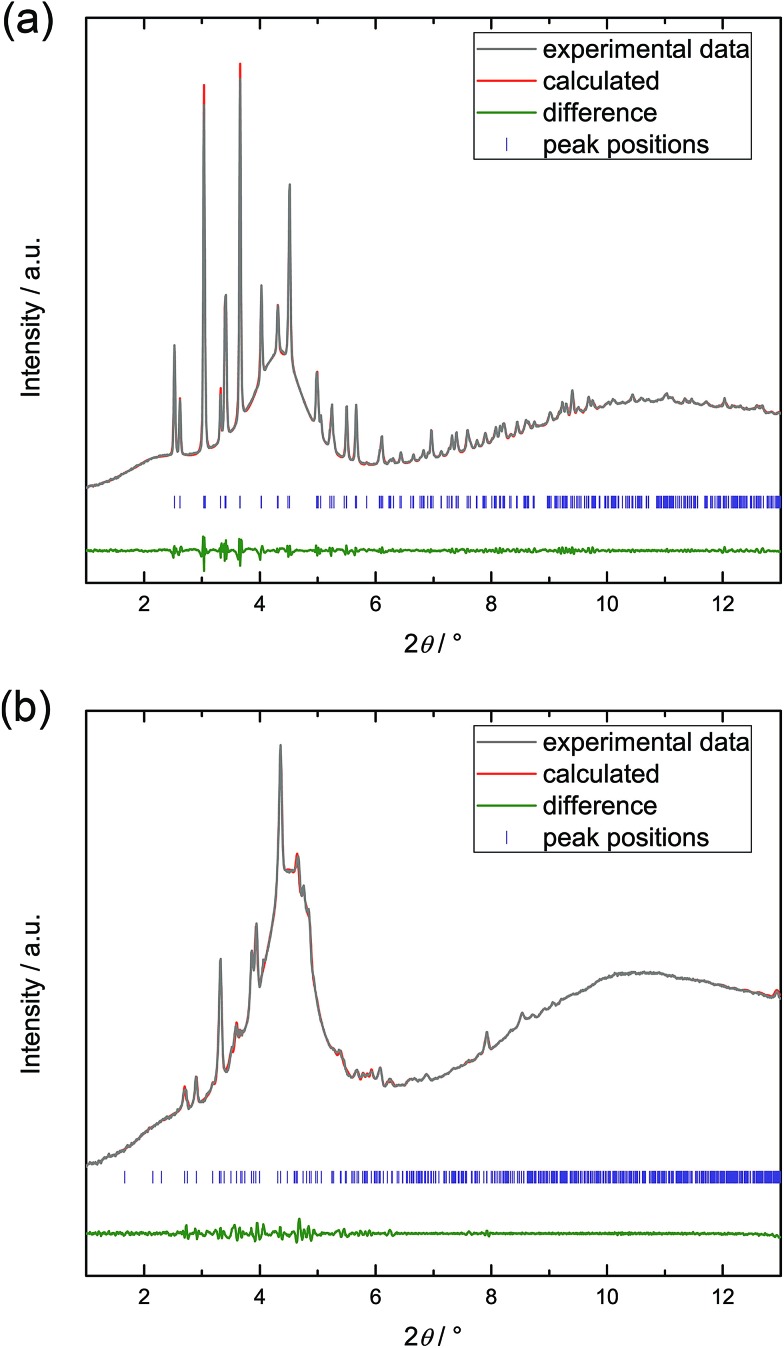
We investigate the pressure-dependent mechanical behaviour of the zeolitic imidazolate framework ZIF-4 (M(im); M = Co or Zn, im = imidazolate) with high pressure, synchrotron powder X-ray diffraction and mercury intrusion measurements. A displacive phase transition from a highly compressible open pore () phase with continuous porosity (space group , bulk modulus ∼1.4 GPa) to a closed pore () phase with inaccessible porosity (space group 2/, bulk modulus ∼3.3-4.9 GPa) is triggered by the application of mechanical pressure. Over the course of the transitions, both ZIF-4 materials contract by about 20% in volume. However, the threshold pressure, the reversibility and the immediate repeatability of the phase transition depend on the metal cation. ZIF-4(Zn) undergoes the phase transition at a hydrostatic mechanical pressure of only 28 MPa, while ZIF-4(Co) requires about 50 MPa to initiate the transition. Interestingly, ZIF-4(Co) fully returns to the phase after decompression, whereas ZIF-4(Zn) remains in the phase after pressure release and requires subsequent heating to switch back to the phase. These variations in high pressure behaviour can be rationalised on the basis of the different electron configurations of the respective M ions (3d for Zn and 3d for Co). Our results present the first examples of phase transitions ( breathing transitions) of ZIFs driven by mechanical pressure and suggest potential applications of these functional materials as shock absorbers, nanodampers, or in mechanocalorics.
我们通过高压、同步辐射粉末X射线衍射和压汞测量研究了沸石咪唑酯骨架ZIF-4(M(im);M = Co或Zn,im = 咪唑酯)的压力依赖性力学行为。施加机械压力会引发从具有连续孔隙率(空间群 ,体模量约1.4 GPa)的高度可压缩开孔()相到具有不可达孔隙率(空间群2/,体模量约3.3 - 4.9 GPa)的闭孔()相的位移相变。在转变过程中,两种ZIF-4材料的体积均收缩约20%。然而,相变的阈值压力、可逆性和立即重复性取决于金属阳离子。ZIF-4(Zn)在仅28 MPa的静水压力下发生 相变,而ZIF-4(Co)需要约50 MPa才能引发转变。有趣的是,ZIF-4(Co)减压后完全恢复到 相,而ZIF-4(Zn)在压力释放后仍保留在 相,需要随后加热才能切换回 相。基于各自M离子(Zn为3d,Co为3d)的不同电子构型,可以合理解释这些高压行为的变化。我们的结果展示了由机械压力驱动的ZIFs的 相变(呼吸转变)的首个实例,并暗示了这些功能材料作为减震器、纳米阻尼器或用于机械热学的潜在应用。