Department of Internal Medicine III, Cardiology and Angiology, Medical University of Innsbruck, Anichstr. 35, 6020, Innsbruck, Austria.
Reha Zentrum Muenster and Karl Landsteiner Institute for Interdisciplinary Rehabilitation, Tyrol, Austria.
Clin Res Cardiol. 2018 Oct;107(10):881-886. doi: 10.1007/s00392-018-1257-8. Epub 2018 Apr 19.
OBJECTIVES/BACKGROUND: To assess brake reaction time (BRT; key factor in driving ability) in patients receiving transfemoral coronary angiography (CAG). We assumed that patients would have a significantly impaired BRT after the procedure.
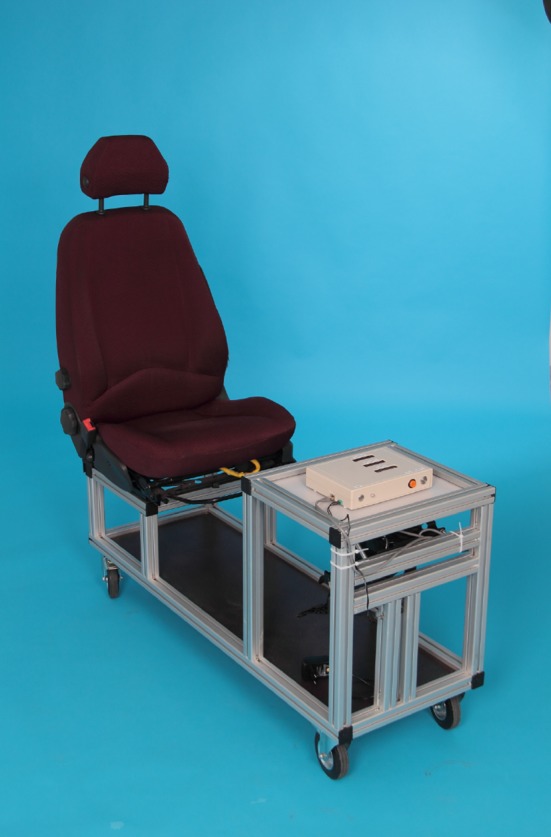
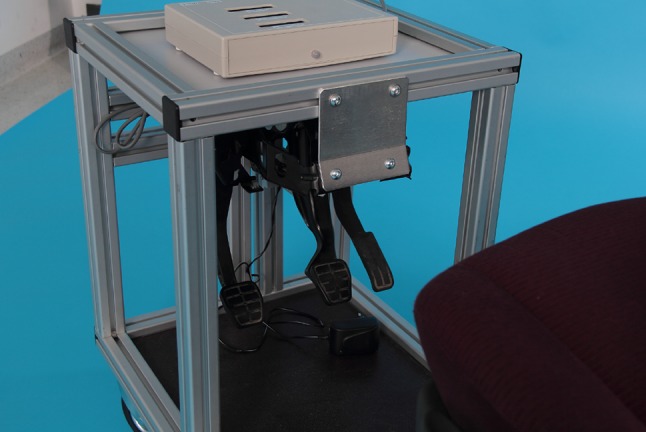
A prospective, observational study design was applied. Consecutive patients undergoing right-sided transfemoral CAG as part of the clinical routine were included. An experimental driving simulator was used to determine BRT after receiving a visual stimulus. The subjects applied the brake with their right foot as quickly as possible when a red-light signal appeared. The time interval between stimulus and brake application was taken as BRT. In addition to the total BRT, also its components were determined: neurologic reaction time, foot transfer time and brake travel time. BRT was determined before and 1 day after CAG (pre-post comparison).
71 patients were included in the analysis (58 male, age 61 ± 9 years). Total BRT was 594 ± 188 and 591 ± 198 ms before and after the CAG procedure, respectively (p = 0.270). Similarly, also the BRT components 'foot transfer time' and 'brake travel time' did not show significant differences between the two test occasions. However, neurologic reaction time decreased from 269 ± 67 to 255 ± 64 ms (p = 0.036).
We found no impairment of BRT on the first day after puncture of the right-sided femoral artery in patients undergoing CAG. Therefore, with regard to BRT, it is regarded safe to resume driving from day 1 after CAG. Other factors of driving safety beyond BRT must also be considered.
目的/背景:评估接受经股冠状动脉造影(CAG)患者的制动反应时间(BRT;驾驶能力的关键因素)。我们假设患者在手术后的 BRT 会显著受损。
采用前瞻性、观察性研究设计。纳入连续接受右侧股动脉 CAG 的患者,作为临床常规的一部分。使用实验性驾驶模拟器在接收到视觉刺激后确定 BRT。当出现红灯信号时,受试者用右脚尽快踩下刹车。从刺激到刹车应用的时间间隔被视为 BRT。除了总 BRT 外,还确定了其组成部分:神经反应时间、脚移时间和刹车行程时间。在 CAG 前后(术前术后比较)测定 BRT。
71 例患者纳入分析(58 例男性,年龄 61±9 岁)。总 BRT 分别为 CAG 前后的 594±188ms 和 591±198ms(p=0.270)。同样,BRT 组成部分“脚移时间”和“刹车行程时间”在两个测试时间点之间也没有显著差异。然而,神经反应时间从 269±67ms 下降至 255±64ms(p=0.036)。
我们发现接受 CAG 的患者右侧股动脉穿刺后第一天的 BRT 没有受损。因此,从 CAG 后第一天起,恢复驾驶被认为是安全的,BRT 以外的其他驾驶安全因素也必须考虑。