Department of Clinical Medicine (K1), University of Bergen, Bergen, Norway.
Department of Neurology, Haukeland University Hospital, Bergen, Norway.
Neuropathol Appl Neurobiol. 2019 Feb;45(2):141-156. doi: 10.1111/nan.12492. Epub 2018 May 24.
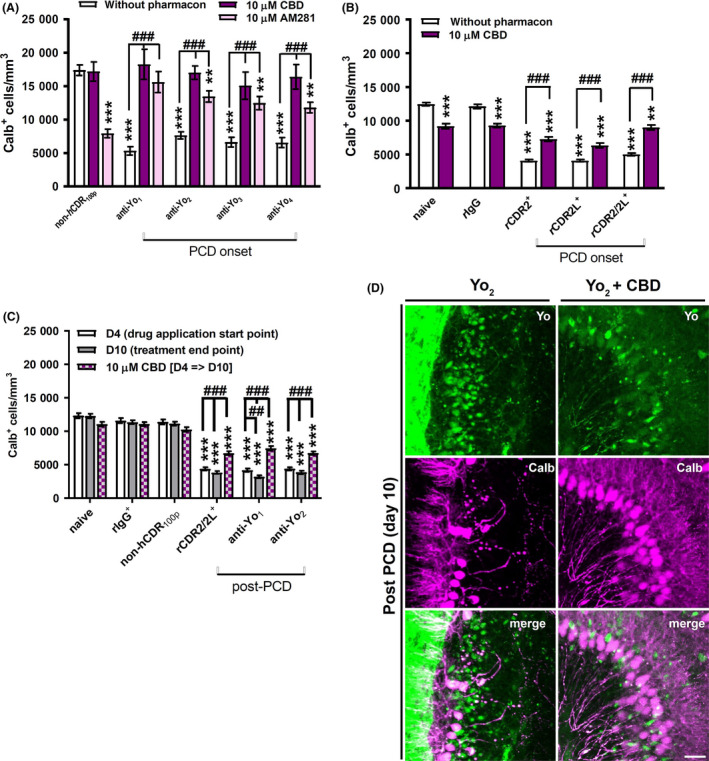
Neurodegeneration is associated with dysfunction of calcium buffering capacity and thereby sustained cellular and mitochondrial calcium overload. Paraneoplastic cerebellar degeneration (PCD), characterized by progressive Purkinje neurone degeneration following paraneoplastic Yo antibody internalization and binding to cerebellar degeneration-related protein CDR2 and CDR2L, has been linked to intracellular calcium homeostasis imbalance due to calbindin D malfunction. Therefore, we hypothesized that Yo antibody internalization affects not only calbindin calcium binding capacity, but also calcium-sensitive mitochondrial-associated signalling, causing mitochondrial calcium overload and thereby Purkinje neurone death.
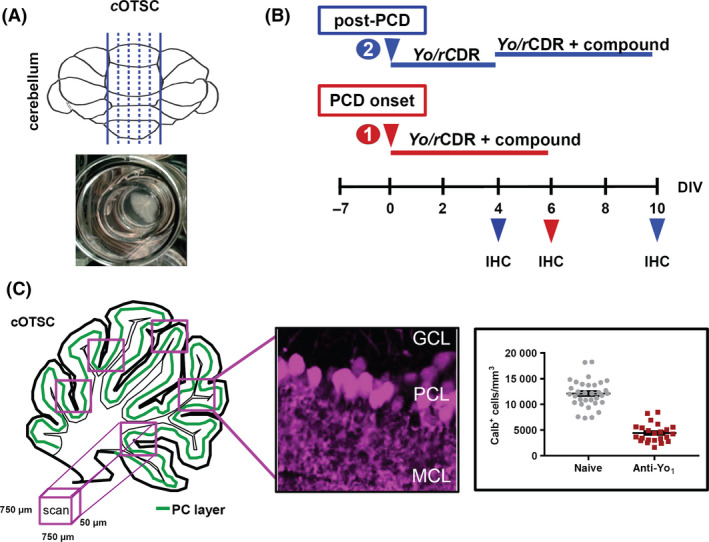
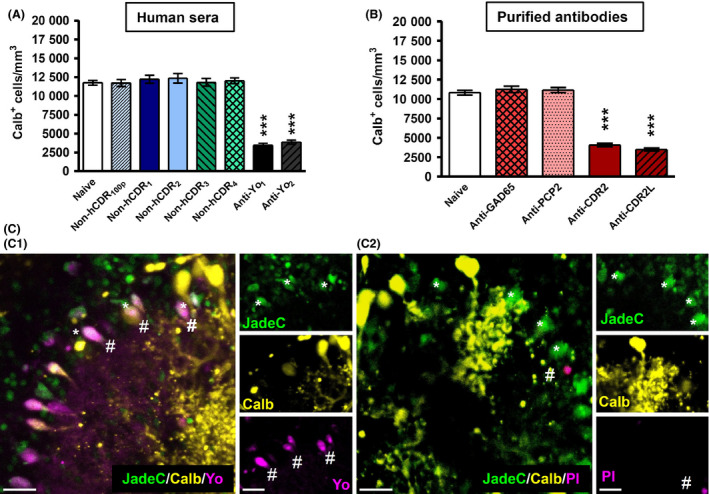
Immunohistochemically, we evaluated cerebellar organotypic slice cultures of rat brains after inducing PCD through the application of Yo antibody-positive PCD patient sera or purified antibodies against CDR2 and CDR2L how pharmacologically biased mitochondrial signalling affected PCD pathology.
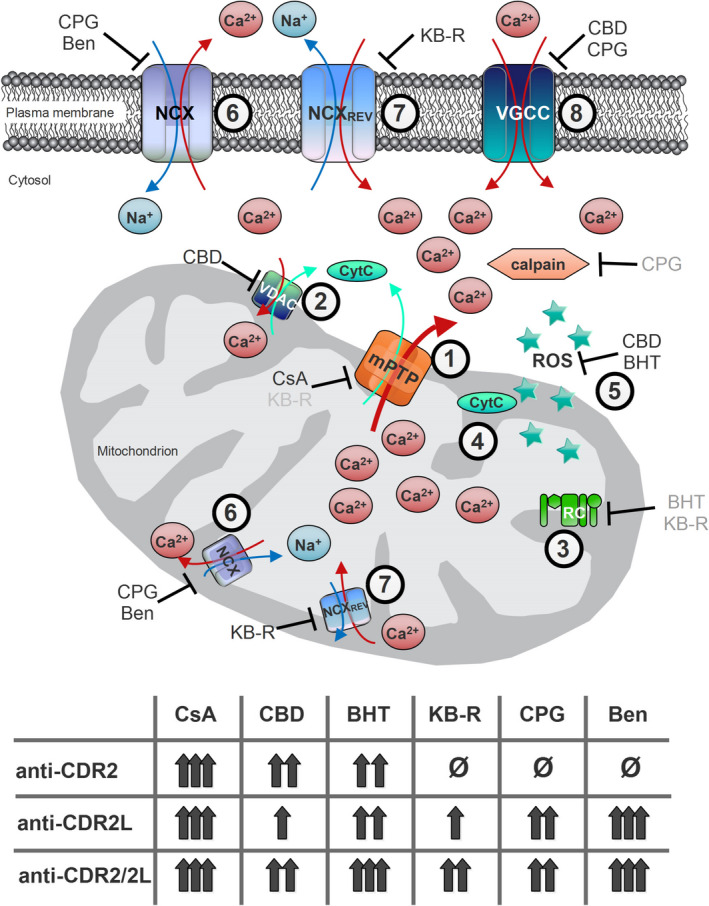
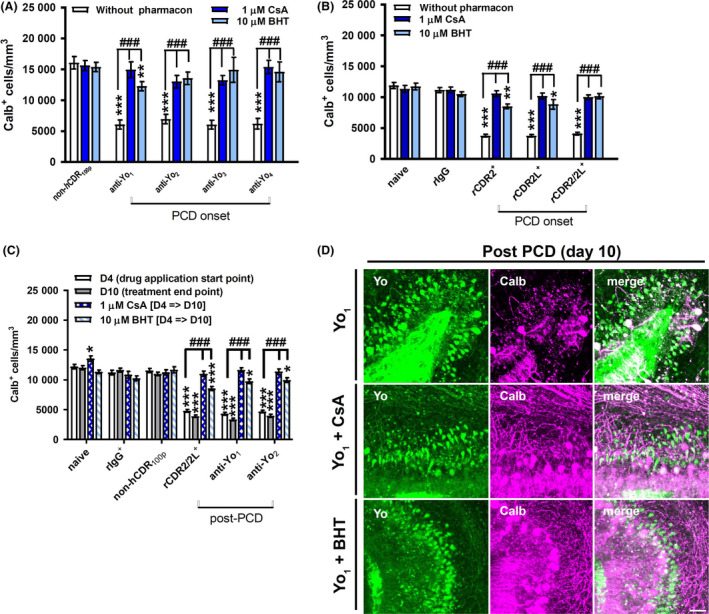
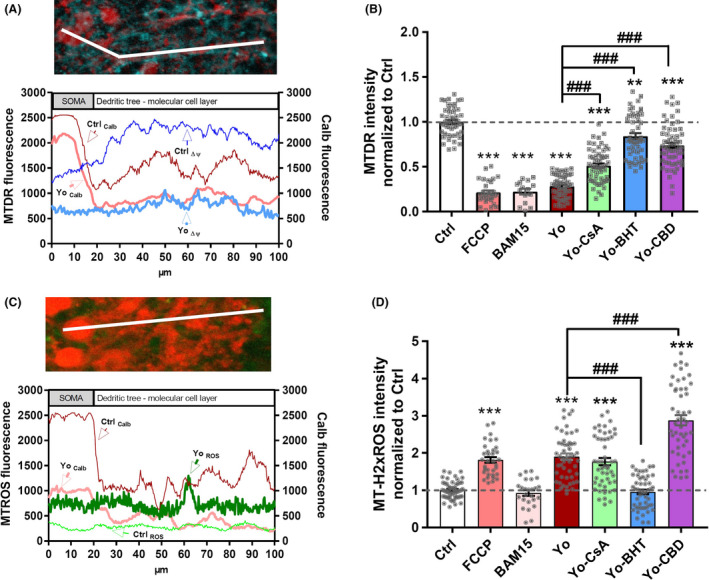
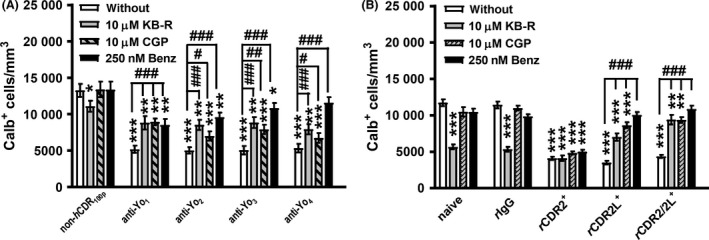
We found that Yo antibody internalization into Purkinje neurons caused depletion of Purkinje neurone calbindin-immunoreactivity, cannabinoid 1 receptor over-activation and alterations in the actions of the mitochondria permeability transition pore (MPTP), voltage-dependent anion channels, reactive oxygen species (ROS) and Na /Ca exchangers (NCX). The pathological mechanisms caused by Yo antibody binding to CDR2 or CDR2L differed between the two targets. Yo-CDR2 binding did not alter the mitochondrial calcium retention capacity, cyclophilin D-independent opening of MPTP or activity of NCX.
These findings suggest that minimizing intracellular calcium overload toxicity either directly with cyclosporin-A or indirectly with cannabidiol or the ROS scavenger butylated hydroxytoluene promotes mitochondrial calcium homeostasis and may therefore be used as future neuroprotective therapy for PCD patients.
神经退行性变与钙缓冲能力的功能障碍有关,从而导致细胞和线粒体钙超载持续存在。副肿瘤性小脑变性(PCD)的特征是在副肿瘤性 Yo 抗体内化并与小脑变性相关蛋白 CDR2 和 CDR2L 结合后,进行性浦肯野神经元变性,已与细胞内钙动态平衡失衡有关,原因是钙结合蛋白 D 功能障碍。因此,我们假设 Yo 抗体内化不仅会影响钙结合蛋白的钙结合能力,还会影响钙敏感的线粒体相关信号转导,导致线粒体钙超载,从而导致浦肯野神经元死亡。
免疫组织化学方法,我们评估了大鼠脑小脑器官型切片培养物在应用 Yo 抗体阳性 PCD 患者血清或针对 CDR2 和 CDR2L 的纯化抗体诱导 PCD 后,药理学偏向的线粒体信号如何影响 PCD 病理学。
我们发现 Yo 抗体内化到浦肯野神经元中会导致浦肯野神经元钙结合蛋白免疫反应性耗竭,大麻素 1 型受体过度激活以及线粒体通透性转换孔(MPTP)、电压依赖性阴离子通道、活性氧(ROS)和 Na / Ca 交换器(NCX)的作用改变。Yo 抗体与 CDR2 或 CDR2L 结合引起的病理机制在两个靶标之间有所不同。Yo-CDR2 结合不会改变线粒体钙保留能力、亲环素 D 非依赖性 MPTP 开放或 NCX 活性。
这些发现表明,直接用环孢素 A 或间接用大麻素或 ROS 清除剂丁羟甲苯最小化细胞内钙超载毒性可促进线粒体钙动态平衡,因此可作为 PCD 患者未来的神经保护治疗方法。