Velayutham Murugesan, Cardounel Arturo J, Liu Zhenguo, Ilangovan Govindasamy
Center for Biomedical EPR Spectroscopy and Imaging, The Ohio State University, Columbus, OH, United States.
Department of Anesthesiology, Wexner Medical Center, The Ohio State University, Columbus, OH, United States.
Front Oncol. 2018 Apr 6;8:97. doi: 10.3389/fonc.2018.00097. eCollection 2018.
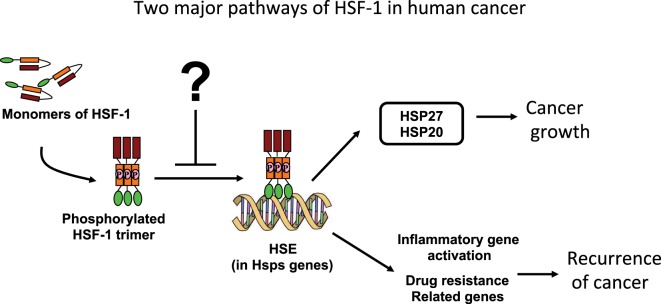
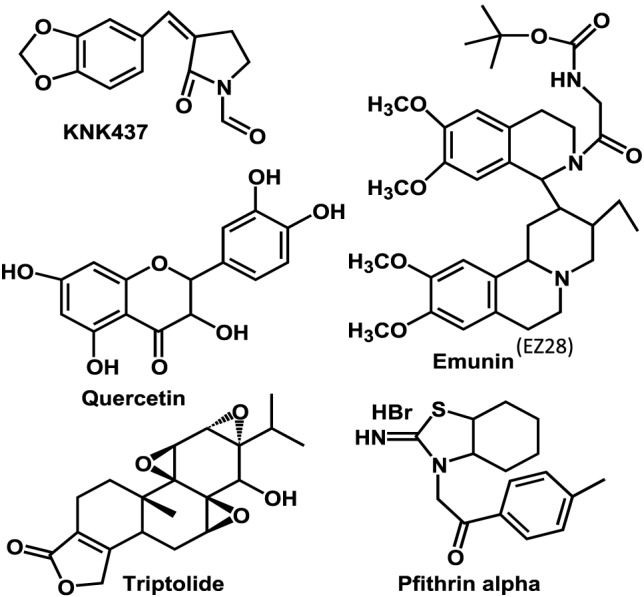
Heat-shock factor-1 (HSF-1) is an important transcription factor that regulates pathogenesis of many human diseases through its extensive transcriptional regulation. Especially, it shows pleiotropic effects in human cancer, and hence it has recently received increased attention of cancer researchers. After myriad investigations on HSF-1, the field has advanced to the phase where there is consensus that finding a potent and selective pharmacological inhibitor for this transcription factor will be a major break-through in the treatment of various human cancers. Presently, all reported inhibitors have their limitations, made evident at different stages of clinical trials. This brief account summarizes the advances with tested natural products as HSF-1 inhibitors and highlights the necessity of phytochemistry in this endeavor of discovering a potent pharmacological HSF-1 inhibitor.
热休克因子-1(HSF-1)是一种重要的转录因子,通过广泛的转录调控来调节多种人类疾病的发病机制。特别是,它在人类癌症中表现出多效性作用,因此最近受到癌症研究人员越来越多的关注。在对HSF-1进行了大量研究之后,该领域已发展到这样一个阶段,即人们达成共识,找到一种针对该转录因子的有效且选择性的药理抑制剂将是治疗各种人类癌症的一项重大突破。目前,所有报道的抑制剂都有其局限性,这在临床试验的不同阶段都很明显。本简要综述总结了作为HSF-1抑制剂的经过测试的天然产物的研究进展,并强调了植物化学在发现一种有效的HSF-1药理抑制剂这一努力中的必要性。