Reilly Michael P, Weeks Connor D, Crews David, Gore Andrea C
Division of Pharmacology and Toxicology, College of Pharmacy, The University of Texas at Austin.
College of Natural Sciences, The University of Texas at Austin.
J Comp Psychol. 2018 Aug;132(3):253-267. doi: 10.1037/com0000103. Epub 2018 Apr 23.
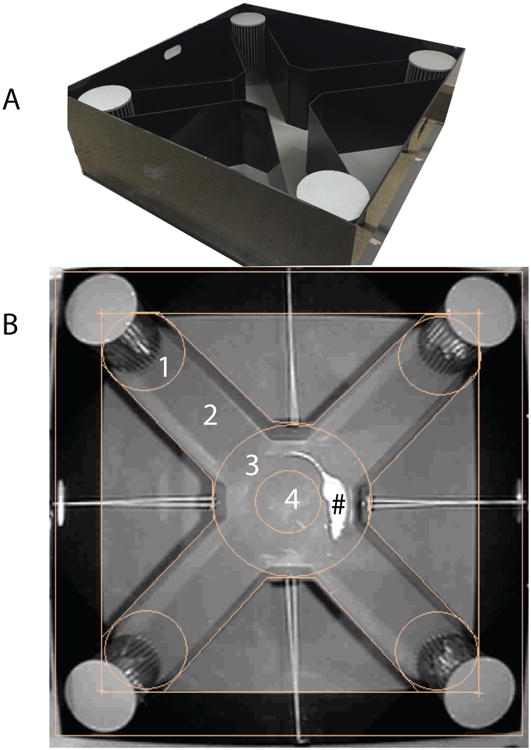
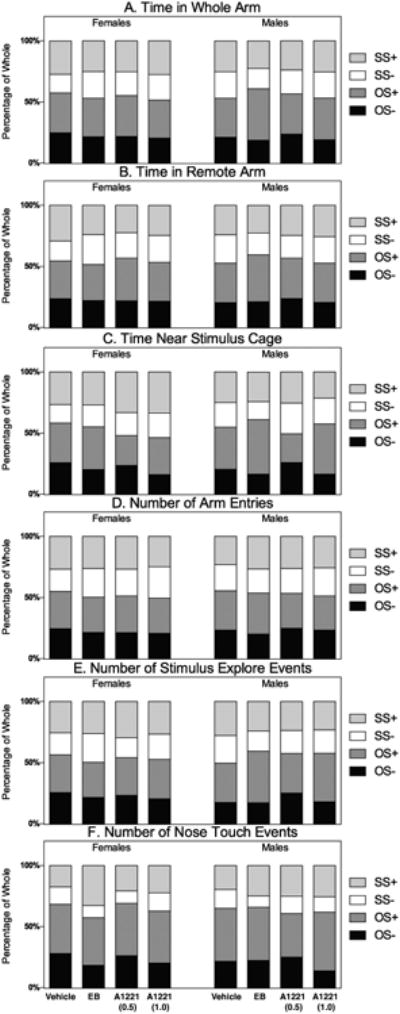
Endocrine-disrupting chemical (EDC) exposures during critical periods of gestation cause long-lasting behavioral effects, presumably by disturbing hormonal organization of the brain. Among such EDCs are polychlorinated biphenyls (PCBs), a class of industrial chemicals. PCB exposure in utero leads to alterations in mating behaviors and other sexually dimorphic social interactions in rats. Many of the previous studies on social behavior gave the experimental animal a single or binary choice. This study applied a more complex behavioral apparatus, an X-shaped Plexiglas apparatus (FourPlex), that enabled an experimental animal exposed to PCBs or a vehicle to distinguish and choose among 4 stimulus animals of the same or opposite sex, and of different hormonal status. We found that rats were able to differentiate among the stimuli in the FourPlex and showed the expected preference for an opposite sex, hormone-treated rat, particularly for behaviors conducted in proximity. Prenatal treatment caused subtle shifts in behavior toward stimulus rats in the FourPlex; more robust effects were seen for the sexual dimorphisms in behavior. Importantly, the results differ from our previous results of a simple binary choice model, showing that how an animal behaves in a more complex social paradigm does not predict the outcome in a simple choice model, and vice versa. (PsycINFO Database Record
在妊娠期的关键时期接触内分泌干扰化学物(EDC)会导致长期的行为影响,这可能是由于干扰了大脑的激素组织。这类EDC中包括多氯联苯(PCBs),一种工业化学品。子宫内接触多氯联苯会导致大鼠的交配行为和其他性别二态性社会互动发生改变。之前许多关于社会行为的研究让实验动物进行单一或二元选择。本研究应用了一种更复杂的行为装置,即一个X形有机玻璃装置(四向装置),它能让接触多氯联苯或载体的实验动物在4只同性或异性、不同激素状态的刺激动物之间进行区分和选择。我们发现大鼠能够在四向装置中区分刺激物,并表现出对异性、经激素处理的大鼠的预期偏好,尤其是在近距离进行的行为中。产前处理导致在四向装置中对刺激大鼠的行为发生微妙变化;行为中的性别二态性表现出更明显的影响。重要的是,这些结果与我们之前在简单二元选择模型中的结果不同,表明动物在更复杂社会范式中的行为方式并不能预测其在简单选择模型中的结果,反之亦然。(《心理学文摘数据库记录》 )