Scientific Laboratory of Molecular Genetics, Riga Stradins University, Dzirciema street 16, Riga, LV-1007, Latvia.
Centre of Genetics, "IVF Riga" Reproductive Genetics Clinic, Riga, LV-1010, Latvia.
J Assist Reprod Genet. 2018 Aug;35(8):1457-1472. doi: 10.1007/s10815-018-1187-4. Epub 2018 Apr 23.
To compare multiple displacement amplification and OmniPlex whole genome amplification technique performance during array comparative genome hybridization (aCGH), Sanger sequencing, SNaPshot and fragment size analysis downstream applications in frame of multifactor embryo preimplantation genetic testing.
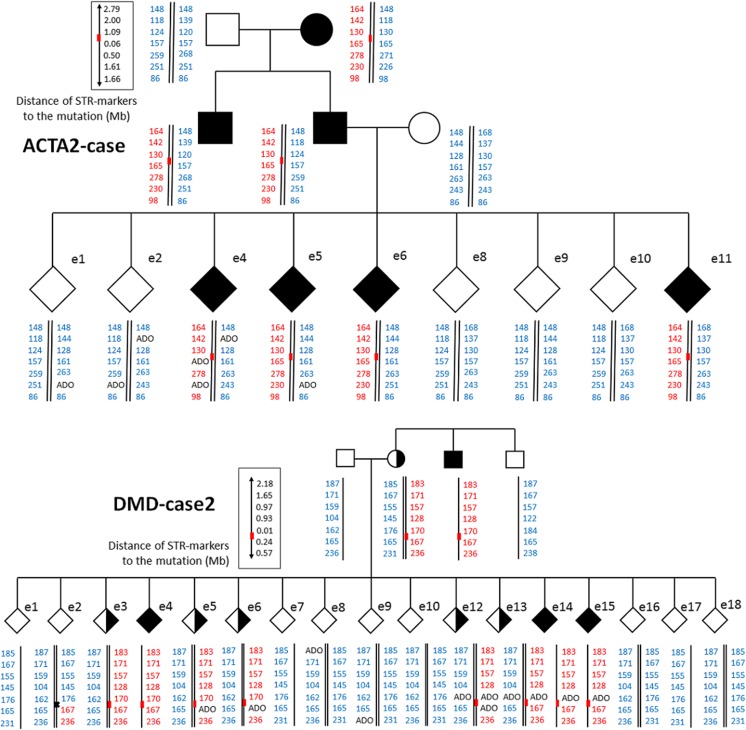
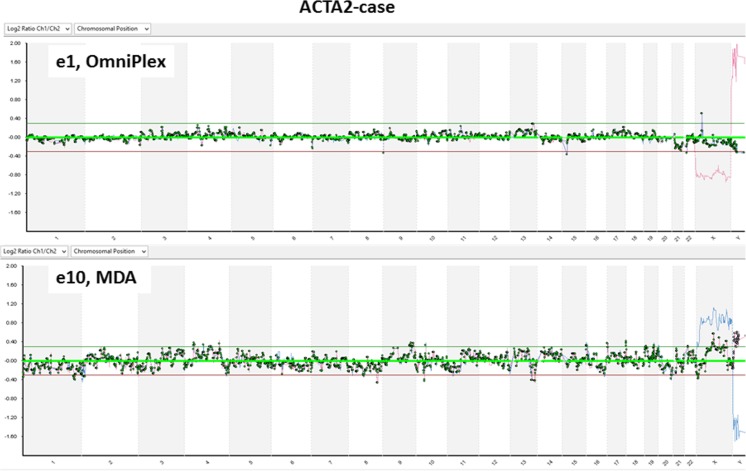
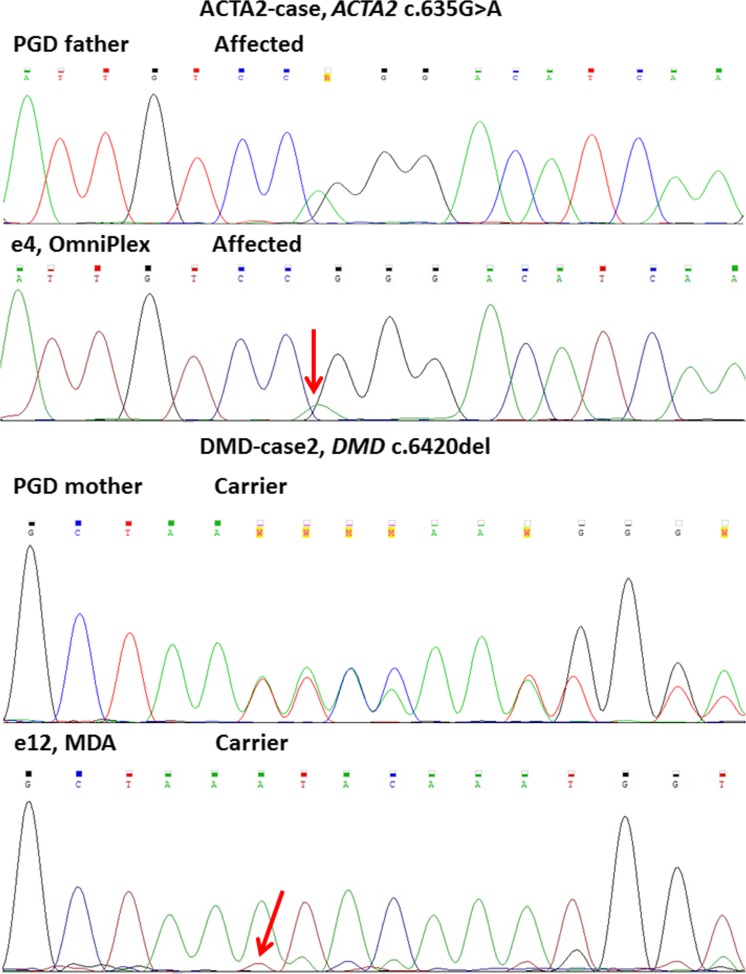
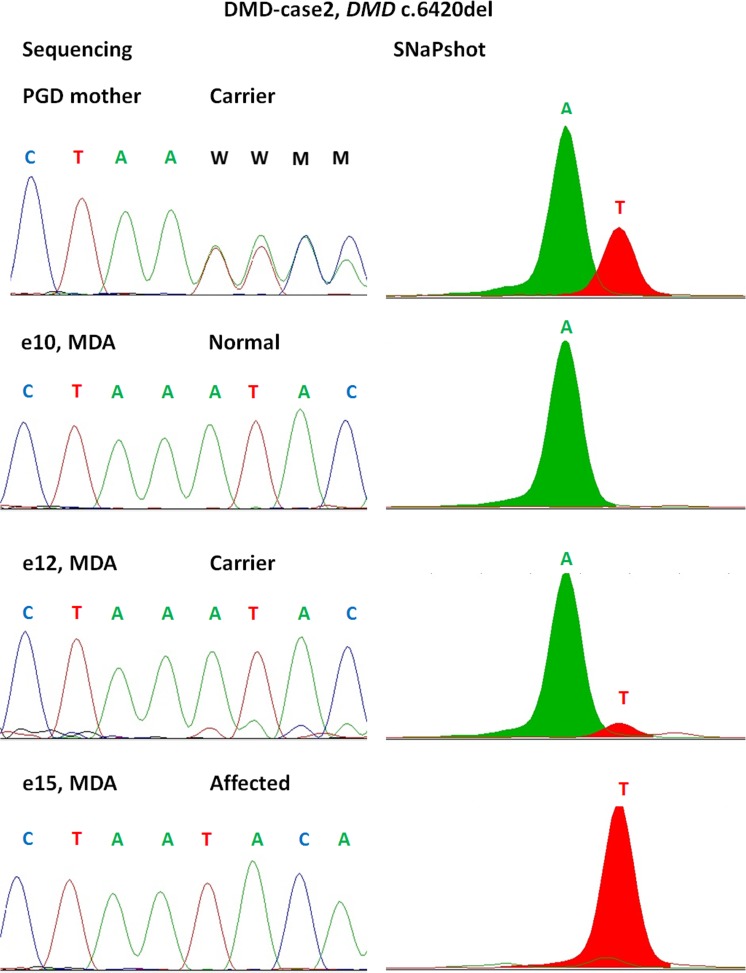
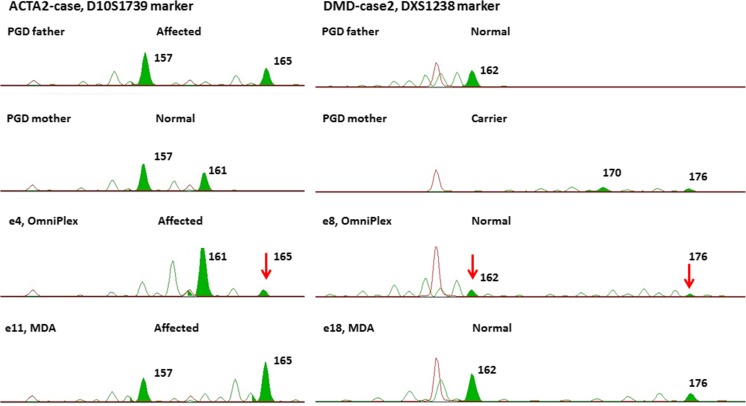
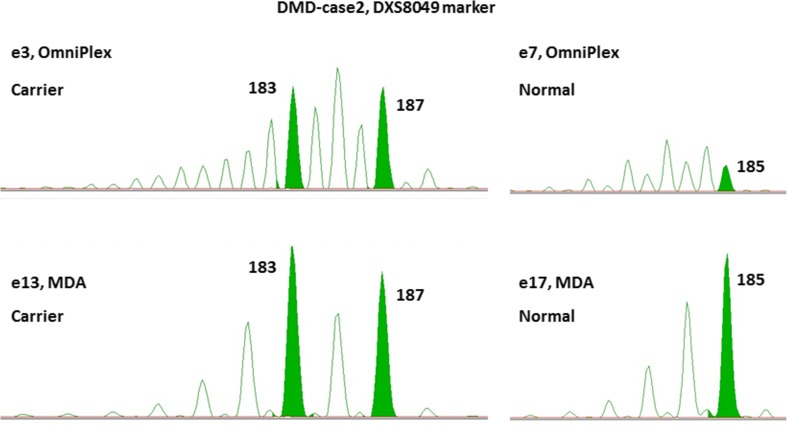
Preclinical workup included linked short tandem repeat (STR) marker selection and primer design for loci of interest. It was followed by a family haplotyping, after which an in vitro fertilization preimplantation genetic testing (IVF-PGT) cycle was carried out. A total of 62 embryos were retrieved from nine couples with a confirmed single gene disorder being transmitted in their family with various inheritance traits-autosomal dominant (genes-ACTA2, HTT, KRT14), autosomal recessive (genes-ALOX12B, TPP1, GLB1) and X-linked (genes-MTM1, DMD). Whole genome amplification (WGA) for the day 5 embryo trophectoderm single biopsies was carried out by multiple displacement amplification (MDA) or polymerase chain reaction (PCR)-based technology OmniPlex and was used for direct (Sanger sequencing, fragment size analysis, SNaPshot) and indirect mutation assessment (STR marker haplotyping), and embryo aneuploidy testing by array comparative genome hybridization (aCGH).
Family haplotyping revealed informative/semi-informative microsatellite markers for all clinical cases for all types of inheritance. Indirect testing gave a persuasive conclusion for all embryos assessed, which was confirmed through direct testing. The overall allele dropout (ADO) rate was higher for PCR-based WGA, and MDA shows a better genomic recovery scale. Five euploid embryos were subjected to elective single embryo transfer (eSET), which resulted in four clinical pregnancies and birth of two healthy children, which proved free of disease causative variants running in the family postnataly.
A developed multifactor PGT protocol can be adapted and applied to virtually any genetic condition and is capable of improving single gene disorder preimplantation genetic testing in a patient-tailored manner thus increasing pregnancy rates, saving costs and increasing patient reliability.
比较多重置换扩增和 OmniPlex 全基因组扩增技术在阵列比较基因组杂交(aCGH)、Sanger 测序、SNaPshot 和片段大小分析下游应用中的性能,这些应用是在多因素胚胎植入前遗传检测的框架内进行的。
临床前工作包括选择连锁短串联重复(STR)标记和对感兴趣的基因座进行引物设计。随后进行家族单体型分析,然后进行体外受精植入前遗传检测(IVF-PGT)周期。从 9 对夫妇中获得了 62 个胚胎,这些夫妇的家族中存在已知的单基因疾病,具有不同的遗传特征-常染色体显性(基因-ACTA2、HTT、KRT14)、常染色体隐性(基因-ALOX12B、TPP1、GLB1)和 X 连锁(基因-MTM1、DMD)。对第 5 天胚胎滋养外胚层的单个活检进行全基因组扩增(WGA),采用多重置换扩增(MDA)或基于聚合酶链反应(PCR)的 OmniPlex 技术进行,用于直接(Sanger 测序、片段大小分析、SNaPshot)和间接突变评估(STR 标记单体型分析),以及通过阵列比较基因组杂交(aCGH)进行胚胎非整倍体检测。
家族单体型分析为所有类型遗传的所有临床病例提供了信息/半信息微卫星标记。间接检测对所有评估的胚胎都得出了有说服力的结论,该结论通过直接检测得到了证实。基于 PCR 的 WGA 的总体等位基因缺失(ADO)率较高,而 MDA 显示出更好的基因组回收规模。对 5 个正常胚胎进行选择性单胚胎移植(eSET),导致 4 例临床妊娠和 2 例健康婴儿出生,这证明了出生后家族中不存在致病变异。
开发的多因素 PGT 方案可以适应并应用于几乎任何遗传条件,并能够以患者为中心的方式改善单基因疾病植入前遗传检测,从而提高妊娠率、降低成本并提高患者的可靠性。