Department of Systems Design Engineering, University of Waterloo, Waterloo, ON N2L 3G1, Canada.
Centre for Rehabilitation Research and Development, Ottawa Hospital Research Institute, Ottawa, ON K1H 8M2, Canada.
Sensors (Basel). 2018 Apr 21;18(4):1275. doi: 10.3390/s18041275.
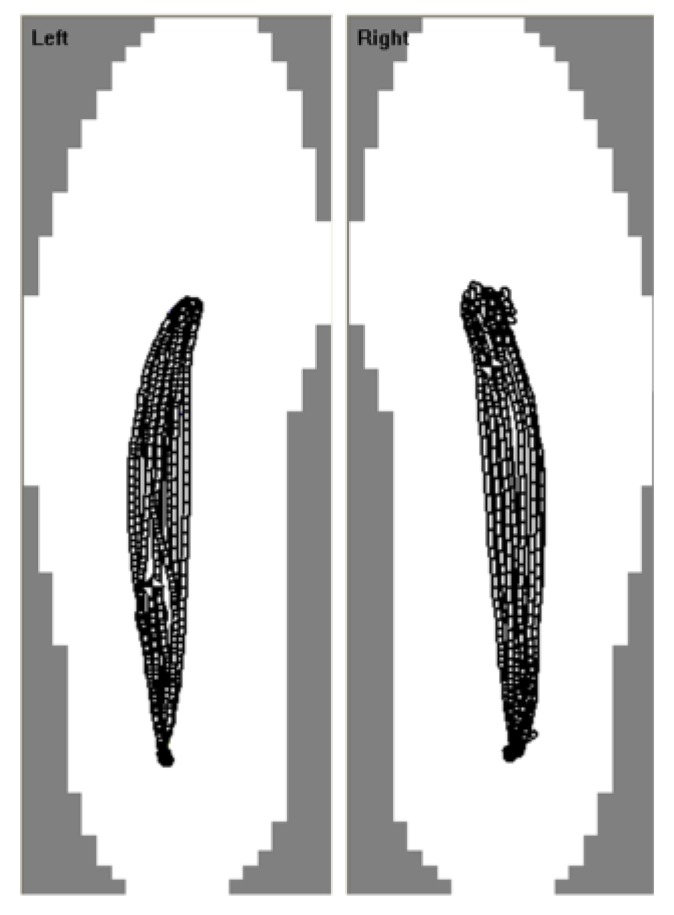
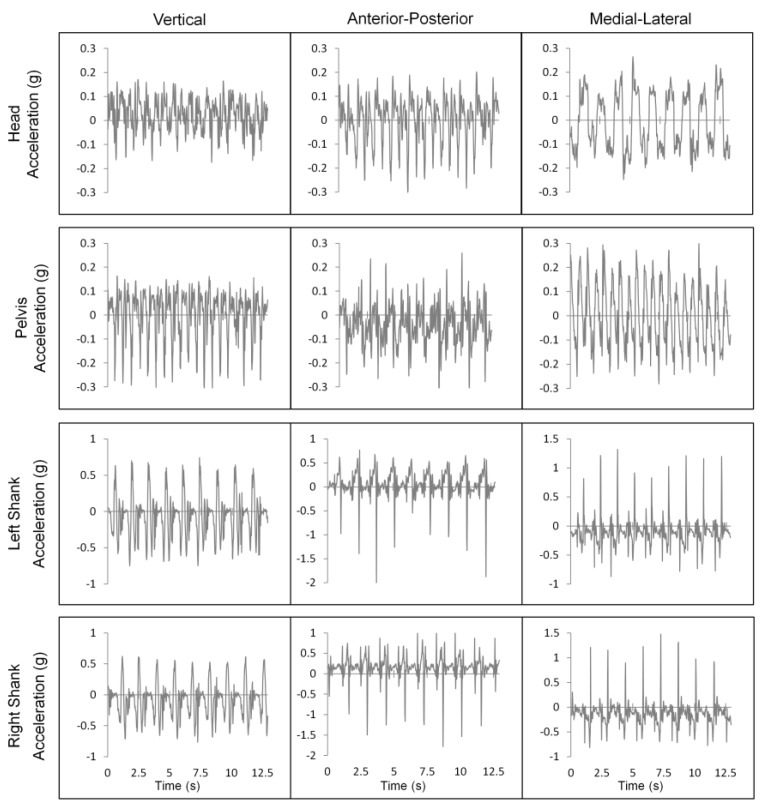
Wearable sensors could facilitate point of care, clinically feasible assessments of dynamic stability and associated fall risk through an assessment of single-task (ST) and dual-task (DT) walking. This study investigated gait changes between ST and DT walking and between older adult prospective fallers and non-fallers. The results were compared to a study based on retrospective fall occurrence. Seventy-five individuals (75.2 ± 6.6 years; 47 non-fallers, 28 fallers; 6 month prospective fall occurrence) walked 7.62 m under ST and DT conditions while wearing pressure-sensing insoles and accelerometers at the head, pelvis, and on both shanks. DT-induced gait changes included changes in temporal measures, centre of pressure (CoP) path stance deviations and coefficient of variation, acceleration descriptive statistics, Fast Fourier Transform (FFT) first quartile, ratio of even to odd harmonics, and maximum Lyapunov exponent. Compared to non-fallers, prospective fallers had significantly lower DT anterior⁻posterior CoP path stance coefficient of variation, DT head anterior⁻posterior FFT first quartile, ST left shank medial⁻lateral FFT first quartile, and ST right shank superior maximum acceleration. DT-induced gait changes were consistent regardless of faller status or when the fall occurred (retrospective or prospective). Gait differences between fallers and non-fallers were dependent on retrospective or prospective faller identification.
可穿戴传感器可以通过评估单任务 (ST) 和双任务 (DT) 行走,促进即时、临床可行的动态稳定性评估和相关跌倒风险评估。本研究调查了 ST 和 DT 行走以及老年潜在跌倒者和非跌倒者之间的步态变化。结果与基于回顾性跌倒发生的研究进行了比较。75 名个体(75.2 ± 6.6 岁;47 名非跌倒者,28 名跌倒者;6 个月前瞻性跌倒发生)在穿着压力感应鞋垫和头部、骨盆以及两个小腿上的加速度计的情况下,在 ST 和 DT 条件下行走 7.62 米。DT 引起的步态变化包括时间测量、压力中心 (CoP) 路径站立偏差和变异系数、加速度描述性统计、快速傅里叶变换 (FFT) 第一四分位数、偶数到奇数谐波比以及最大 Lyapunov 指数的变化。与非跌倒者相比,潜在跌倒者的 DT 前后 CoP 路径站立变异系数、DT 头前后 FFT 第一四分位数、ST 左小腿内侧-外侧 FFT 第一四分位数和 ST 右小腿上最大加速度明显较低。无论跌倒者状态如何,或者跌倒是回顾性还是前瞻性发生,DT 引起的步态变化都是一致的。跌倒者和非跌倒者之间的步态差异取决于回顾性或前瞻性跌倒者的识别。