• 文献检索
  • 文档翻译
  • 深度研究
  • 学术资讯
  • Suppr Zotero 插件Zotero 插件
  • 邀请有礼
  • 套餐&价格
  • 历史记录
应用&插件
Suppr Zotero 插件Zotero 插件浏览器插件Mac 客户端Windows 客户端微信小程序
定价
高级版会员购买积分包购买API积分包
服务
文献检索文档翻译深度研究API 文档MCP 服务
关于我们
关于 Suppr公司介绍联系我们用户协议隐私条款
关注我们

Suppr 超能文献

核心技术专利:CN118964589B侵权必究
粤ICP备2023148730 号-1Suppr @ 2026

文献检索

告别复杂PubMed语法,用中文像聊天一样搜索,搜遍4000万医学文献。AI智能推荐,让科研检索更轻松。

立即免费搜索

文件翻译

保留排版,准确专业,支持PDF/Word/PPT等文件格式,支持 12+语言互译。

免费翻译文档

深度研究

AI帮你快速写综述,25分钟生成高质量综述,智能提取关键信息,辅助科研写作。

立即免费体验

一种基于表面肌电技术的可穿戴步态阶段检测系统。

A Wearable Gait Phase Detection System Based on Force Myography Techniques.

作者信息

Jiang Xianta, Chu Kelvin H T, Khoshnam Mahta, Menon Carlo

机构信息

MENRVA lab, Schools of Mechatronic Systems and Engineering Science, Simon Fraser University, Metro Vancouver, BC V5A 1S6, Canada.

出版信息

Sensors (Basel). 2018 Apr 21;18(4):1279. doi: 10.3390/s18041279.

DOI:10.3390/s18041279
PMID:29690532
原文链接:https://pmc.ncbi.nlm.nih.gov/articles/PMC5948944/
Abstract

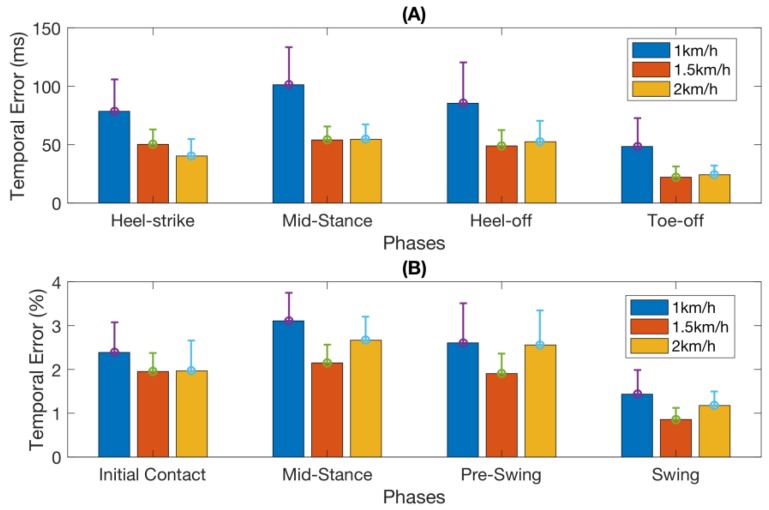
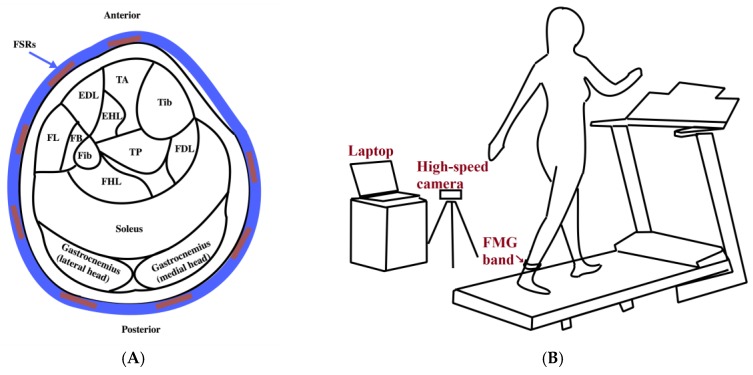
(1) Background: Quantitative evaluation of gait parameters can provide useful information for constructing individuals’ gait profile, diagnosing gait abnormalities, and better planning of rehabilitation schemes to restore normal gait pattern. Objective determination of gait phases in a gait cycle is a key requirement in gait analysis applications; (2) Methods: In this study, the feasibility of using a force myography-based technique for a wearable gait phase detection system is explored. In this regard, a force myography band is developed and tested with nine participants walking on a treadmill. The collected force myography data are first examined sample-by-sample and classified into four phases using Linear Discriminant Analysis. The gait phase events are then detected from these classified samples using a set of supervisory rules; (3) Results: The results show that the force myography band can correctly detect more than 99.9% of gait phases with zero insertions and only four deletions over 12,965 gait phase segments. The average temporal error of gait phase detection is 55.2 ms, which translates into 2.1% error with respect to the corresponding labelled stride duration; (4) Conclusions: This proof-of-concept study demonstrates the feasibility of force myography techniques as viable solutions in developing wearable gait phase detection systems.

摘要

(1) 背景:步态参数的定量评估可为构建个体步态轮廓、诊断步态异常以及更好地规划恢复正常步态模式的康复方案提供有用信息。在步态分析应用中,客观确定步态周期中的步态阶段是一项关键要求;(2) 方法:在本研究中,探索了使用基于测力肌电图技术的可穿戴步态阶段检测系统的可行性。为此,开发了一个测力肌电图带,并在九名参与者在跑步机上行走时进行了测试。首先对收集到的测力肌电图数据逐样本进行检查,并使用线性判别分析将其分为四个阶段。然后使用一组监督规则从这些分类样本中检测步态阶段事件;(3) 结果:结果表明,测力肌电图带能够正确检测超过99.9%的步态阶段,在12965个步态阶段片段中零插入且仅四个删除。步态阶段检测的平均时间误差为55.2毫秒,相对于相应标记的步幅持续时间而言,这相当于2.1%的误差;(4) 结论:这项概念验证研究证明了测力肌电图技术作为开发可穿戴步态阶段检测系统可行解决方案的可行性。
https://cdn.ncbi.nlm.nih.gov/pmc/blobs/fef9/5948944/6ba7cad0767b/sensors-18-01279-g006.jpg
https://cdn.ncbi.nlm.nih.gov/pmc/blobs/fef9/5948944/3abb65d7136b/sensors-18-01279-g001a.jpg
https://cdn.ncbi.nlm.nih.gov/pmc/blobs/fef9/5948944/d4930f3f7b63/sensors-18-01279-g002.jpg
https://cdn.ncbi.nlm.nih.gov/pmc/blobs/fef9/5948944/ee4a62287c24/sensors-18-01279-g003.jpg
https://cdn.ncbi.nlm.nih.gov/pmc/blobs/fef9/5948944/dbe84800a078/sensors-18-01279-g004.jpg
https://cdn.ncbi.nlm.nih.gov/pmc/blobs/fef9/5948944/90ecbe117887/sensors-18-01279-g005.jpg
https://cdn.ncbi.nlm.nih.gov/pmc/blobs/fef9/5948944/6ba7cad0767b/sensors-18-01279-g006.jpg
https://cdn.ncbi.nlm.nih.gov/pmc/blobs/fef9/5948944/3abb65d7136b/sensors-18-01279-g001a.jpg
https://cdn.ncbi.nlm.nih.gov/pmc/blobs/fef9/5948944/d4930f3f7b63/sensors-18-01279-g002.jpg
https://cdn.ncbi.nlm.nih.gov/pmc/blobs/fef9/5948944/ee4a62287c24/sensors-18-01279-g003.jpg
https://cdn.ncbi.nlm.nih.gov/pmc/blobs/fef9/5948944/dbe84800a078/sensors-18-01279-g004.jpg
https://cdn.ncbi.nlm.nih.gov/pmc/blobs/fef9/5948944/90ecbe117887/sensors-18-01279-g005.jpg
https://cdn.ncbi.nlm.nih.gov/pmc/blobs/fef9/5948944/6ba7cad0767b/sensors-18-01279-g006.jpg

相似文献

1
A Wearable Gait Phase Detection System Based on Force Myography Techniques.一种基于表面肌电技术的可穿戴步态阶段检测系统。
Sensors (Basel). 2018 Apr 21;18(4):1279. doi: 10.3390/s18041279.
2
Wearable step counting using a force myography-based ankle strap.使用基于力肌电描记法的脚踝绑带进行可穿戴步数计数。
J Rehabil Assist Technol Eng. 2017 Dec 6;4:2055668317746307. doi: 10.1177/2055668317746307. eCollection 2017 Jan-Dec.
3
Recent Trends and Practices Toward Assessment and Rehabilitation of Neurodegenerative Disorders: Insights From Human Gait.神经退行性疾病评估与康复的最新趋势和实践:来自人类步态的见解
Front Neurosci. 2022 Apr 15;16:859298. doi: 10.3389/fnins.2022.859298. eCollection 2022.
4
Validation of an algorithm to assess regular and irregular gait using inertial sensors in healthy and stroke individuals.使用惯性传感器验证评估健康个体和脑卒中个体的正常和异常步态的算法。
PeerJ. 2023 Dec 15;11:e16641. doi: 10.7717/peerj.16641. eCollection 2023.
5
A New Force Myography-Based Approach for Continuous Estimation of Knee Joint Angle in Lower Limb Amputees and Able-Bodied Subjects.一种基于新力量肌电的方法,用于连续估计下肢截肢者和健全受试者的膝关节角度。
IEEE J Biomed Health Inform. 2021 Mar;25(3):701-710. doi: 10.1109/JBHI.2020.2993697. Epub 2021 Mar 5.
6
Real-Time Detection of Seven Phases of Gait in Children with Cerebral Palsy Using Two Gyroscopes.使用两个陀螺仪实时检测脑瘫儿童的七个步态阶段。
Sensors (Basel). 2019 Jun 1;19(11):2517. doi: 10.3390/s19112517.
7
Gait Phase Detection Based on Muscle Deformation with Static Standing-Based Calibration.基于肌肉变形的静态站立标定步态相位检测
Sensors (Basel). 2021 Feb 4;21(4):1081. doi: 10.3390/s21041081.
8
Estimation of spatio-temporal parameters of gait from magneto-inertial measurement units: multicenter validation among Parkinson, mildly cognitively impaired and healthy older adults.基于磁惯性测量单元估计帕金森病、轻度认知障碍和健康老年人步态的时空参数:多中心验证。
Biomed Eng Online. 2018 May 9;17(1):58. doi: 10.1186/s12938-018-0488-2.
9
A Wearable Force Myography-Based Armband for Recognition of Upper Limb Gestures.一种基于可穿戴力电肌图的臂带,用于识别上肢手势。
Sensors (Basel). 2023 Nov 23;23(23):9357. doi: 10.3390/s23239357.
10
A wearable walking monitoring system for gait analysis.一种用于步态分析的可穿戴式步行监测系统。
Annu Int Conf IEEE Eng Med Biol Soc. 2012;2012:6772-5. doi: 10.1109/EMBC.2012.6347549.

引用本文的文献

1
A predictive walking energy model based on gait phase with suspended backpack.一种基于步态阶段和背负式背包的预测性步行能量模型。
Heliyon. 2024 Oct 2;10(19):e38912. doi: 10.1016/j.heliyon.2024.e38912. eCollection 2024 Oct 15.
2
Smartphone IMU Sensors for Human Identification through Hip Joint Angle Analysis.基于髋关节角度分析的智能手机惯性测量单元传感器进行人体识别。
Sensors (Basel). 2024 Jul 23;24(15):4769. doi: 10.3390/s24154769.
3
A survey on the state of the art of force myography technique (FMG): analysis and assessment.力肌电图技术(FMG)现状调查:分析与评估。

本文引用的文献

1
Wearable step counting using a force myography-based ankle strap.使用基于力肌电描记法的脚踝绑带进行可穿戴步数计数。
J Rehabil Assist Technol Eng. 2017 Dec 6;4:2055668317746307. doi: 10.1177/2055668317746307. eCollection 2017 Jan-Dec.
2
A preliminary investigation on the utility of temporal features of Force Myography in the two-class problem of grasp vs. no-grasp in the presence of upper-extremity movements.在存在上肢运动的情况下,对力量肌电图时间特征在抓握与非抓握两类问题中的效用进行的初步研究。
Biomed Eng Online. 2017 May 16;16(1):59. doi: 10.1186/s12938-017-0349-4.
3
Exploration of Force Myography and surface Electromyography in hand gesture classification.
Med Biol Eng Comput. 2024 May;62(5):1313-1332. doi: 10.1007/s11517-024-03019-w. Epub 2024 Feb 2.
4
Techniques for the detection and management of freezing of gait in Parkinson's disease - A systematic review and future perspectives.帕金森病步态冻结的检测与管理技术——系统评价与未来展望
MethodsX. 2023 Mar 4;10:102106. doi: 10.1016/j.mex.2023.102106. eCollection 2023.
5
Human Gait Activity Recognition Machine Learning Methods.人类步态活动识别机器学习方法。
Sensors (Basel). 2023 Jan 9;23(2):745. doi: 10.3390/s23020745.
6
A Review of EMG-, FMG-, and EIT-Based Biosensors and Relevant Human-Machine Interactivities and Biomedical Applications.基于肌电图、表面肌电和电阻抗成像的生物传感器综述及其相关人机互动和生物医学应用。
Biosensors (Basel). 2022 Jul 12;12(7):516. doi: 10.3390/bios12070516.
7
Recent Trends and Practices Toward Assessment and Rehabilitation of Neurodegenerative Disorders: Insights From Human Gait.神经退行性疾病评估与康复的最新趋势和实践:来自人类步态的见解
Front Neurosci. 2022 Apr 15;16:859298. doi: 10.3389/fnins.2022.859298. eCollection 2022.
8
Building Effective Machine Learning Models for Ankle Joint Power Estimation During Walking Using FMG Sensors.使用FMG传感器构建用于步行过程中踝关节功率估计的有效机器学习模型。
Front Neurorobot. 2022 Apr 1;16:836779. doi: 10.3389/fnbot.2022.836779. eCollection 2022.
9
Gait Recognition for Lower Limb Exoskeletons Based on Interactive Information Fusion.基于交互式信息融合的下肢外骨骼步态识别
Appl Bionics Biomech. 2022 Mar 26;2022:9933018. doi: 10.1155/2022/9933018. eCollection 2022.
10
A Survey of Human Gait-Based Artificial Intelligence Applications.基于人类步态的人工智能应用综述。
Front Robot AI. 2022 Jan 3;8:749274. doi: 10.3389/frobt.2021.749274. eCollection 2021.
用于手势分类的力肌电图和表面肌电图研究
Med Eng Phys. 2017 Mar;41:63-73. doi: 10.1016/j.medengphy.2017.01.015. Epub 2017 Feb 1.
4
Gait Partitioning Methods: A Systematic Review.步态划分方法:系统综述
Sensors (Basel). 2016 Jan 6;16(1):66. doi: 10.3390/s16010066.
5
Capturing step counts at slow walking speeds in older adults: comparison of ankle and waist placement of measuring device.记录老年人慢步行走速度下的步数:测量装置置于脚踝和腰部的比较
J Rehabil Med. 2015 Oct 5;47(9):830-5. doi: 10.2340/16501977-1993.
6
A novel HMM distributed classifier for the detection of gait phases by means of a wearable inertial sensor network.一种通过可穿戴惯性传感器网络检测步态阶段的新型隐马尔可夫模型分布式分类器。
Sensors (Basel). 2014 Sep 2;14(9):16212-34. doi: 10.3390/s140916212.
7
Online decoding of hidden Markov models for gait event detection using foot-mounted gyroscopes.使用足部安装的陀螺仪在线解码隐马尔可夫模型以检测步态事件。
IEEE J Biomed Health Inform. 2014 Jul;18(4):1122-30. doi: 10.1109/JBHI.2013.2293887.
8
Summary measures for clinical gait analysis: a literature review.临床步态分析的总结性指标:文献综述。
Gait Posture. 2014 Apr;39(4):1005-10. doi: 10.1016/j.gaitpost.2014.02.001. Epub 2014 Feb 7.
9
A wireless flexible sensorized insole for gait analysis.一种用于步态分析的无线柔性传感鞋垫。
Sensors (Basel). 2014 Jan 9;14(1):1073-93. doi: 10.3390/s140101073.
10
Towards the development of a wearable feedback system for monitoring the activities of the upper-extremities.朝着开发可穿戴反馈系统以监测上肢活动的方向发展。
J Neuroeng Rehabil. 2014 Jan 8;11:2. doi: 10.1186/1743-0003-11-2.