Department of Anatomy and Neurobiology, Central South University School of Basic Medical Science, Changsha, 410013, Hunan, China.
Department of Physiology, Southern Illinois University School of Medicine, Carbondale, IL, 62901, USA.
Alzheimers Res Ther. 2018 Apr 24;10(1):40. doi: 10.1186/s13195-018-0370-2.
Alzheimer's disease (AD) is a devastating neurodegenerative disorder bearing multiple pathological hallmarks suggestive of complex cellular/molecular interplay during pathogenesis. Transgenic mice and nonhuman primates are used as disease models for mechanistic and translational research into AD; the extent to which these animal models recapitulate AD-type neuropathology is an issue of importance. Putative C-terminal fragments from sortilin, a member of the vacuolar protein sorting 10 protein (Vps10p) family, have recently been shown to deposit in the neuritic β-amyloid (Aβ) plaques in the human brain.
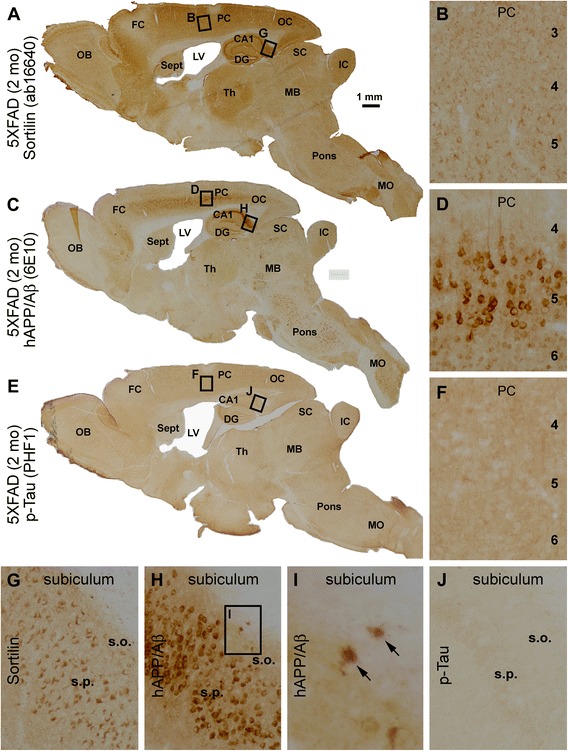
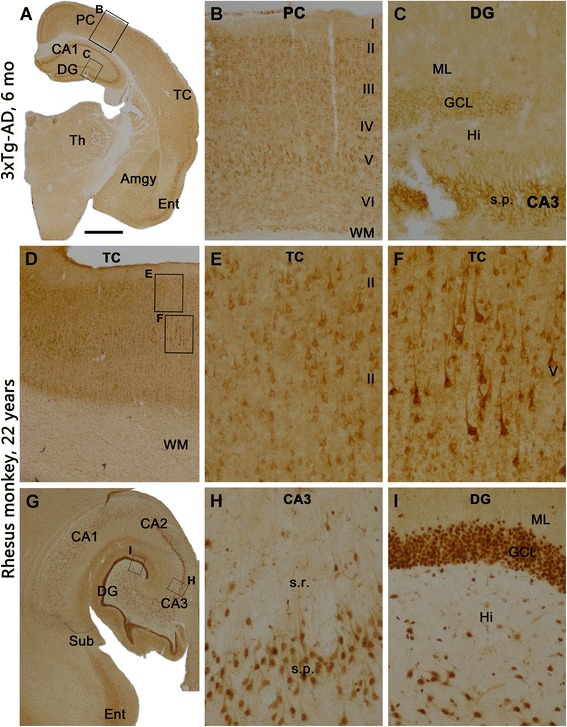
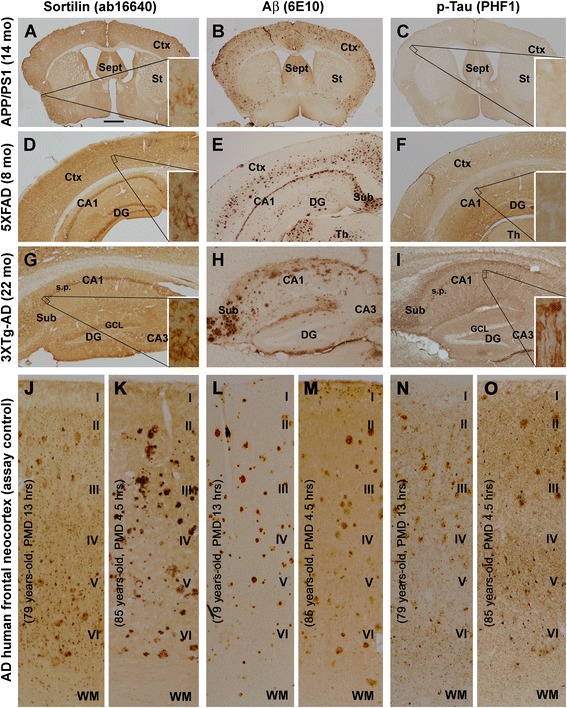
We set out to explore if extracellular sortilin neuropathology exists in AD-related transgenic mice and nonhuman primates. Brains from different transgenic strains and ages developed overt cerebral Aβ deposition, including the β-amyloid precursor protein and presenilin 1 double-transgenic (APP/PS1) mice at ~ 14 months of age, the five familial Alzheimer's disease mutations transgenic (5×FAD) mice at ~ 8 months, the triple-transgenic Alzheimer's disease (3×Tg-AD) mice at ~ 22 months, and aged monkeys (Macaca mulatta and Macaca fascicularis) were examined. Brain samples from young transgenic mice, middle-aged/aged monkeys, and AD humans were used as negative and positive pathological controls.
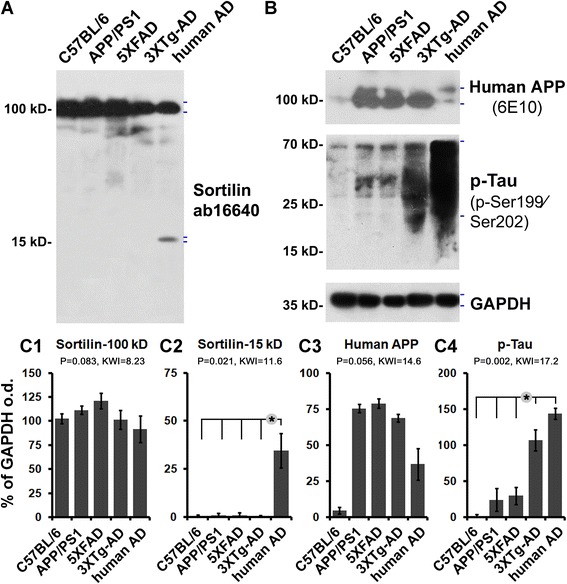
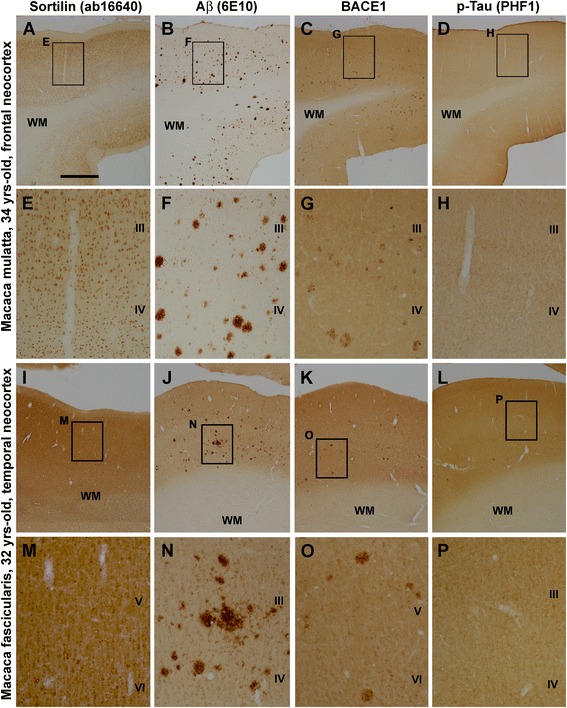
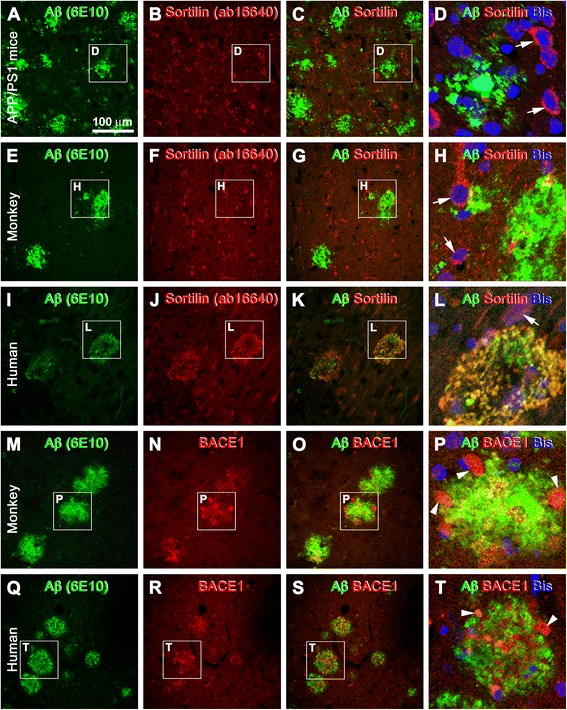
The C-terminal sortilin antibody, which labeled senile plaques in the AD human cerebral sections, did not display extracellular immunolabeling in the transgenic mouse or aged monkey brain sections with Aβ deposition. In Western blot analysis, sortilin fragments ~ 15 kDa were not detectable in transgenic mouse cortical lysates, but they occurred in control AD lysates.
In reference to their human brain counterparts, neuritic plaques seen in transgenic AD model mouse brains represent an incomplete form of this AD pathological hallmark. The species difference in neuritic plaque constituents also indicates more complex secondary proteopathies in the human brain relative to rodents and nonhuman primates during aging and in AD.
阿尔茨海默病(AD)是一种破坏性的神经退行性疾病,具有多种病理特征,表明在发病机制中有复杂的细胞/分子相互作用。转基因小鼠和非人灵长类动物被用作 AD 的机制和转化研究的疾病模型;这些动物模型在多大程度上再现 AD 型神经病理学是一个重要问题。最近有研究表明,分选蛋白 10 蛋白(Vps10p)家族成员的 C 端片段在人类大脑的神经原纤维β-淀粉样蛋白(Aβ)斑块中沉积。
我们着手探索 AD 相关转基因小鼠和非人灵长类动物中是否存在细胞外分选蛋白神经病理学。不同转基因株系和年龄的大脑出现明显的脑 Aβ沉积,包括β-淀粉样前体蛋白和早老素 1 双转基因(APP/PS1)小鼠在约 14 个月龄时,5 种家族性阿尔茨海默病突变转基因(5×FAD)小鼠在约 8 个月龄时,三转基因阿尔茨海默病(3×Tg-AD)小鼠在约 22 个月龄时,以及老年猴子(猕猴和食蟹猴)。年轻转基因小鼠、中年/老年猴子和 AD 人类的脑样本被用作阴性和阳性病理对照。
在 AD 人类大脑切片中标记老年斑的 C 端分选蛋白抗体,在有 Aβ沉积的转基因小鼠或老年猴脑切片中没有显示细胞外免疫标记。在 Western blot 分析中,在转基因小鼠皮质裂解物中未检测到约 15 kDa 的分选蛋白片段,但在对照 AD 裂解物中存在。
与人类大脑相比,在转基因 AD 模型小鼠大脑中观察到的神经原纤维斑块代表了这种 AD 病理特征的不完全形式。在神经原纤维斑块成分方面的种间差异也表明,在衰老和 AD 期间,人类大脑相对于啮齿动物和非人灵长类动物存在更复杂的继发性蛋白病变。