Macnaughton Camille J, Kovachik Colin, Charles Colin, Enders Eva C
Fisheries and Oceans Canada, Freshwater Institute, Winnipeg, Canada R3T 2N6.
Conserv Physiol. 2018 Apr 18;6(1):coy018. doi: 10.1093/conphys/coy018. eCollection 2018.
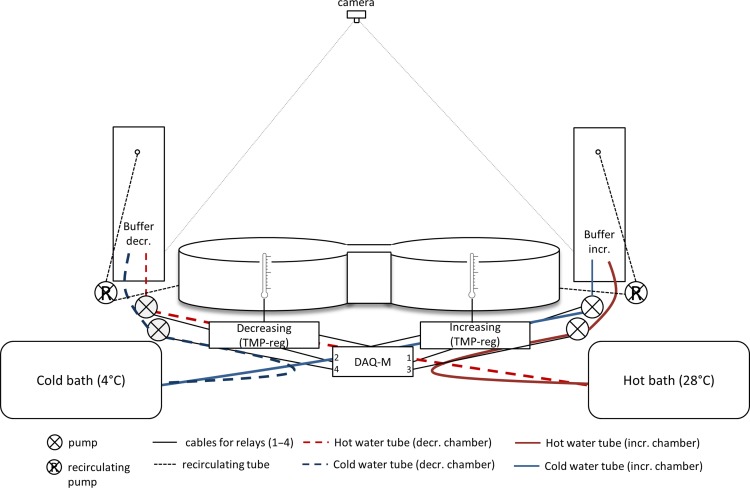
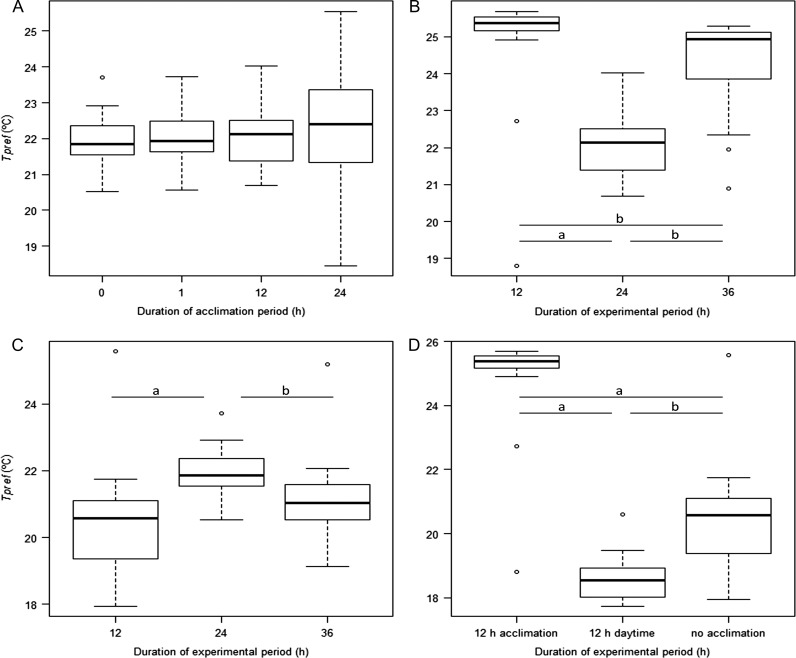
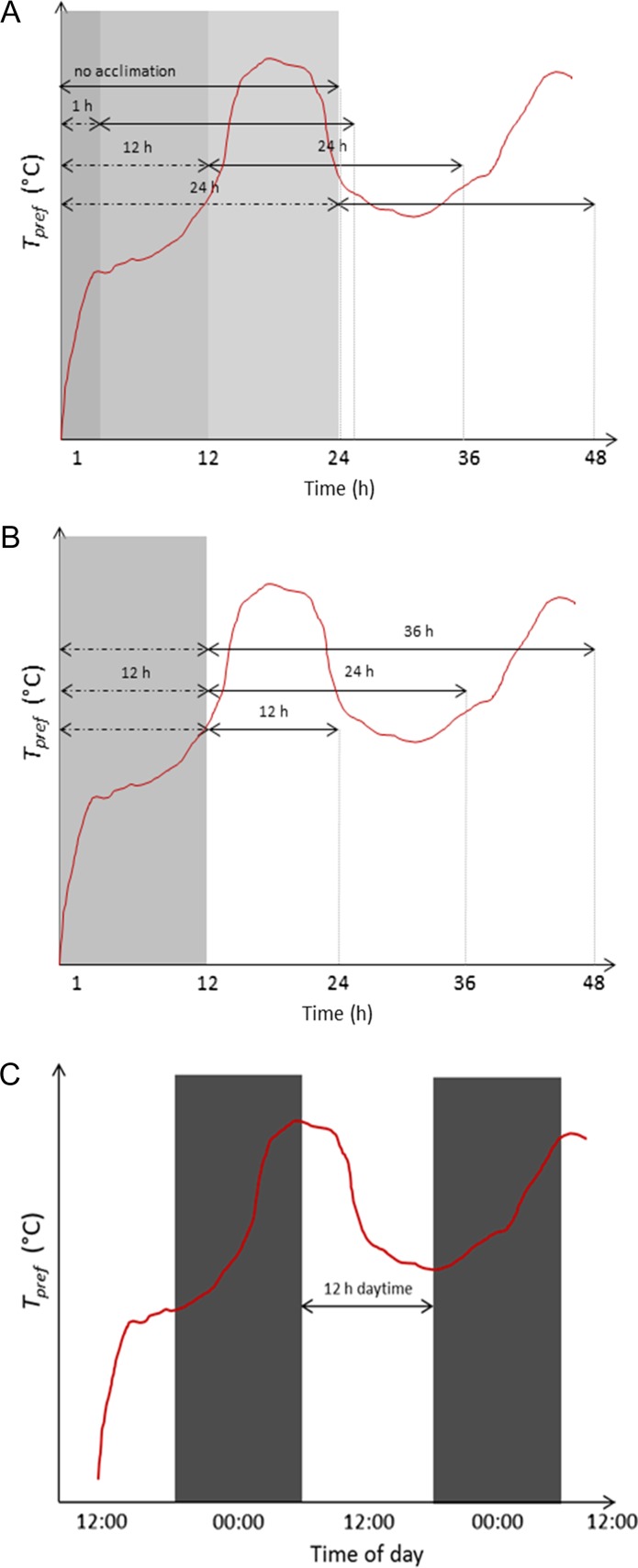
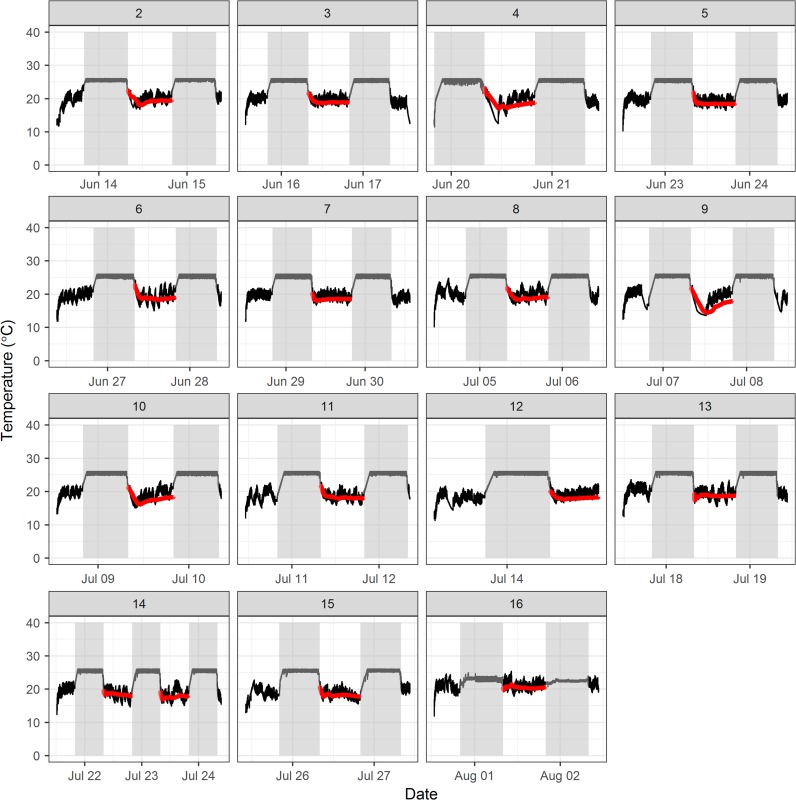
Temperature preference for various fishes has often been used as a proxy of optimal temperature for growth and metabolism due to the ease of obtaining preferred temperature zones in laboratory experiments. Several laboratory designs and methods have been proposed to examine preferred temperature zones, however, differences between them (i.e. thermal gradients vs. static temperatures in chambers and duration of acclimation/experimental periods) have led to varying measurements, precluding comparisons between experiments, species and/or life-stages. Juvenile Westslope Cutthroat Trout (), a species listed as threatened in Alberta and of special concern in British Columbia, were tested in an automated shuttlebox experimental design (Loligo® Systems) to determine average and ranges of temperature preference () and occupied temperatures. Previous lab studies suggested that Westslope Cutthroat Trout (WCT) prefer temperatures around 15°C, however, we found that average daytime for lab-reared juvenile WCT was substantially higher at 18.6°C, with occupied temperatures ranging between 11.9°C and 26.0°C throughout the duration of trials. This seems to indicate that despite constant lab-rearing conditions of 12°C, juvenile WCT may tolerate and even prefer warmer water temperatures. The duration of the acclimation period (1h, 12 h and 24 h) did not have an effect on , however, differed significantly for variable trial durations (12 h, 24 h and 36 h). A closer look at thermal trends throughout trials revealed that photoperiod significantly influenced , as nighttime temperature preference reached consistently 26°C. Collectively, these results suggest that shuttlebox experiments on WCT need to take into account the photoperiod, as behaviour may drive more so than the duration of acclimation periods.
由于在实验室实验中易于获得鱼类的偏好温度区域,各种鱼类的温度偏好常常被用作生长和代谢的最佳温度的替代指标。已经提出了几种实验室设计和方法来研究偏好温度区域,然而,它们之间的差异(即热梯度与实验箱中的静态温度以及适应/实验期的持续时间)导致测量结果各不相同,从而无法在实验、物种和/或生命阶段之间进行比较。西部斜坡割喉鳟幼鱼(在艾伯塔省被列为受威胁物种,在不列颠哥伦比亚省受到特别关注)在自动穿梭箱实验设计(Loligo®系统)中进行测试,以确定温度偏好()的平均值和范围以及占据的温度。先前的实验室研究表明,西部斜坡割喉鳟(WCT)偏好15°C左右的温度,然而,我们发现实验室饲养的WCT幼鱼白天的平均温度明显更高,为18.6°C,在整个试验期间占据的温度范围在11.9°C至26.0°C之间。这似乎表明,尽管实验室饲养条件恒定为12°C,但WCT幼鱼可能耐受甚至更喜欢温暖的水温。适应期的持续时间(1小时、12小时和24小时)对没有影响,然而,不同试验持续时间(12小时、24小时和36小时)的差异显著。仔细观察整个试验过程中的热趋势发现,光周期对有显著影响,因为夜间温度偏好始终达到26°C。总体而言,这些结果表明,对WCT进行的穿梭箱实验需要考虑光周期,因为行为可能比适应期的持续时间对的影响更大。