Schafer Caitlin, Moore Vicky, Dasgupta Nupur, Javadov Sabzali, James Jeanne F, Glukhov Alexander I, Strauss Arnold W, Khuchua Zaza
The Heart Institute, Cincinnati Children's Research Foundation, Cincinnati, OH, United States.
The Division of Human Genetics, Department of Pediatrics, University of Cincinnati College of Medicine and Cincinnati Children's Research Foundation, Cincinnati, OH, United States.
Front Pharmacol. 2018 Apr 11;9:318. doi: 10.3389/fphar.2018.00318. eCollection 2018.
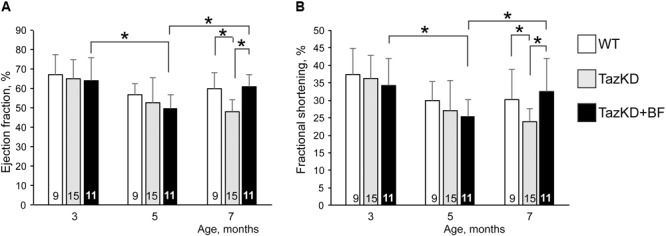
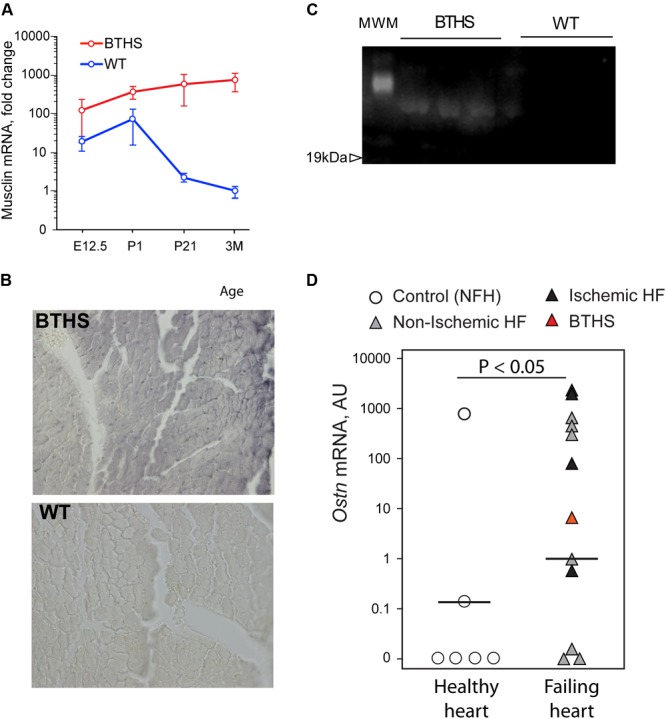
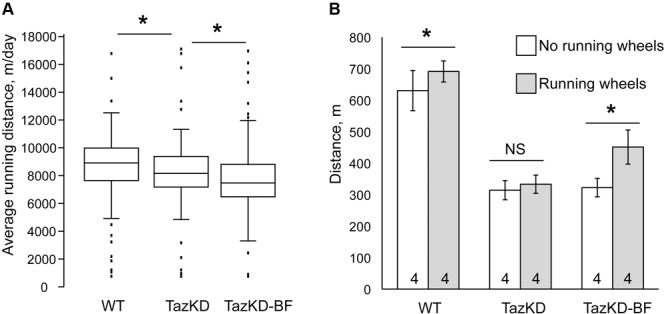
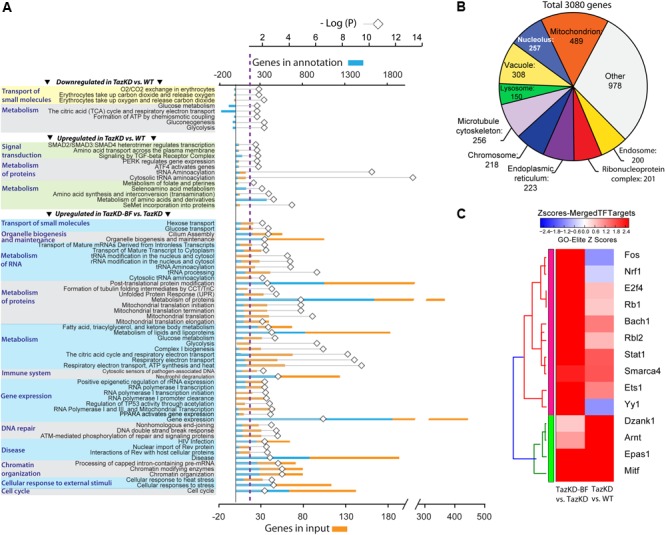
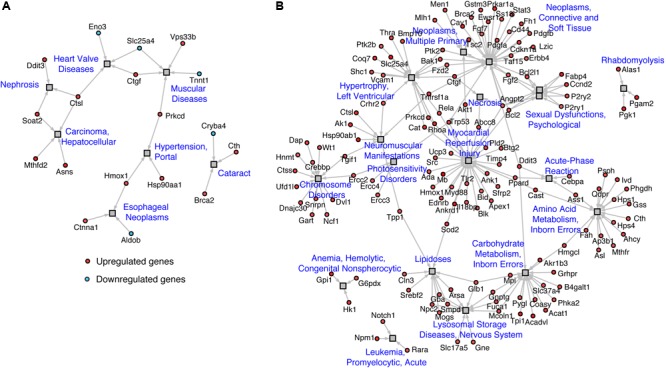
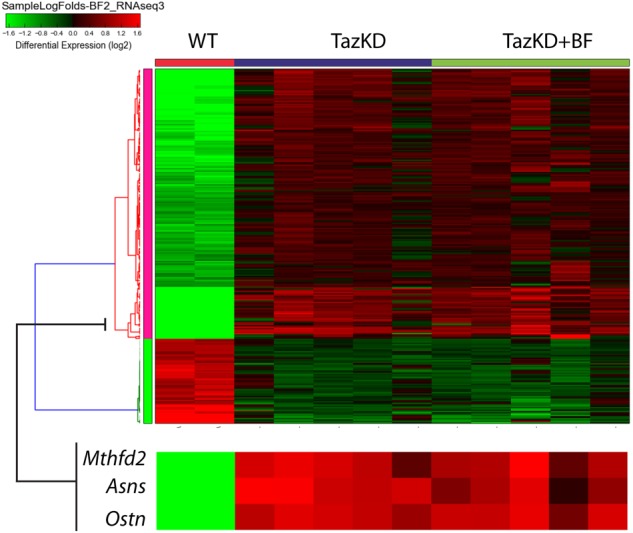
Tafazzin knockdown (TazKD) in mice is widely used to create an experimental model of Barth syndrome (BTHS) that exhibits dilated cardiomyopathy and impaired exercise capacity. Peroxisome proliferator-activated receptors (PPARs) are a group of nuclear receptor proteins that play essential roles as transcription factors in the regulation of carbohydrate, lipid, and protein metabolism. We hypothesized that the activation of PPAR signaling with PPAR agonist bezafibrate (BF) may ameliorate impaired cardiac and skeletal muscle function in TazKD mice. This study examined the effects of BF on cardiac function, exercise capacity, and metabolic status in the heart of TazKD mice. Additionally, we elucidated the impact of PPAR activation on molecular pathways in TazKD hearts. BF (0.05% w/w) was given to TazKD mice with rodent chow. Cardiac function in wild type-, TazKD-, and BF-treated TazKD mice was evaluated by echocardiography. Exercise capacity was evaluated by exercising mice on the treadmill until exhaustion. The impact of BF on metabolic pathways was evaluated by analyzing the total transcriptome of the heart by RNA sequencing. The uptake of BF during a 4-month period at a clinically relevant dose effectively protected the cardiac left ventricular systolic function in TazKD mice. BF alone did not improve the exercise capacity however, in combination with everyday voluntary running on the running wheel BF significantly ameliorated the impaired exercise capacity in TazKD mice. Analysis of cardiac transcriptome revealed that BF upregulated PPAR downstream target genes involved in a wide spectrum of metabolic (energy and protein) pathways as well as chromatin modification and RNA processing. In addition, the Ostn gene, which encodes the metabolic hormone musclin, is highly induced in TazKD myocardium and human failing hearts, likely as a compensatory response to diminished bioenergetic homeostasis in cardiomyocytes. The PPAR agonist BF at a clinically relevant dose has the therapeutic potential to attenuate cardiac dysfunction, and possibly exercise intolerance in BTHS. The role of musclin in the failing heart should be further investigated.
在小鼠中敲低tafazzin(TazKD)被广泛用于建立Barth综合征(BTHS)的实验模型,该模型表现出扩张型心肌病和运动能力受损。过氧化物酶体增殖物激活受体(PPARs)是一组核受体蛋白,作为转录因子在碳水化合物、脂质和蛋白质代谢的调节中发挥重要作用。我们假设用PPAR激动剂苯扎贝特(BF)激活PPAR信号可能改善TazKD小鼠受损的心脏和骨骼肌功能。本研究考察了BF对TazKD小鼠心脏功能、运动能力和心脏代谢状态的影响。此外,我们阐明了PPAR激活对TazKD心脏分子途径的影响。将BF(0.05% w/w)与啮齿动物饲料一起给予TazKD小鼠。通过超声心动图评估野生型、TazKD和BF处理的TazKD小鼠的心脏功能。通过在跑步机上运动小鼠直至疲惫来评估运动能力。通过RNA测序分析心脏的总转录组来评估BF对代谢途径的影响。在4个月期间以临床相关剂量摄取BF可有效保护TazKD小鼠的心脏左心室收缩功能。单独使用BF并不能改善运动能力,然而,与每天在跑轮上自愿跑步相结合,BF可显著改善TazKD小鼠受损的运动能力。心脏转录组分析显示,BF上调了参与广泛代谢(能量和蛋白质)途径以及染色质修饰和RNA加工的PPAR下游靶基因。此外,编码代谢激素肌肉素的Ostn基因在TazKD心肌和人类衰竭心脏中高度诱导,可能是对心肌细胞生物能量稳态降低的一种代偿反应。临床相关剂量的PPAR激动剂BF具有减轻心脏功能障碍以及可能减轻BTHS患者运动不耐受的治疗潜力。应进一步研究肌肉素在衰竭心脏中的作用。