Department of Ophthalmology, Jinling Hospital, School of Medicine, Nanjing University, 305 East Zhongshan Road, Nanjing, People's Republic of China.
BMC Ophthalmol. 2018 Apr 24;18(1):109. doi: 10.1186/s12886-018-0758-6.
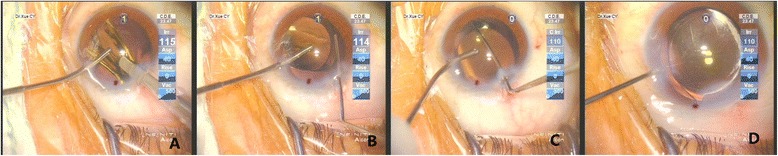
To compare the results between hydroimplantation of a single-piece, acrylic foldable toric intraocular lens (IOLs) and conventional implantation using an ophthalmic viscosurgical device (OVD).
In this study, 60 eyes with cataract and preexisting regular corneal astigmatism of 1.0 to 3.0 diopters (D) underwent the implantation of the AcrySof toric IOLs (Alcon Laboratories, Inc.). The patients were randomly assigned to a conventional implantation technique with an OVD or a hydroimplantation technique. Comparison of preoperative and postoperative parameters was performed using paired Student t tests, and independent Student t test was used to compare between the two groups.
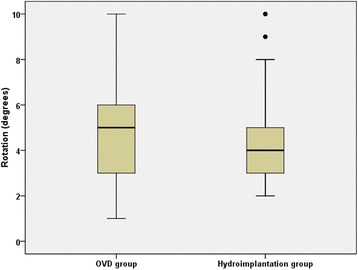
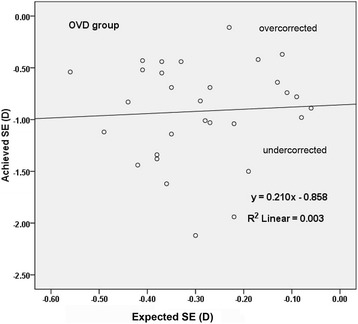
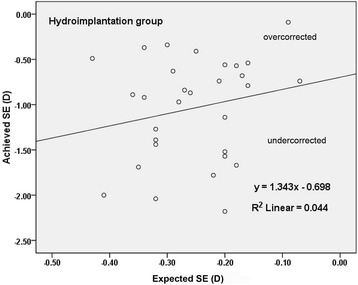
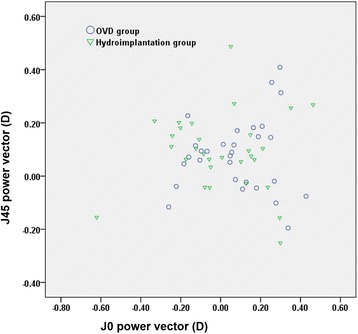
Three months postoperatively, the mean subjective astigmatism was 0.45 D ± 0.24 (SD) in the OVD group and 0.49 ± 0.29 D in the hydroimplantation group (P = 0.492). The mean endothelial cell density (ECD) loss was 7.54% ± 0.82% and 7.32% ± 0.59%, respectively (P = 0.117). The mean absolute IOL rotation was 4.77 ± 2.32 degrees and 4.70 ± 1.95 degrees, respectively (P = 0.334). The mean time for IOL implantation was 71.50 ± 8.10 s and 37.60 ± 3.90 s, respectively (P < 0.001). Two hours, 1 day, 1 week, 1 month, and 3 months postoperatively, there was no significant difference in IOP between the two groups (P > 0.05), although IOP two hours postoperatively seemed to be a little higher in the OVD group.
Compared with the use of OVDs for toric IOLs implantation, the hydroimplantation technique provided advantages of increased efficiency, reduced surgical time and cost, and no concerns of OVD-induced elevated IOP.
Current Controlled Trials ISRCTN55696872 , Retrospectively registered (Date of registration: 25 March 2018).
比较单次折叠式丙烯酸可折叠散光人工晶状体(IOL)水注入植入与使用眼科黏弹剂(OVD)的传统植入的结果。
本研究中,60 只患有白内障且术前角膜规则散光为 1.0 至 3.0 屈光度(D)的眼接受了 AcrySof toric IOL(Alcon Laboratories,Inc.)植入。患者被随机分配到使用 OVD 的传统植入技术或水注入植入技术。使用配对学生 t 检验比较术前和术后参数,使用独立学生 t 检验比较两组之间的差异。
术后 3 个月,OVD 组的平均主观散光为 0.45 D±0.24(SD),水注入组为 0.49±0.29 D(P=0.492)。平均内皮细胞密度(ECD)损失分别为 7.54%±0.82%和 7.32%±0.59%(P=0.117)。平均绝对 IOL 旋转分别为 4.77±2.32 度和 4.70±1.95 度(P=0.334)。IOL 植入的平均时间分别为 71.50±8.10 s 和 37.60±3.90 s(P<0.001)。术后 2 小时、1 天、1 周、1 个月和 3 个月,两组间眼压无显著差异(P>0.05),尽管 OVD 组术后 2 小时眼压似乎略高。
与使用 OVD 植入散光 IOL 相比,水注入技术具有提高效率、缩短手术时间和降低成本的优势,且不存在 OVD 引起的眼压升高的担忧。
当前对照试验 ISRCTN55696872,回顾性注册(注册日期:2018 年 3 月 25 日)。