Zhang Xiaojun, Zhou Jing, Chai Xuee, Chen Guiling, Guo Bin, Ni Lei, Wu Peng
Department of Radiology.
Department of Radiology, Affiliated Hospital of Nanjing University of Chinese Medicine.
Medicine (Baltimore). 2018 Apr;97(17):e0411. doi: 10.1097/MD.0000000000010411.
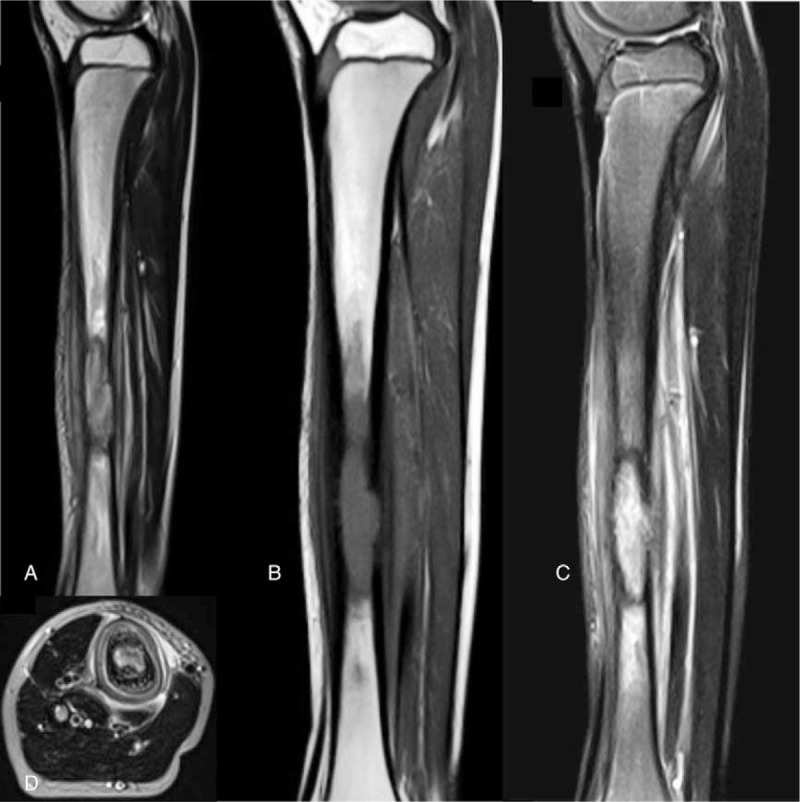
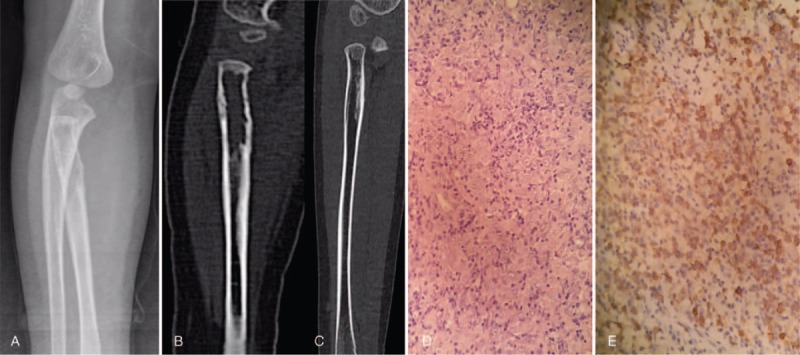
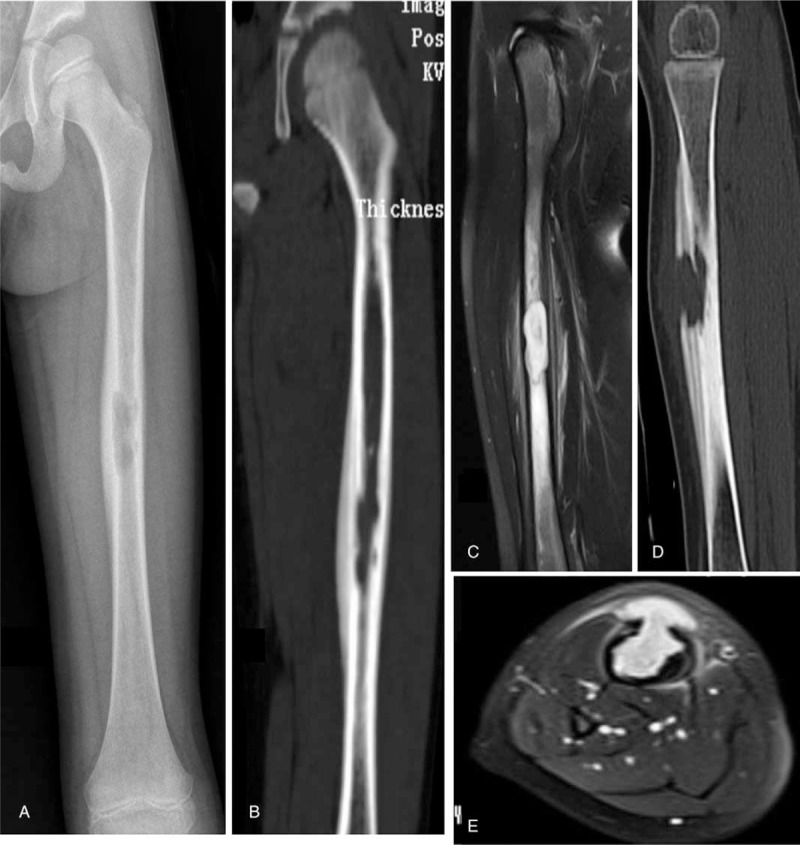
The studies focusing on x-ray, computed tomography (CT), and magnetic resonance imaging (MRI) in pediatric Langerhans cell histiocytosis (LCH) patients were still rare. Therefore, we aimed to evaluate the application of x-ray, CT, and MRI in pediatric LCH patients with long bone involvement.Total 22 pediatric LCH patients were included in this study. The diagnosis of LCH was confirmed by pathological examination. All patients were followed up for 3 years. X-ray, CT, or MRI was performed and the results were recorded for further analyses.Among 22 pediatric patients, x-ray (n = 20), CT (n = 18), or MRI (n = 12) were used to scan the lesion on long bones affected by LCH. Femurs (n = 13, 38.24%), tibia (n = 11, 32.35%), humerus (n = 5, 14.71%), and radius (n = 4, 11.76%) were the most frequently affected anatomic sites. Ovoid or round radiolucent lesions, aggressive periosteal reaction, and swelling of surrounding soft tissues were characteristic image of long bones on x-ray, CT, and MRI in pediatric LCH.Femurs, tibia, humerus, and radius were the most commonly affected long bones of pediatric LCH. The application of x-ray, CT, and MRI on long bones could help with the diagnosis of pediatric LCH.
针对小儿朗格汉斯细胞组织细胞增生症(LCH)患者的X线、计算机断层扫描(CT)和磁共振成像(MRI)的研究仍然很少。因此,我们旨在评估X线、CT和MRI在患有长骨受累的小儿LCH患者中的应用。本研究共纳入22例小儿LCH患者。LCH的诊断经病理检查确诊。所有患者均随访3年。进行了X线、CT或MRI检查,并记录结果以供进一步分析。在22例小儿患者中,使用X线(n = 20)、CT(n = 18)或MRI(n = 12)扫描受LCH影响的长骨病变。股骨(n = 13,38.24%)、胫骨(n = 11,32.35%)、肱骨(n = 5,14.71%)和桡骨(n = 4,11.76%)是最常受累的解剖部位。椭圆形或圆形透亮病变、侵袭性骨膜反应以及周围软组织肿胀是小儿LCH患者长骨在X线、CT和MRI上的特征性影像。股骨、胫骨、肱骨和桡骨是小儿LCH最常受累的长骨。X线、CT和MRI在长骨上的应用有助于小儿LCH的诊断。