Zepeda Andrea B, Figueroa Carolina A, Pessoa Adalberto, Farías Jorge G
Universidad de La Frontera, Facultad de Ingeniería, Ciencias y Administración, Departamento de Ingeniería Química, Temuco, Chile; Universidade de São Paulo, Faculdade de Ciências Farmacêuticas, Departamento de Tecnologia Bioquímico-Farmacêutica, São Paulo, SP, Brazil.
Universidade de São Paulo, Faculdade de Ciências Farmacêuticas, Departamento de Tecnologia Bioquímico-Farmacêutica, São Paulo, SP, Brazil.
Braz J Microbiol. 2018 Oct-Dec;49(4):856-864. doi: 10.1016/j.bjm.2018.03.008. Epub 2018 Apr 12.
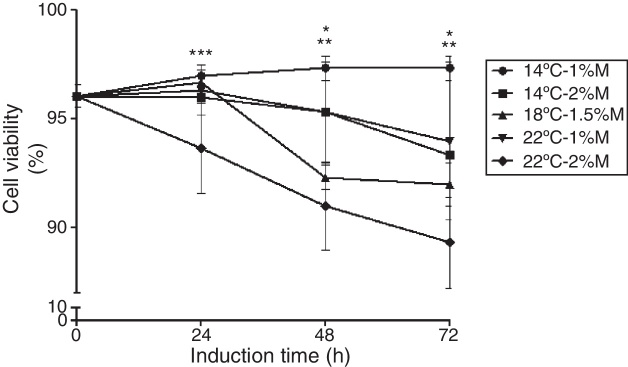
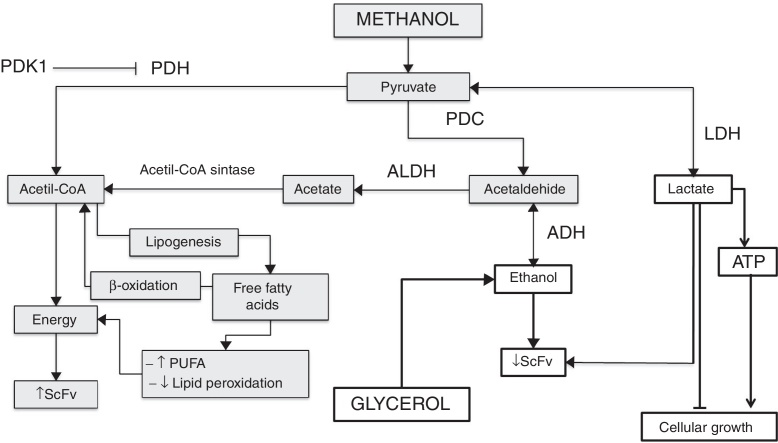
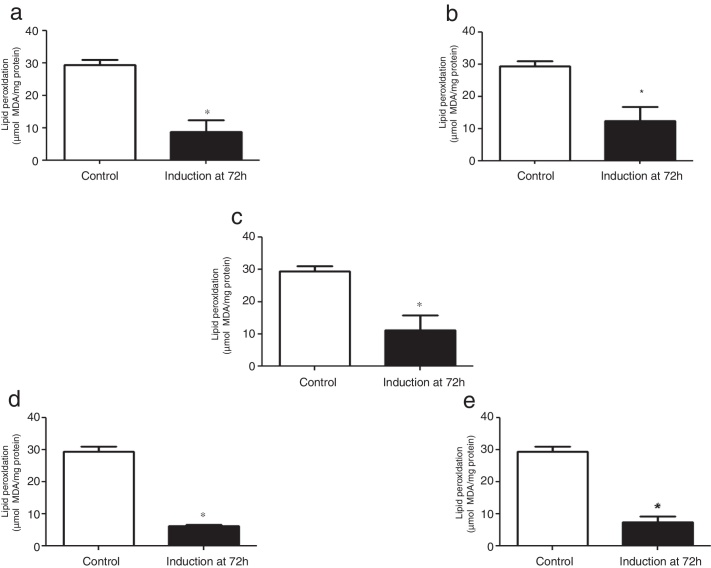
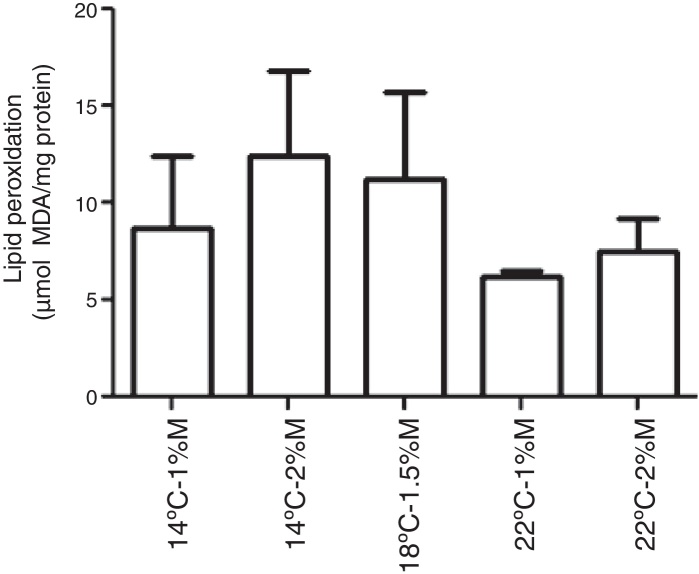
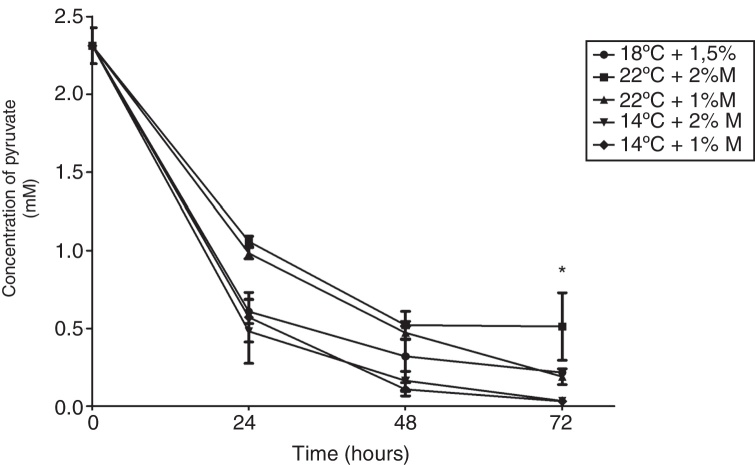
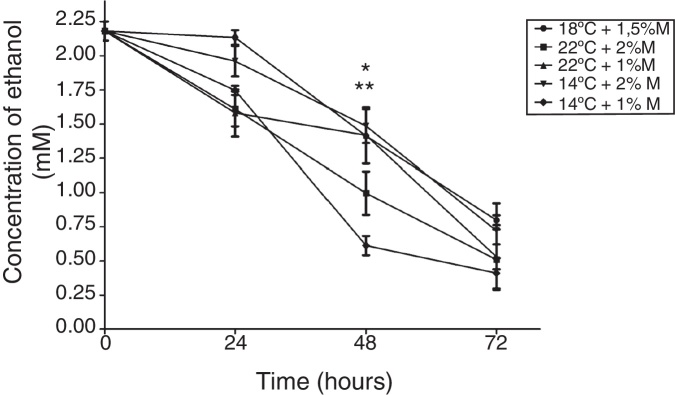
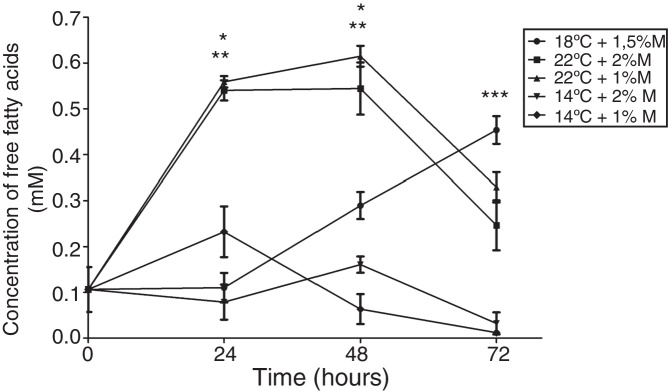
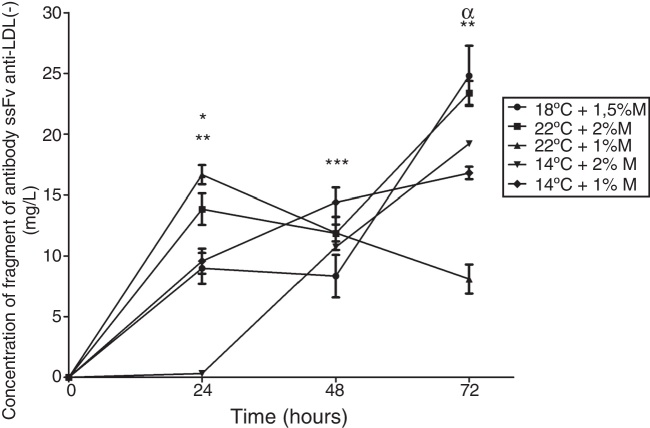
The growth of yeasts in culture media can be affected by many factors. For example, methanol can be metabolized by other pathways to produce ethanol, which acts as an inhibitor of the heterologous protein production pathway; oxygen concentration can generate aerobic or anaerobic environments and affects the fermentation rate; and temperature affects the central carbon metabolism and stress response protein folding. The main goal of this study was determine the implication of free fatty acids on the production of heterologous proteins in different culture conditions in cultures of Pichia pastoris. We evaluated cell viability using propidium iodide by flow cytometry and thiobarbituric acid reactive substances to measure cell membrane damage. The results indicate that the use of low temperatures and low methanol concentrations favors the decrease in lipid peroxidation in the transition phase from glycerol to methanol. In addition, a temperature of 14°C+1%M provided the most stable viability. By contrast, the temperature of 18°C+1.5%M favored the production of a higher antibody fragment concentration. In summary, these results demonstrate that the decrease in lipid peroxidation is related to an increased production of free fatty acids.
酵母在培养基中的生长会受到多种因素的影响。例如,甲醇可通过其他途径代谢产生乙醇,而乙醇会抑制异源蛋白生产途径;氧气浓度会产生有氧或无氧环境,并影响发酵速率;温度会影响中心碳代谢和应激反应蛋白折叠。本研究的主要目标是确定游离脂肪酸对毕赤酵母培养物在不同培养条件下异源蛋白生产的影响。我们通过流式细胞术使用碘化丙啶评估细胞活力,并使用硫代巴比妥酸反应性物质来测量细胞膜损伤。结果表明,在从甘油到甲醇的过渡阶段,使用低温和低甲醇浓度有利于脂质过氧化的减少。此外,14°C + 1%甲醇的温度提供了最稳定的活力。相比之下,18°C + 1.5%甲醇的温度有利于产生更高浓度的抗体片段。总之,这些结果表明脂质过氧化的减少与游离脂肪酸产量的增加有关。