Technical Chemistry-Life Science, Leibniz University of Hannover, Hannover, Germany.
Microb Cell Fact. 2012 Aug 8;11:103. doi: 10.1186/1475-2859-11-103.
Pichia pastoris is an established eukaryotic host for the production of recombinant proteins. Most often, protein production is under the control of the strong methanol-inducible aox1 promoter. However, detailed information about the physiological alterations in P. pastoris accompanying the shift from growth on glycerol to methanol-induced protein production under industrial relevant conditions is missing. Here, we provide an analysis of the physiological response of P. pastoris GS115 to methanol-induced high-level production of the Hepatitis B virus surface antigen (HBsAg). High product titers and the retention of the protein in the endoplasmic reticulum (ER) are supposedly of major impact on the host physiology. For a more detailed understanding of the cellular response to methanol-induced HBsAg production, the time-dependent changes in the yeast proteome and ultrastructural cell morphology were analyzed during the production process.
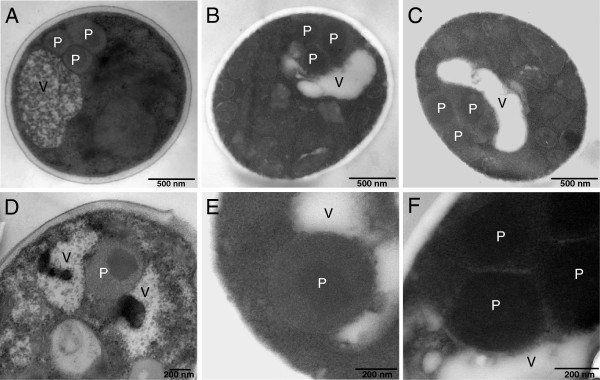
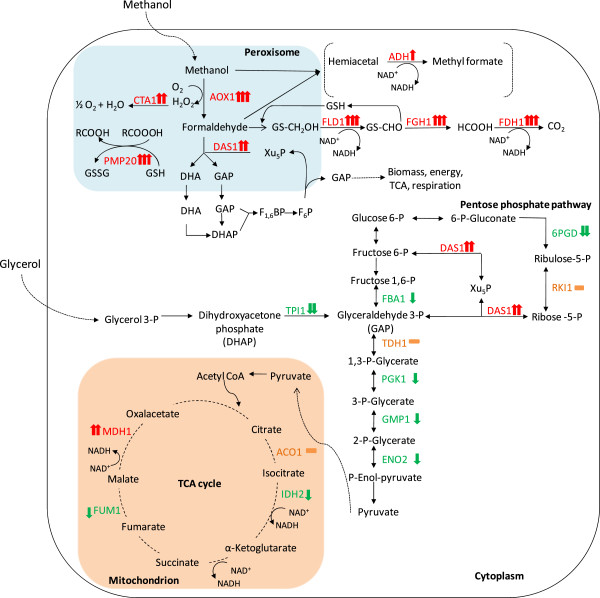
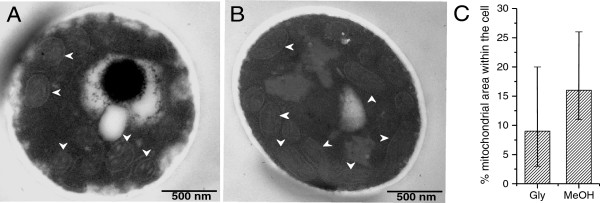
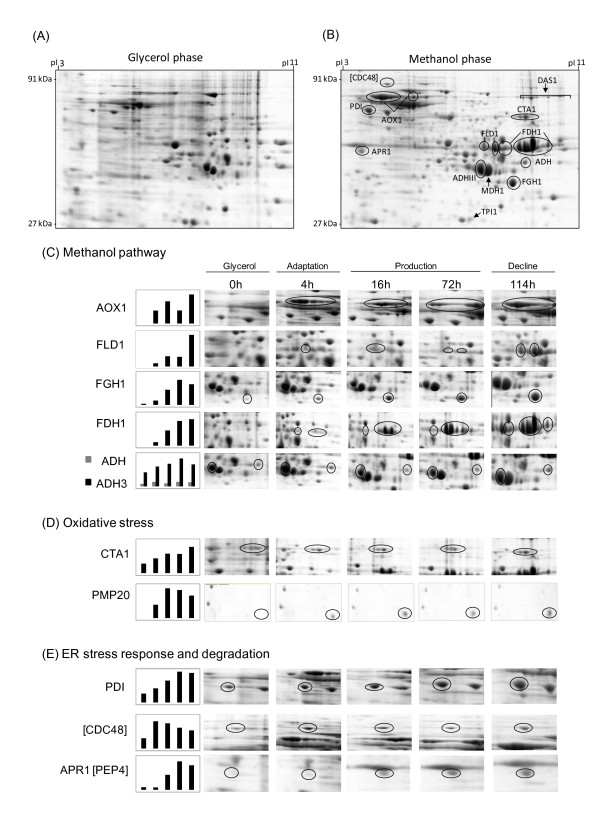
The shift from growth on glycerol to growth and HBsAg production on methanol was accompanied by a drastic change in the yeast proteome. In particular, enzymes from the methanol dissimilation pathway started to dominate the proteome while enzymes from the methanol assimilation pathway, e.g. the transketolase DAS1, increased only moderately. The majority of methanol was metabolized via the energy generating dissimilatory pathway leading to a corresponding increase in mitochondrial size and numbers. The methanol-metabolism related generation of reactive oxygen species induced a pronounced oxidative stress response (e.g. strong increase of the peroxiredoxin PMP20). Moreover, the accumulation of HBsAg in the ER resulted in the induction of the unfolded protein response (e.g. strong increase of the ER-resident disulfide isomerase, PDI) and the ER associated degradation (ERAD) pathway (e.g. increase of two cytosolic chaperones and members of the AAA ATPase superfamily) indicating that potential degradation of HBsAg could proceed via the ERAD pathway and through the proteasome. However, the amount of HBsAg did not show any significant decline during the cultivation revealing its general protection from proteolytic degradation. During the methanol fed-batch phase, induction of vacuolar proteases (e.g. strong increase of APR1) and constitutive autophagic processes were observed. Vacuolar enclosures were mainly found around peroxisomes and not close to HBsAg deposits and, thus, were most likely provoked by peroxisomal components damaged by reactive oxygen species generated by methanol oxidation.
In the methanol fed-batch phase P. pastoris is exposed to dual stress; stress resulting from methanol degradation and stress resulting from the production of the recombinant protein leading to the induction of oxidative stress and unfolded protein response pathways, respectively. Finally, the modest increase of methanol assimilatory enzymes compared to the strong increase of methanol dissimilatory enzymes suggests here a potential to increase methanol incorporation into biomass/product through metabolic enhancement of the methanol assimilatory pathway.
毕赤酵母是生产重组蛋白的一种已确立的真核宿主。大多数情况下,蛋白质生产受强甲醇诱导的 aox1 启动子控制。然而,在工业相关条件下,从甘油生长到甲醇诱导的蛋白质生产的毕赤酵母的生理变化的详细信息仍然缺失。在这里,我们分析了毕赤酵母 GS115 从甘油生长到甲醇诱导的乙型肝炎病毒表面抗原(HBsAg)高水平生产时的生理反应。高产物滴度和蛋白质在粗面内质网(ER)中的保留被认为对宿主生理学有重大影响。为了更详细地了解甲醇诱导的 HBsAg 生产对细胞的影响,在生产过程中分析了酵母蛋白质组和超微结构细胞形态的时间依赖性变化。
从甘油生长到甲醇生长和 HBsAg 生产的转变伴随着酵母蛋白质组的剧烈变化。特别是,甲醇分解代谢途径的酶开始主导蛋白质组,而甲醇同化途径的酶,如转酮醇酶 DAS1,仅适度增加。大多数甲醇通过产生能量的分解代谢途径代谢,导致线粒体大小和数量相应增加。甲醇代谢相关的活性氧的产生诱导了明显的氧化应激反应(例如,过氧化物酶 PMP20 强烈增加)。此外,HBsAg 在 ER 中的积累导致未折叠蛋白反应(例如,内质网驻留二硫键异构酶 PDI 强烈增加)和 ER 相关降解(ERAD)途径(例如,两种胞质伴侣和 AAA ATPase 超家族成员增加)的诱导,表明 HBsAg 的潜在降解可能通过 ERAD 途径和蛋白酶体进行。然而,在培养过程中,HBsAg 的量没有显示出任何显著下降,表明其普遍免受蛋白水解降解的保护。在甲醇补料分批阶段,观察到液泡蛋白酶(例如,APR1 强烈增加)和组成型自噬过程的诱导。液泡包被主要发现于过氧化物酶体周围,而不是靠近 HBsAg 沉积物,因此,很可能是由甲醇氧化产生的活性氧损伤过氧化物酶体成分引起的。
在甲醇补料分批阶段,毕赤酵母受到双重压力的影响;一种是由甲醇降解引起的压力,另一种是由重组蛋白生产引起的压力,分别导致氧化应激和未折叠蛋白反应途径的诱导。最后,与强甲醇分解代谢酶的增加相比,甲醇同化酶的适度增加表明,通过代谢增强甲醇同化途径,有可能将甲醇更多地掺入生物量/产物中。