Lopes Karina L, Rodrigues Ricardo A O, Silva Marcos C, Braga Wiliane G S, Silva-Filho Marcio C
Departamento de Genética, Escola Superior de Agricultura Luiz de Queiroz, Universidade de São Paulo, Piracicaba, Brazil.
Front Plant Sci. 2018 Apr 18;9:504. doi: 10.3389/fpls.2018.00504. eCollection 2018.
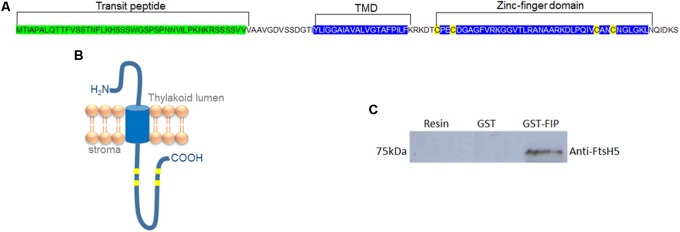
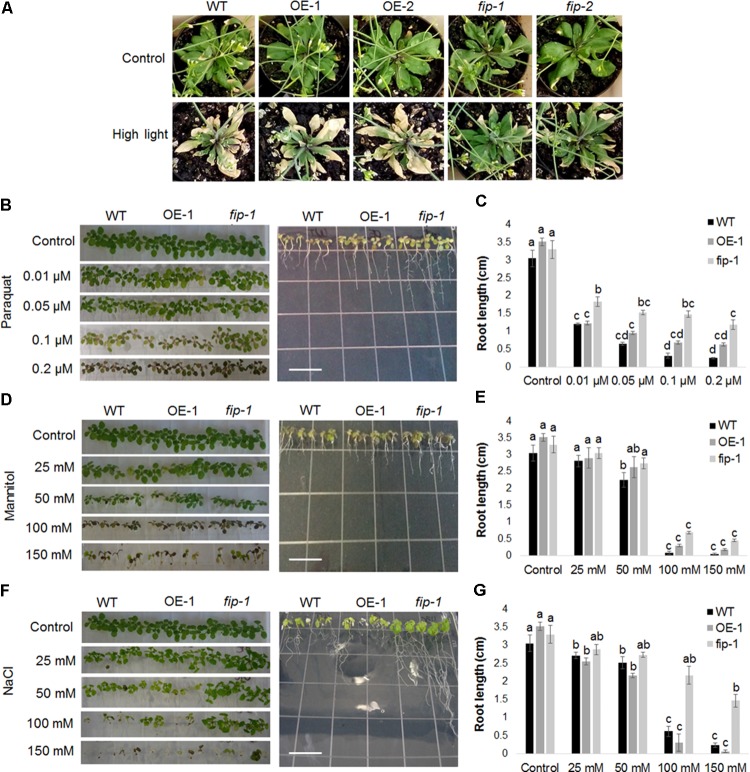
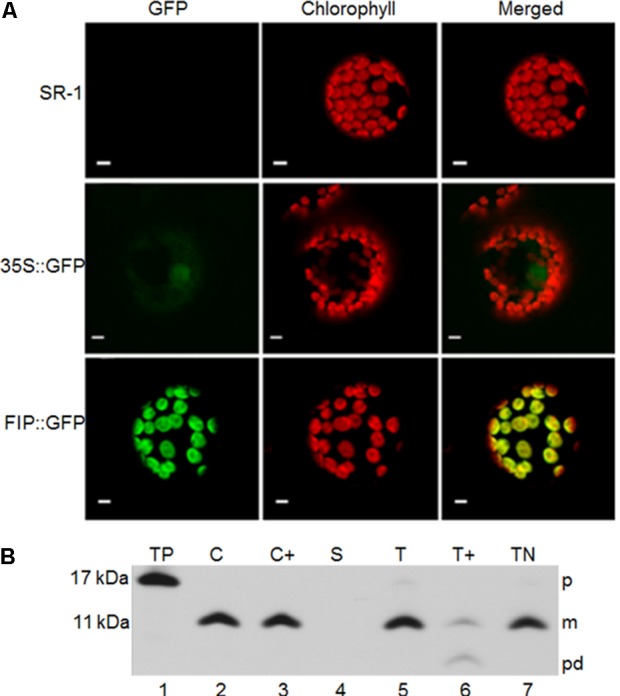
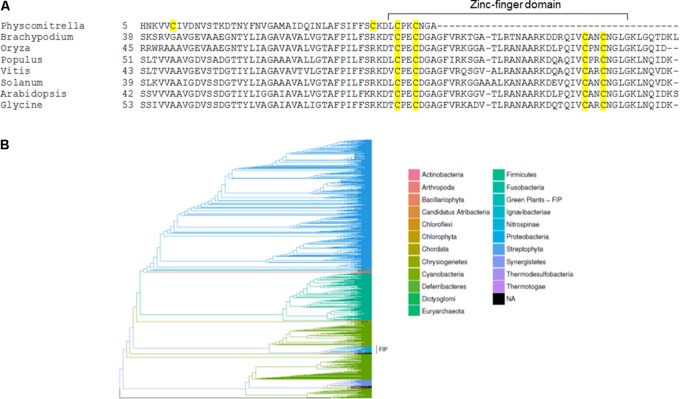
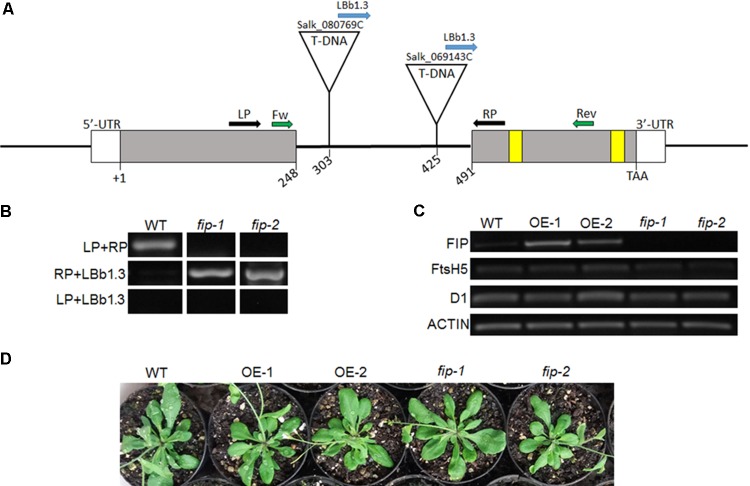
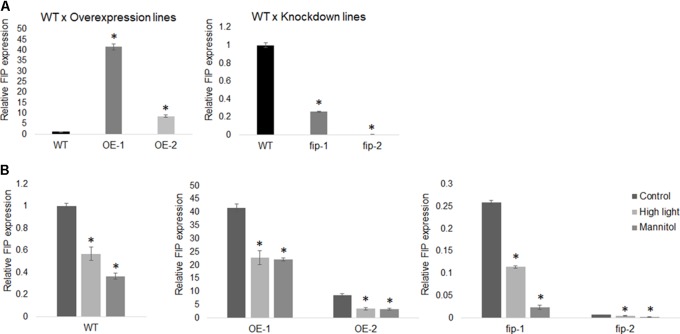
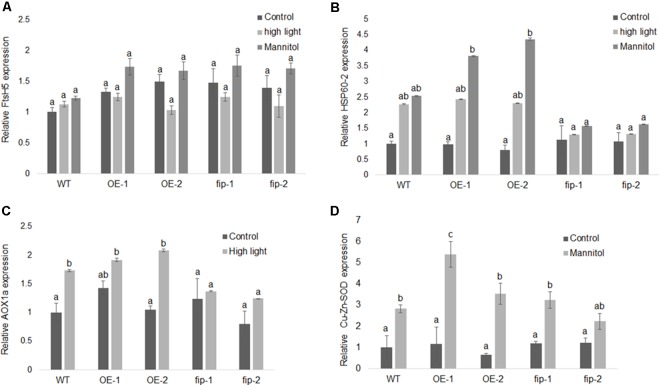
Many plant genes have their expression modulated by stress conditions. Here, we used FtsH5 protease, which expression is regulated by light stress, as bait in a yeast two-hybrid screen to search for new proteins involved in the stress response. As a result, we found FIP (FtsH5 Interacting Protein), which possesses an amino proximal cleavable transit peptide, a hydrophobic membrane-anchoring region, and a carboxyl proximal C-type zinc-finger domain. experiments using FIP fused to green fluorescent protein (GFP) showed a plastid localization. This finding was corroborated by chloroplast import assays that showed FIP inserted in the thylakoid membrane. expression was down-regulated in plants exposed to high light intensity, oxidative, salt, and osmotic stresses, whereas mutant plants expressing low levels of were more tolerant to these abiotic stresses. Our data shows a new thylakoid-membrane protein involved with abiotic stress response in .
许多植物基因的表达会受到胁迫条件的调控。在此,我们使用了FtsH5蛋白酶(其表达受光胁迫调控)作为酵母双杂交筛选中的诱饵,以寻找参与胁迫反应的新蛋白质。结果,我们发现了FIP(FtsH5相互作用蛋白),它具有一个氨基近端可裂解转运肽、一个疏水膜锚定区域和一个羧基近端C型锌指结构域。使用与绿色荧光蛋白(GFP)融合的FIP进行的实验表明其定位于质体。叶绿体导入分析证实了这一发现,该分析表明FIP插入类囊体膜中。在暴露于高光强度、氧化、盐和渗透胁迫的植物中,FIP的表达下调,而表达低水平FIP的突变植物对这些非生物胁迫更具耐受性。我们的数据显示了一种新的类囊体膜蛋白参与了植物中的非生物胁迫反应。