Department of Chemistry and Biochemistry, The Ohio State University, Columbus, OH 43210, USA.
Department of Chemistry and Biochemistry, The Ohio State University, Columbus, OH 43210, USA; Ohio State Biochemistry Program, The Ohio State University, Columbus, OH 43210, USA; Infectious Diseases Institute, The Ohio State University, Columbus, OH 43210, USA.
Curr Biol. 2018 May 21;28(10):1536-1547.e9. doi: 10.1016/j.cub.2018.03.065. Epub 2018 May 3.
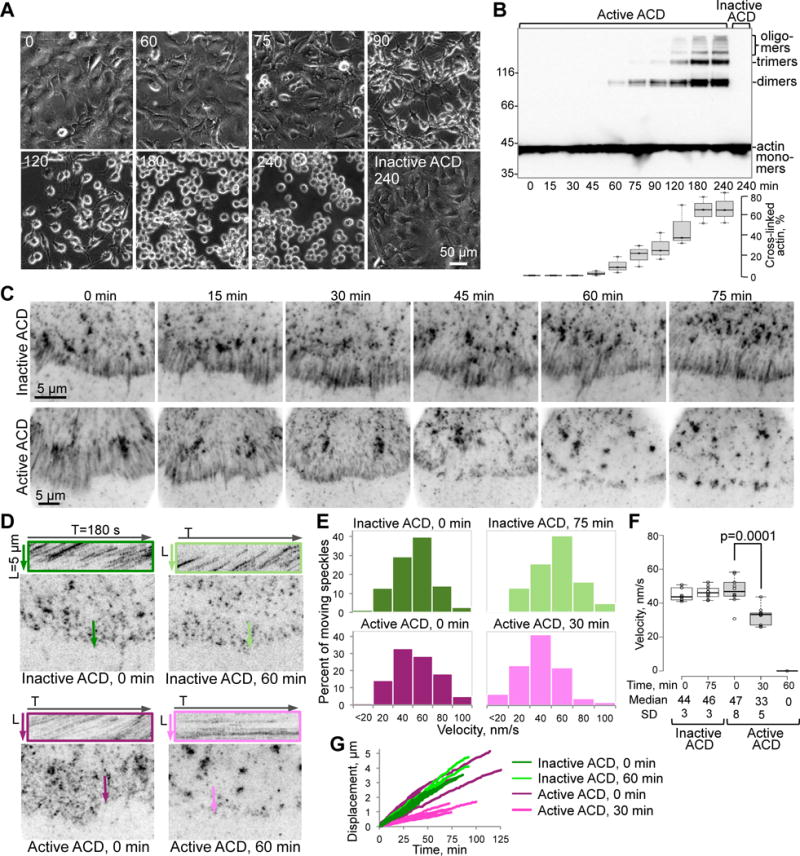
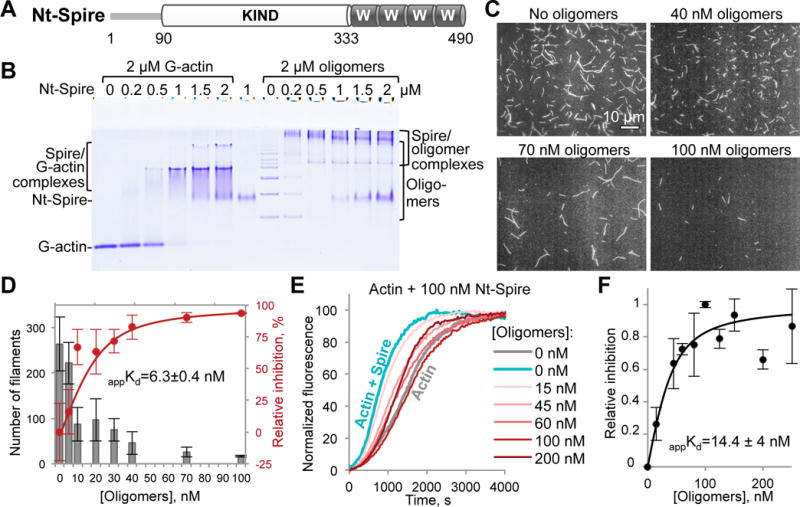
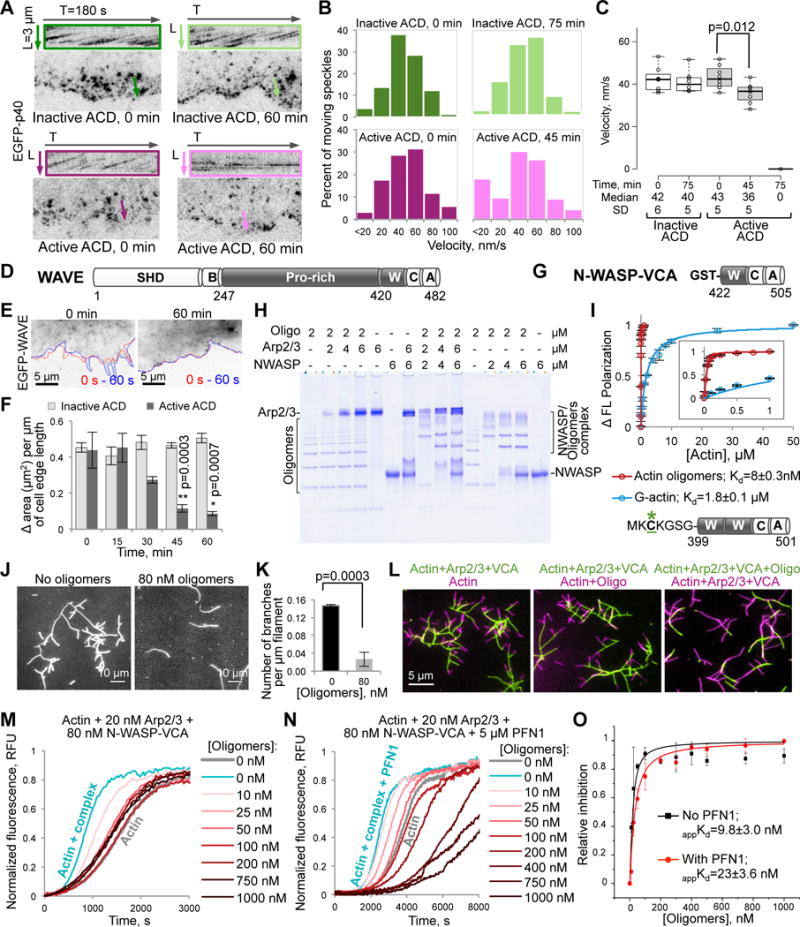
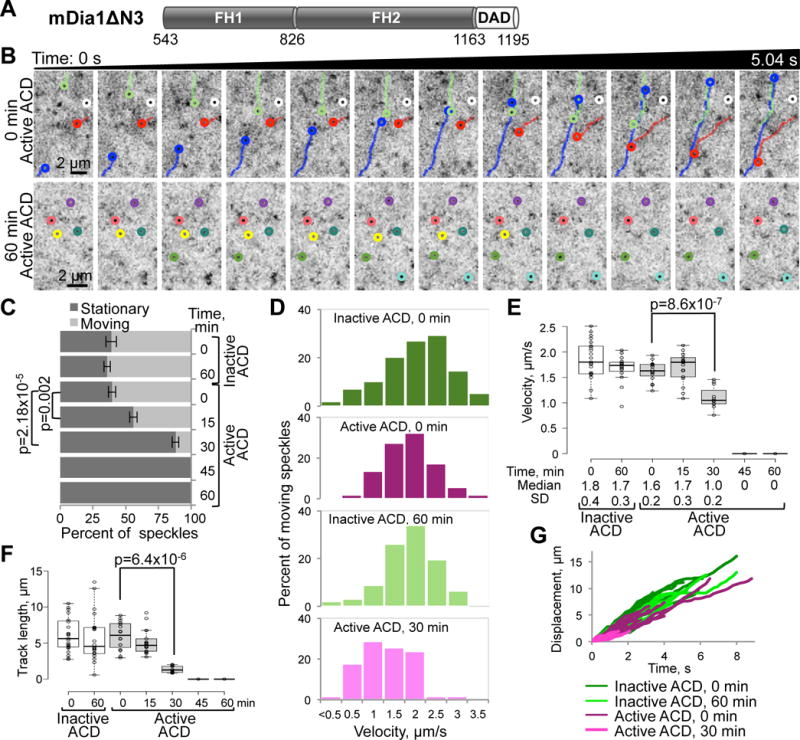
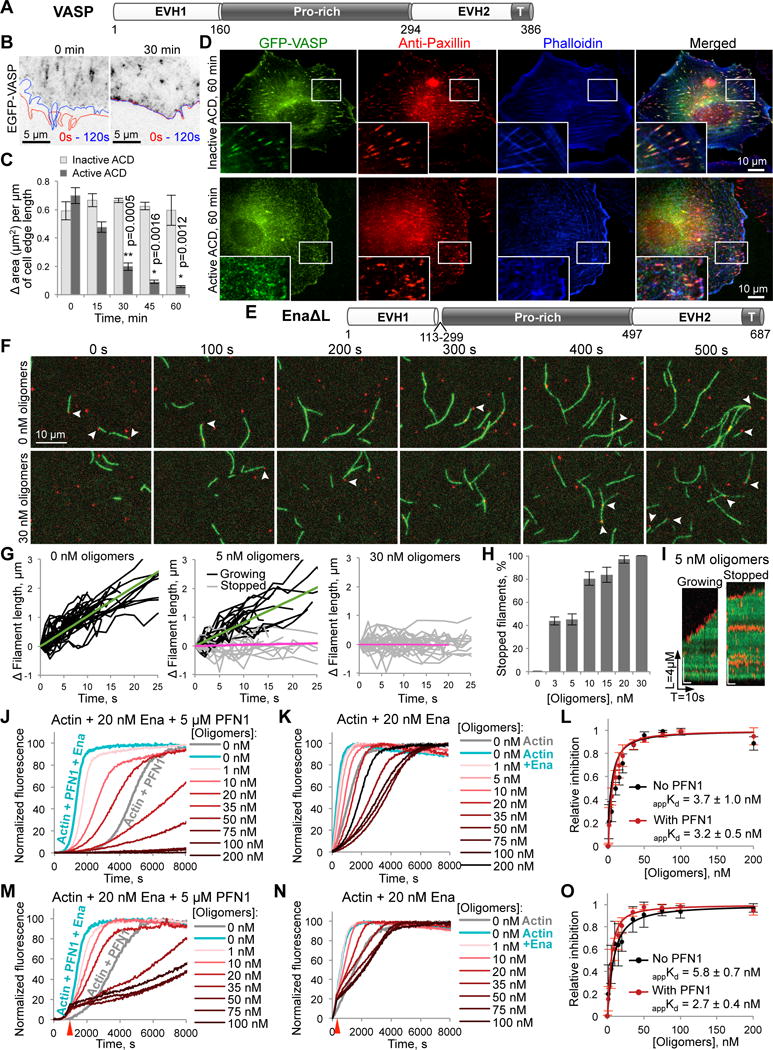
Delivery of bacterial toxins to host cells is hindered by host protective barriers. This obstruction dictates a remarkable efficiency of toxins, a single copy of which may kill a host cell. Efficiency of actin-targeting toxins is further hampered by an overwhelming abundance of their target. The actin cross-linking domain (ACD) toxins of Vibrio species and related bacterial genera catalyze the formation of covalently cross-linked actin oligomers. Recently, we reported that the ACD toxicity can be amplified via a multivalent inhibitory association of actin oligomers with actin assembly factors formins, suggesting that the oligomers may act as secondary toxins. Importantly, many proteins involved in nucleation, elongation, severing, branching, and bundling of actin filaments contain G-actin-binding Wiskott-Aldrich syndrome protein (WASP)-homology motifs 2 (WH2) organized in tandem and therefore may act as a multivalent platform for high-affinity interaction with the ACD-cross-linked actin oligomers. Using live-cell single-molecule speckle (SiMS) microscopy, total internal reflection fluorescence (TIRF) microscopy, and actin polymerization assays, we show that, in addition to formins, the oligomers bind with high affinity and potently inhibit several families of actin assembly factors: Ena/vasodilator-stimulated phosphorprotein (VASP); Spire; and the Arp2/3 complex, both in vitro and in live cells. As a result, ACD blocks the actin retrograde flow and membrane dynamics and disrupts association of Ena/VASP with adhesion complexes. This study defines ACD as a universal inhibitor of tandem-organized G-actin binding proteins that overcomes the abundance of actin by redirecting the toxicity cascade toward less abundant targets and thus leading to profound disorganization of the actin cytoskeleton and disruption of actin-dependent cellular functions.
细菌毒素向宿主细胞的输送受到宿主保护屏障的阻碍。这种阻碍决定了毒素的显著效率,其中一个拷贝就可能杀死一个宿主细胞。肌动蛋白靶向毒素的效率进一步受到其靶标的压倒性丰富的阻碍。弧菌属和相关细菌属的肌动蛋白交联结构域 (ACD) 毒素催化共价交联的肌动蛋白寡聚物的形成。最近,我们报道称,ACD 的毒性可以通过肌动蛋白寡聚物与肌动蛋白组装因子formin 的多价抑制性结合来放大,这表明寡聚物可能作为次级毒素发挥作用。重要的是,许多参与肌动蛋白丝成核、延伸、切割、分支和束集的蛋白质都含有 G-肌动蛋白结合 Wiskott-Aldrich 综合征蛋白 (WASP)-同源结构域 2 (WH2),这些结构域串联排列,因此可能作为一个多价平台,与 ACD 交联的肌动蛋白寡聚物进行高亲和力相互作用。使用活细胞单分子斑点 (SiMS) 显微镜、全内反射荧光 (TIRF) 显微镜和肌动蛋白聚合测定法,我们表明,除了formin 之外,寡聚物还以高亲和力结合并强烈抑制几种肌动蛋白组装因子家族:Ena/血管扩张刺激磷蛋白 (VASP);Spire;以及 Arp2/3 复合物,无论是在体外还是在活细胞中。结果,ACD 阻断了肌动蛋白的逆行流动和膜动力学,并破坏了 Ena/VASP 与粘附复合物的结合。这项研究将 ACD 定义为串联组织的 G-肌动蛋白结合蛋白的通用抑制剂,它通过将毒性级联重新定向到较少丰富的靶标,克服了肌动蛋白的丰富度,从而导致肌动蛋白细胞骨架的严重紊乱和肌动蛋白依赖的细胞功能的破坏。