Binkowska Aneta M, Michalak Grzegorz, Pilip Sławomir, Kopacz Maria, Słotwiński Robert
Department of Emergency Medicine, Medical University of Warsaw, Warsaw, Poland.
Department of Disaster Medicine, Medical University of Warsaw, Warsaw, Poland.
Cent Eur J Immunol. 2018;43(1):33-41. doi: 10.5114/ceji.2018.74871. Epub 2018 Mar 30.
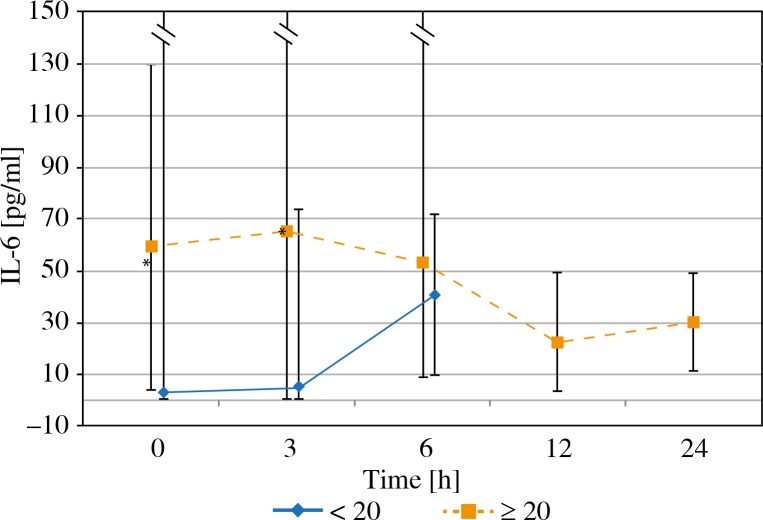
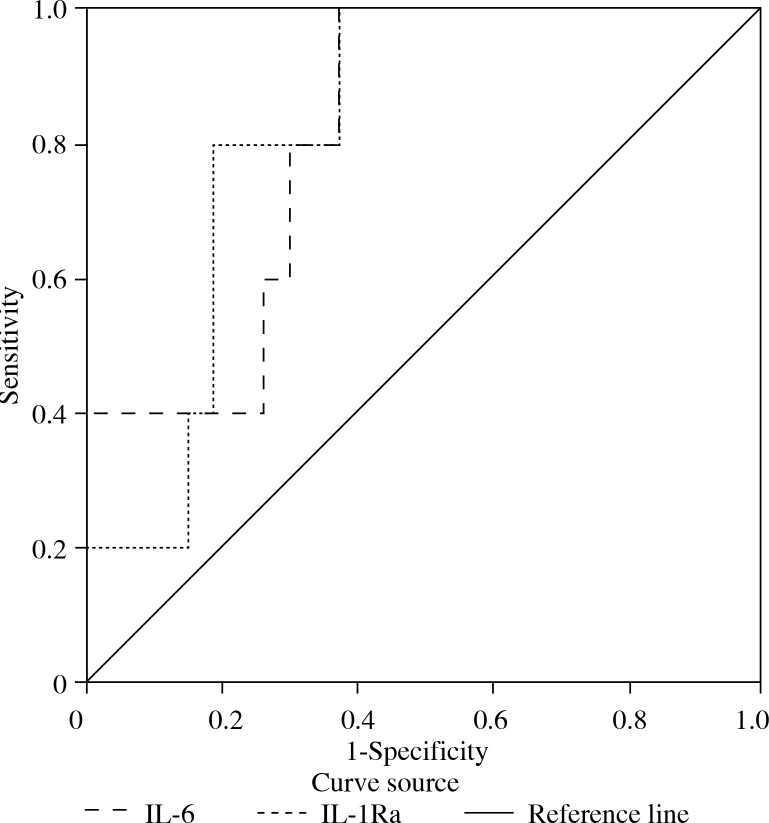
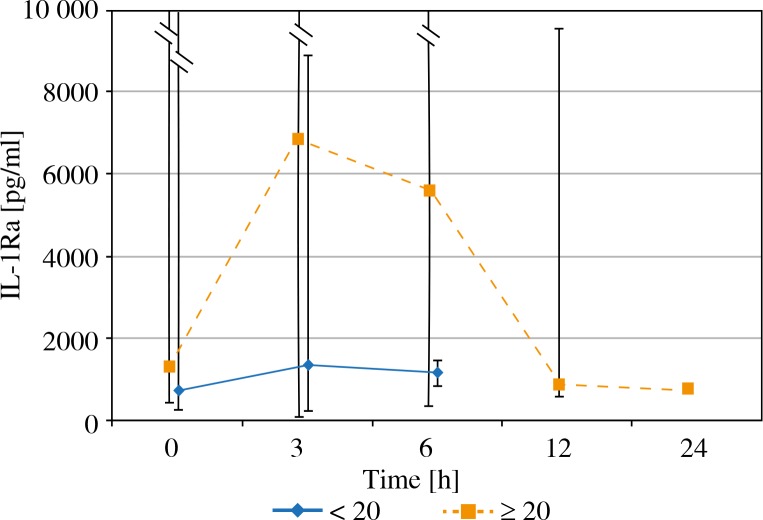
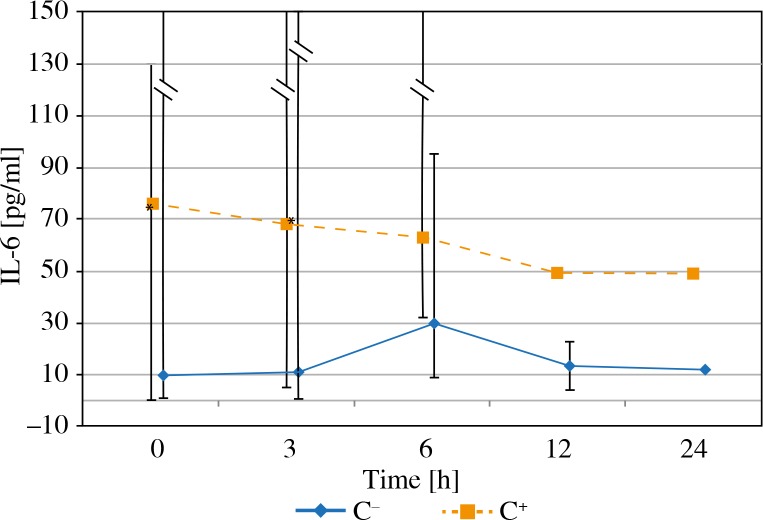
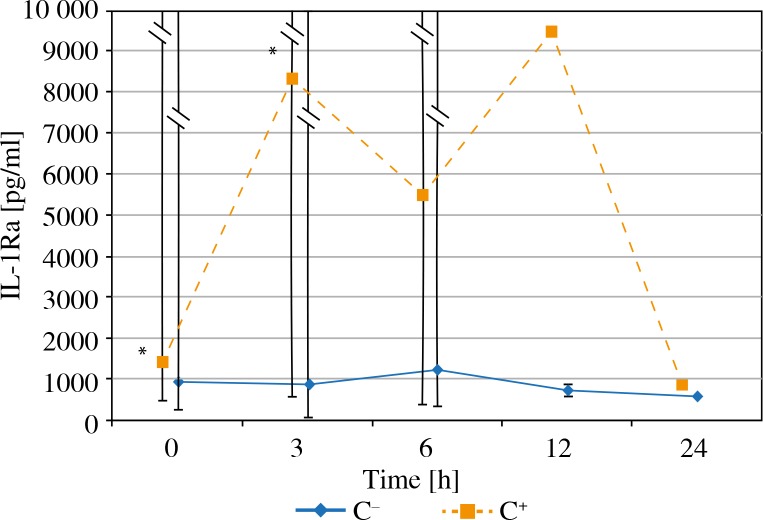
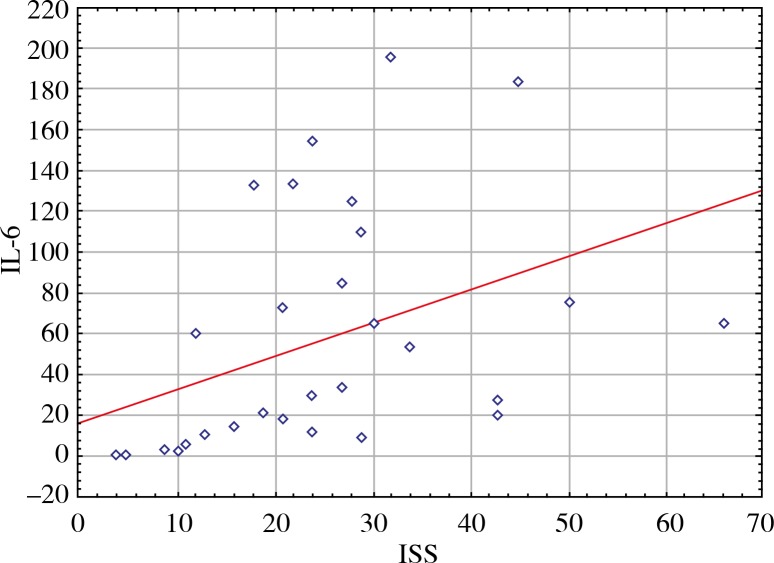
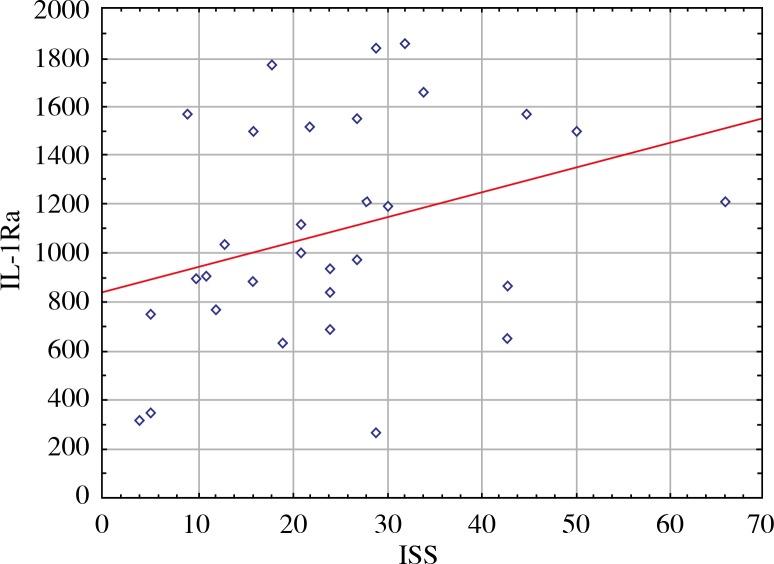
This study was aimed to give a better understanding of the mechanisms of early immune response to trauma by assessing the concentration of cytokines in peripheral blood. The study group comprised 32 patients admitted to the Emergency Department due to injury. Depending on the magnitude of the Injury Severity Score (ISS) trauma patients were divided into two groups. In group A (ISS ≥ 20), 13 patients had complications, and five died, while in group B (ISS < 20) only three patients had complications (e.g. respiratory failure and infections). Depending on the extent of the injury, significant differences were observed in the concentrations of cytokines in the treatment groups. The highest levels of IL-6 and IL-1Ra in both groups were recorded in the third hour of hospitalisation and were considerably higher in group A compared to the concentration of these cytokines in group B (p = 0.001). In patients with complications, IL-6 and IL-1Ra concentrations were significantly higher compared to those without complications. Spearman's rho-correlation showed a statistically significant positive correlation between baseline concentrations of IL-6 (r = 0.64, p < 0.001) and IL-1Ra (r = 0.37, p = 0.042) and the values of the ISS. A high diagnostic sensitivity calculated from ROC curves was found for IL-6 concentrations. In summary, our findings suggest that elevated levels of the cytokines tested, determined in the peripheral blood shortly after injury, may be significantly associated with the occurrence of severe complications, which in some patients can lead to death. Monitoring the levels of these cytokines in patients with a high risk of serious complications should be used routinely.
本研究旨在通过评估外周血中细胞因子的浓度,更好地了解创伤早期免疫反应的机制。研究组包括32例因受伤而入住急诊科的患者。根据损伤严重程度评分(ISS),创伤患者被分为两组。A组(ISS≥20)中,13例患者出现并发症,5例死亡;而B组(ISS<20)中只有3例患者出现并发症(如呼吸衰竭和感染)。根据损伤程度,治疗组中细胞因子的浓度存在显著差异。两组中IL-6和IL-1Ra的最高水平均在住院第3小时记录,且A组中这些细胞因子的浓度明显高于B组(p = 0.001)。有并发症的患者中,IL-6和IL-1Ra的浓度明显高于无并发症的患者。Spearman等级相关性分析显示,IL-6(r = 0.64,p < 0.001)和IL-1Ra(r = 0.37,p = 0.042)的基线浓度与ISS值之间存在统计学显著正相关。从ROC曲线计算得出,IL-6浓度具有较高的诊断敏感性。总之,我们的研究结果表明,受伤后不久在外周血中检测到的受试细胞因子水平升高可能与严重并发症的发生显著相关,在某些患者中可能导致死亡。对于有严重并发症高风险的患者,应常规监测这些细胞因子的水平。