Stelmasiak Marta, Mikaszewska-Sokolewicz MaŁgorzata, NiewiŃski Grzegorz, BaŁan Barbara-Joanna, SŁotwiŃski Robert
Department of Immunology, Biochemistry and Nutrition, Medical University of Warsaw, Warsaw, Poland.
Faculty of Medical and Health Sciences, Kazimierz Pulaski University of Technology and Humanities in Radom, Poland.
Cent Eur J Immunol. 2020;45(2):160-169. doi: 10.5114/ceji.2020.97903. Epub 2020 Jul 27.
Substantial causes of high mortality (30-50%) of people with severe infections treated in intensive care units (ICUs) are still inadequately known in terms of mechanisms and insufficient diagnostic tools for immune responses in sepsis.
The aim of this study was to establish a practical value of determining the concentration of chosen proteins (by ELISA) in peripheral blood as potential in early diagnostics of severe infections, paying special attention to their prognostic values.
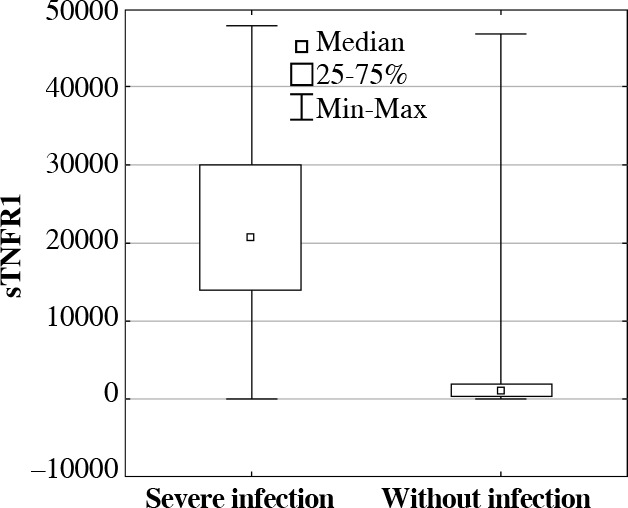
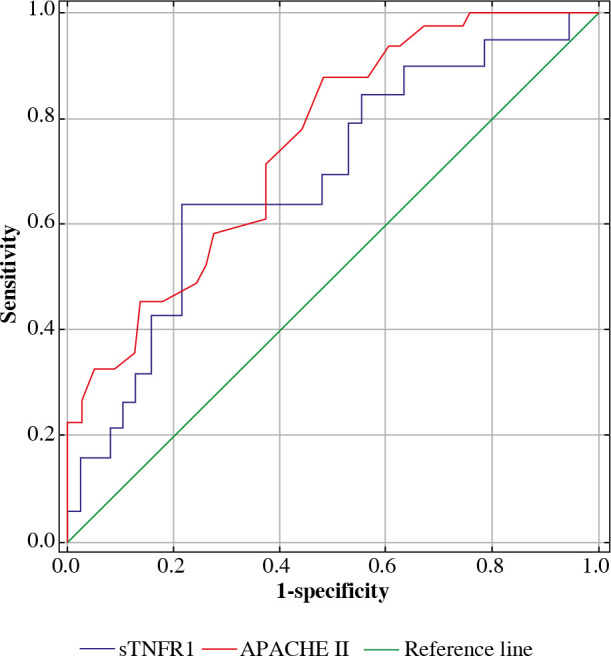
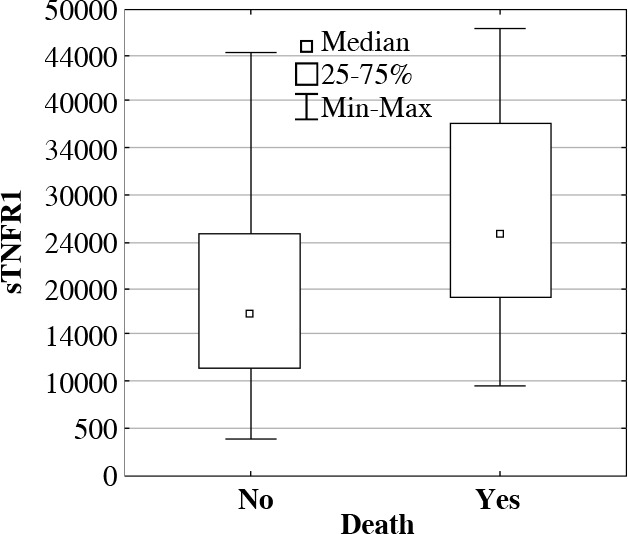
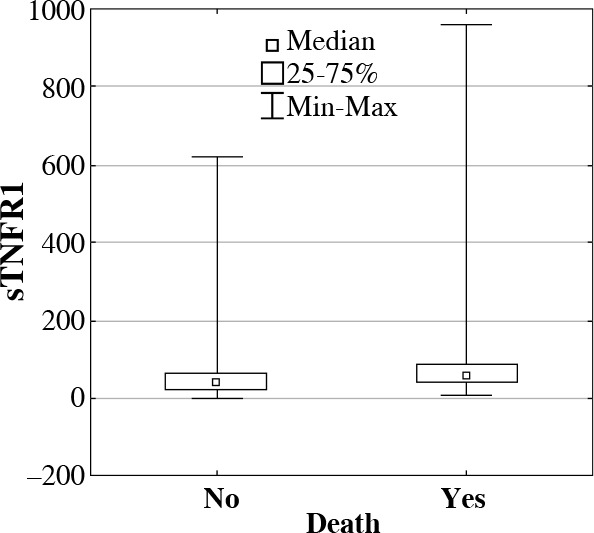
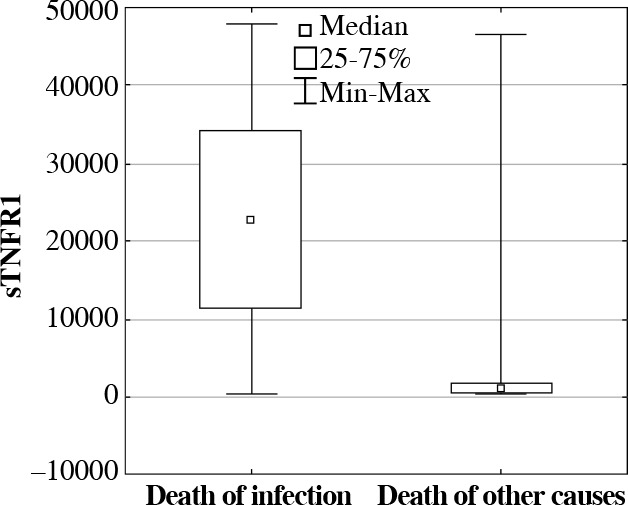
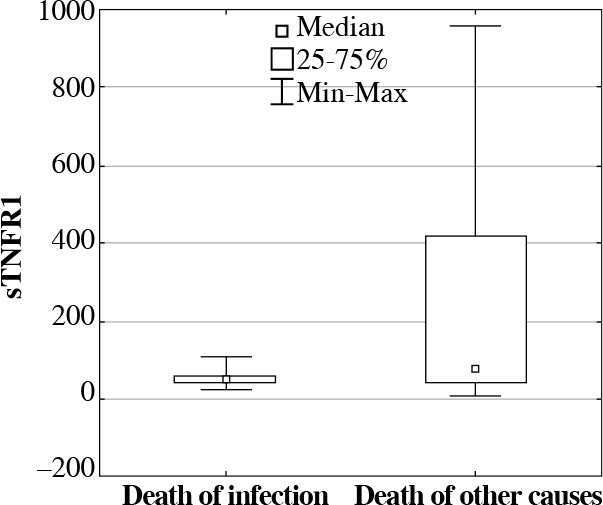
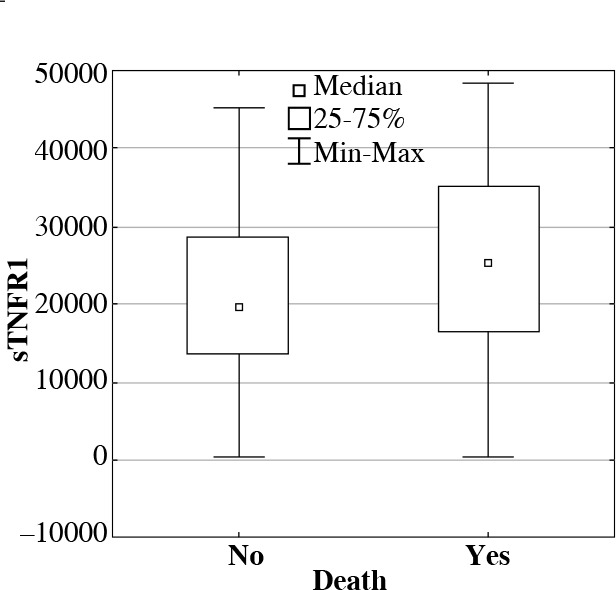
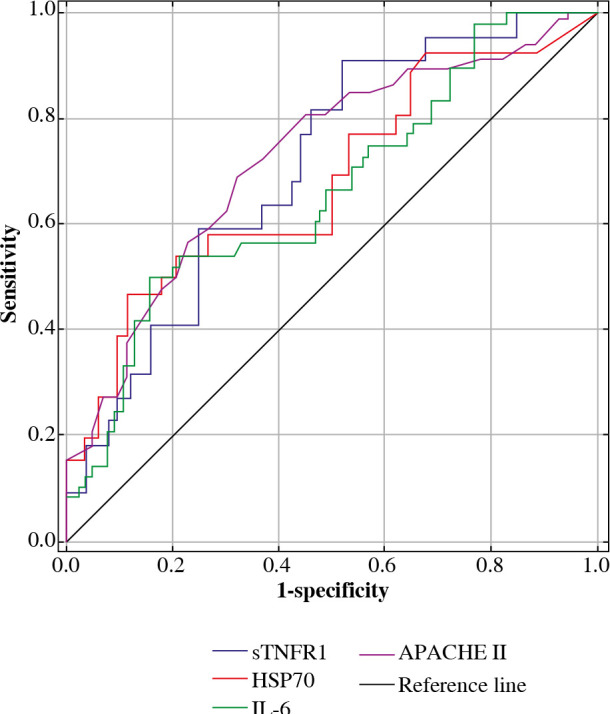
In 163 patients treated in ICUs, changes were assessed in the concentration of chosen proteins relating to the TLR4 receptor signalling pathway, including its effectors of pro- and anti-inflammatory cytokines (IL-1Ra, TNF-α, sTNFR1, IL-6, IL-10, sTLR4, MyD88, TNFAIP3/A20, HSP70, and HMGB1). In the analysis of changes in the process of immune response in severely ill patients with and without infections, a significantly higher concentration of sTNFR1 was observed in patients with infections than those who deceased. In the ROC curves tests, it was noted that an assessment of the concentration of sTNFR1 proteins (AUC = 0.686 and cut-off point = 24.841 pg/ml) was a particularly efficient tool, with prognostic significance in patients with infections.
In other patients treated in an ICU, the efficiency of determining IL-6 (AUC = 0.736) was confirmed and at the same time, the effectiveness of this cytokine in predicting death in cases with infections was excluded. The results of the present study are encouraging, suggesting the benefits of undertaking multi-center clinical trials, which consider monitoring sTNFR1 in different groups of patients with infections treated in intensive care units.
在重症监护病房(ICU)接受治疗的严重感染患者死亡率较高(30%-50%),其确切病因在感染机制方面仍未完全明确,且脓毒症免疫反应的诊断工具不足。
本研究旨在确定通过酶联免疫吸附测定法(ELISA)检测外周血中特定蛋白质浓度在严重感染早期诊断中的实用价值,并特别关注其预后价值。
在163例ICU治疗患者中,评估了与Toll样受体4(TLR4)信号通路相关的特定蛋白质浓度变化,包括促炎和抗炎细胞因子(IL-1Ra、TNF-α、可溶性肿瘤坏死因子受体1[sTNFR1]、IL-6、IL-10、可溶性TLR4[sTLR4]、髓样分化因子88[MyD88]、肿瘤坏死因子α诱导蛋白3/TNFAIP3/A20、热休克蛋白70[HSP70]和高迁移率族蛋白B1[HMGB1])的效应器。在分析感染和未感染重症患者免疫反应过程中的变化时,发现感染患者的sTNFR1浓度显著高于死亡患者。在受试者工作特征(ROC)曲线测试中,发现sTNFR1蛋白浓度评估(曲线下面积[AUC]=0.686,临界值=24.841 pg/ml)是一种特别有效的工具,对感染患者具有预后意义。
在其他ICU治疗患者中,确定IL-6(AUC=0.736)的有效性得到证实,同时排除了该细胞因子在预测感染患者死亡方面的有效性。本研究结果令人鼓舞,表明开展多中心临床试验具有益处,该试验考虑在不同组别的ICU感染治疗患者中监测sTNFR1。