Geoffrey S. Ginsburg (
Kathryn A. Phillips is a professor of health economics and health services research at the University of California San Francisco.
Health Aff (Millwood). 2018 May;37(5):694-701. doi: 10.1377/hlthaff.2017.1624.
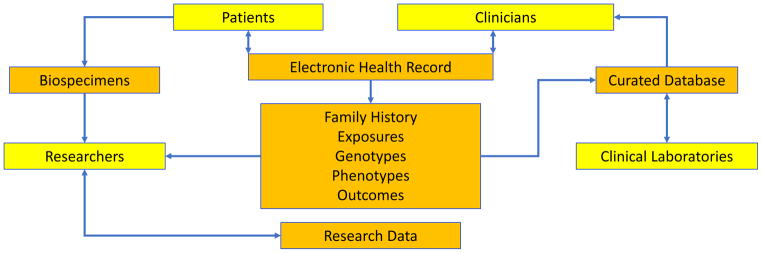
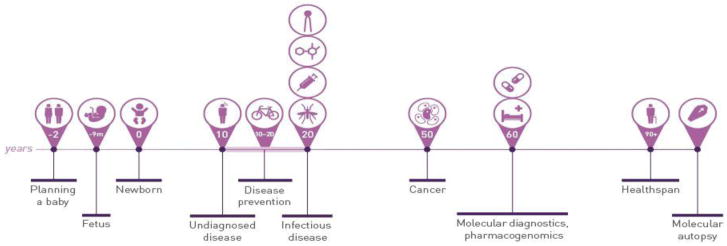
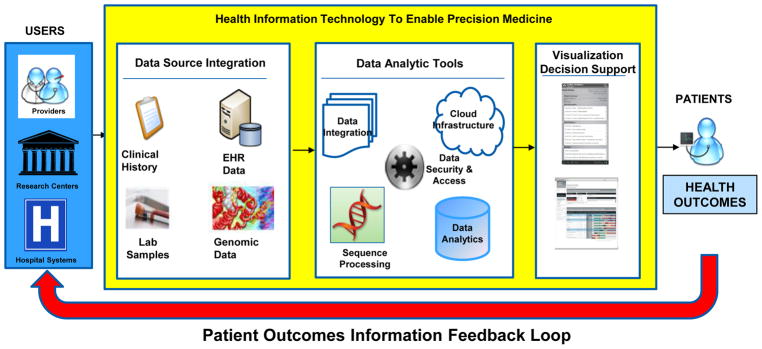
Precision medicine is making an impact on patients, health care delivery systems, and research participants in ways that were only imagined fifteen years ago when the human genome was first sequenced. Discovery of disease-causing and drug-response genetic variants has accelerated, while adoption into clinical medicine has lagged. We define precision medicine and the stakeholder community required to enable its integration into research and health care. We explore the intersection of data science, analytics, and precision medicine in the formation of health systems that carry out research in the context of clinical care and that optimize the tools and information used to deliver improved patient outcomes. We provide examples of real-world impact and conclude with a policy and economic agenda necessary for the adoption of this new paradigm of health care both in the United States and globally.
精准医学正在以前所未有的方式影响着患者、医疗保健系统和研究参与者,而这一切在十五年前人类基因组首次测序时还只是想象。疾病相关和药物反应的遗传变异的发现速度加快了,而将其应用于临床医学的速度却滞后了。我们定义了精准医学以及实现其融入研究和医疗保健所需的利益相关者群体。我们探讨了数据科学、分析和精准医学的交叉点,以及在临床护理背景下开展研究并优化用于提供改善患者结果的工具和信息的卫生系统的形成。我们提供了实际影响的例子,并以美国和全球范围内采用这种新的医疗保健模式所需的政策和经济议程作为结论。