Berger Vance W, Odia Isoken
National Cancer Institute and University of Maryland Baltimore County, Biometry Research Group, National Cancer Institute, 9609 Medical Center Drive, Rockville, MD 20850, USA.
University of South Florida, 13301 Bruce B. Downs Boulevard, Tampa, FL 33612, USA.
Contemp Clin Trials Commun. 2016 Jan 29;2:80-84. doi: 10.1016/j.conctc.2016.01.001. eCollection 2016 Apr 15.
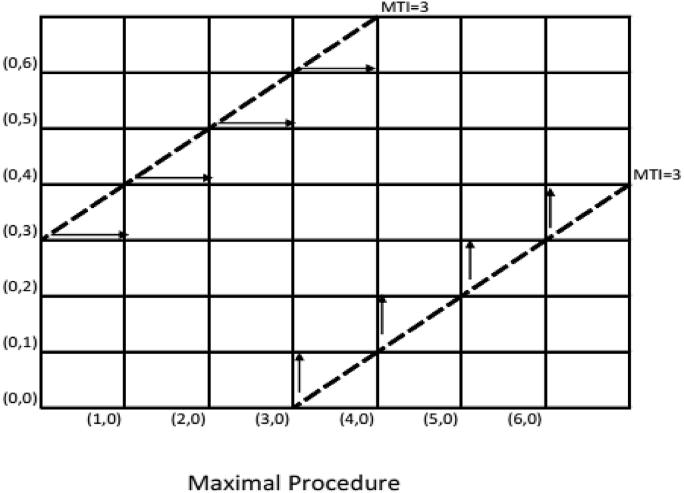
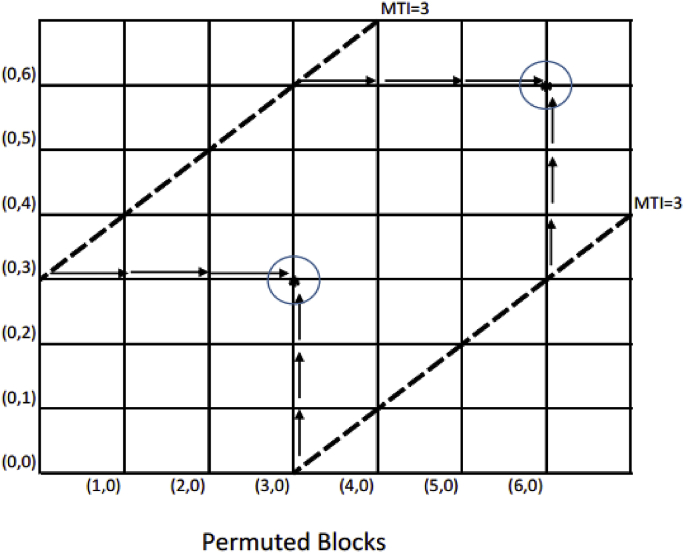
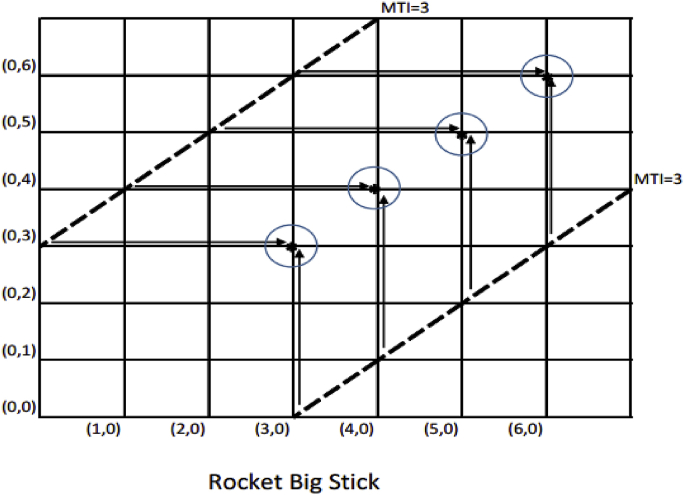
There are numerous approaches to randomizing patients to treatment groups in clinical trials. The most popular is permuted block randomization, and a newer and better class, which is gaining in popularity, is the so-called class of MTI procedures, which use a big stick to force the allocation sequence back towards balance when it reaches the MTI (maximally tolerated imbalance). Three prominent members of this class are the aptly named big stick procedure, Chen's procedure, and the maximal procedure. As we shall establish in this article, blocked randomization, though not typically cast as an MTI procedure, does in fact use the big stick as well. We shall argue that its weaknesses, which are well known, arise precisely from its improper use, bordering on outright abuse, of this big stick. Just as rocket powered golf clubs add power to a golf swing, so too does the big stick used by blocked randomization hit with too much power. In addition, the big stick is invoked when it need not be, thereby resulting in the excessive prediction for which permuted blocks are legendary. We bridge the gap between the MTI procedures and block randomization by identifying a new randomization procedure intermediate between the two, namely based on an excessively powerful big stick, but one that is used only when needed. We shall then argue that the MTI procedures are all superior to this intermediate procedure by virtue of using a restrained big stick, and that this intermediate procedure is superior to block randomization by virtue of restraint in when the big stick is invoked. The transitivity property then completes our argument.
在临床试验中,有多种将患者随机分配到治疗组的方法。最常用的是置换区组随机化,而一种越来越受欢迎的更新且更好的方法是所谓的MTI程序类别,当分配序列达到MTI(最大耐受不平衡)时,它会用一根“大棒”将分配序列强制恢复到平衡状态。这个类别的三个著名成员是恰如其分地命名为“大棒程序”、陈的程序和最大程序。正如我们将在本文中阐述的,区组随机化虽然通常不被视为MTI程序,但实际上也使用了“大棒”。我们将论证,其众所周知的弱点恰恰源于对这根“大棒”的不当使用,近乎滥用。就像火箭动力高尔夫球杆增加高尔夫挥杆的力量一样,区组随机化使用的“大棒”击球力量过大。此外,在不需要时调用“大棒”,从而导致了置换区组闻名的过度预测。我们通过识别介于两者之间的一种新的随机化程序,即基于一根过度强大但仅在需要时使用的“大棒”,弥合了MTI程序和区组随机化之间的差距。然后我们将论证,MTI程序由于使用了受约束的“大棒”而都优于这种中间程序,并且这种中间程序由于在调用“大棒”时有所克制而优于区组随机化。传递性属性完成了我们的论证。