Department of Ecology and Evolution, University of Chicago, 1101 E 57th Street, Chicago, IL, 60637, USA.
School of BioSciences, Bio21 Institute/University of Melbourne, Melbourne, VIC, 3010, Australia.
Nat Commun. 2018 May 8;9(1):1817. doi: 10.1038/s41467-018-04219-3.
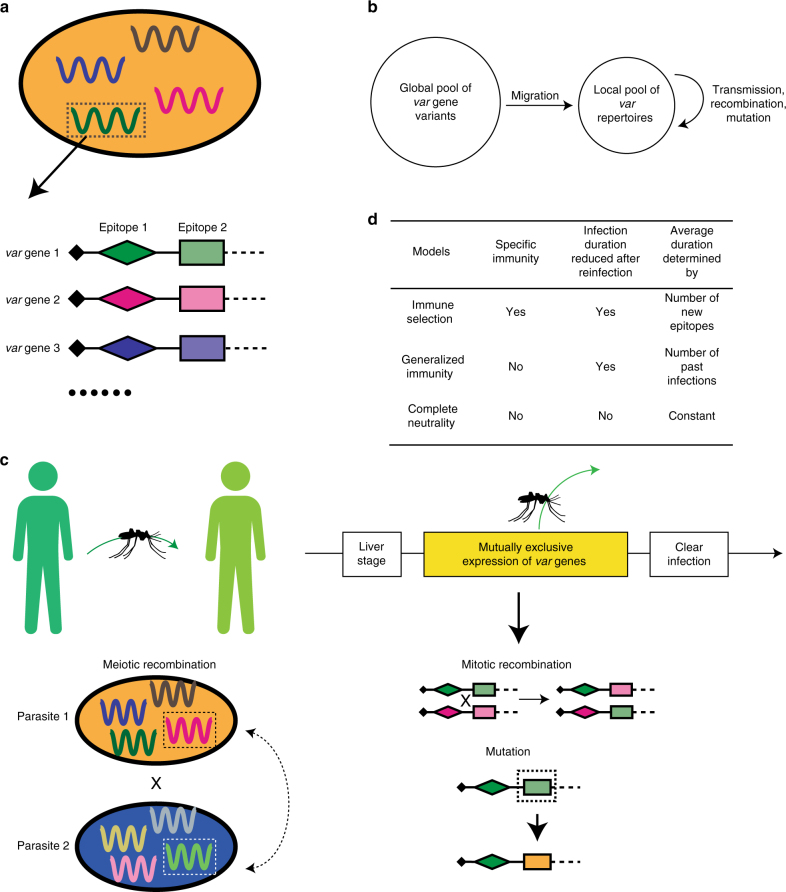
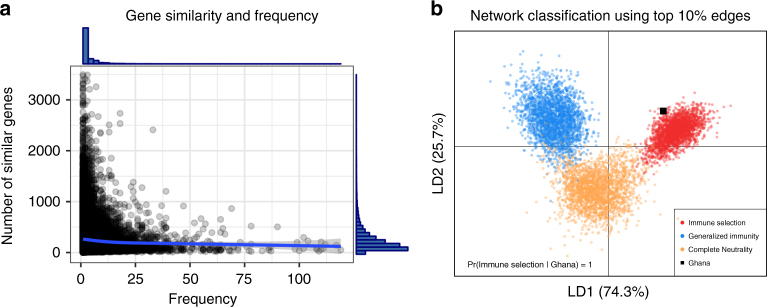
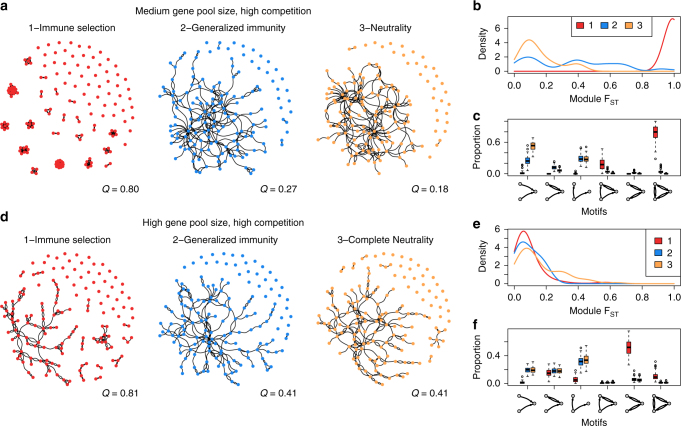
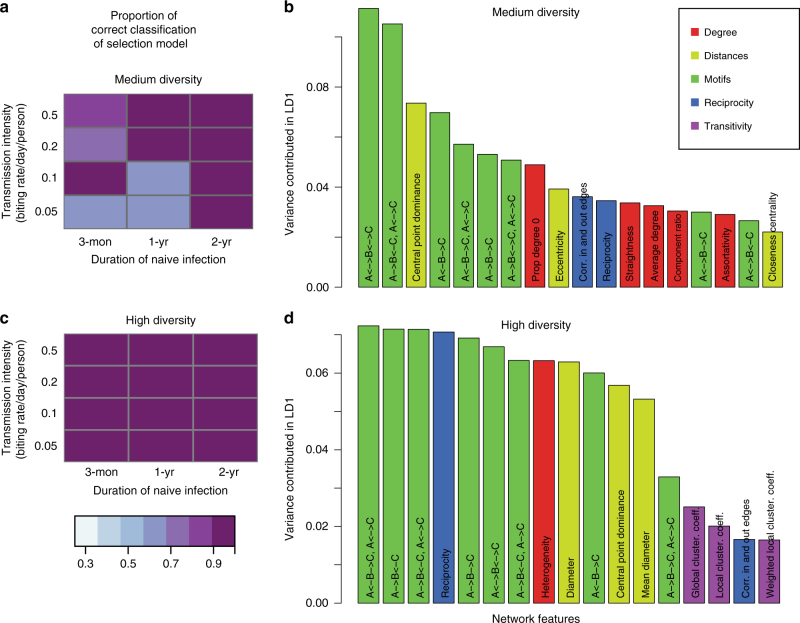
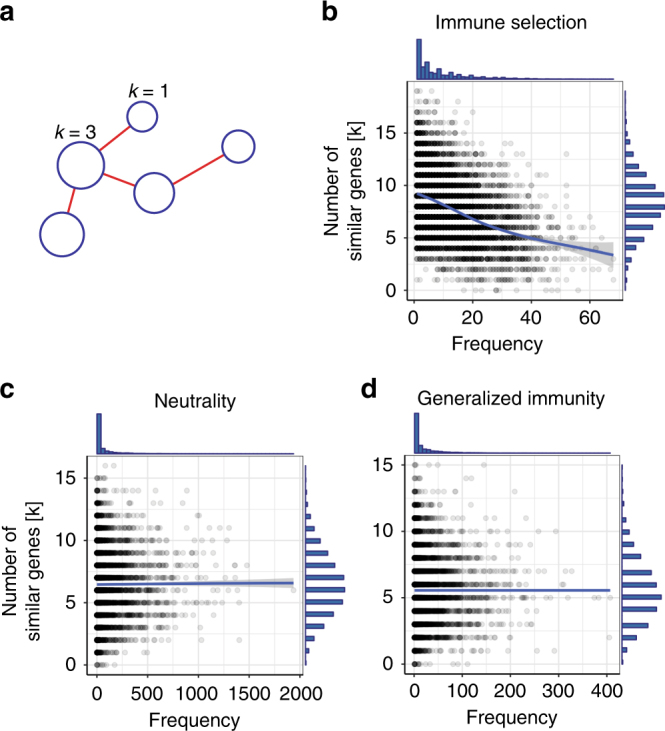
Pathogens compete for hosts through patterns of cross-protection conferred by immune responses to antigens. In Plasmodium falciparum malaria, the var multigene family encoding for the major blood-stage antigen PfEMP1 has evolved enormous genetic diversity through ectopic recombination and mutation. With 50-60 var genes per genome, it is unclear whether immune selection can act as a dominant force in structuring var repertoires of local populations. The combinatorial complexity of the var system remains beyond the reach of existing strain theory and previous evidence for non-random structure cannot demonstrate immune selection without comparison with neutral models. We develop two neutral models that encompass malaria epidemiology but exclude competitive interactions between parasites. These models, combined with networks of genetic similarity, reveal non-neutral strain structure in both simulated systems and an extensively sampled population in Ghana. The unique population structure we identify underlies the large transmission reservoir characteristic of highly endemic regions in Africa.
病原体通过免疫反应对抗原产生的交叉保护模式来争夺宿主。在恶性疟原虫疟疾中,var 多基因家族通过异位重组和突变,进化出巨大的遗传多样性,其基因组中约有 50-60 个 var 基因,目前尚不清楚免疫选择是否可以成为构建当地人群 var 库的主要力量。var 系统的组合复杂性超出了现有菌株理论的范围,并且没有与中性模型进行比较,以前关于非随机结构的证据不能证明免疫选择。我们开发了两种涵盖疟疾流行病学但排除寄生虫之间竞争相互作用的中性模型。这些模型与遗传相似性网络相结合,揭示了模拟系统和加纳广泛采样人群中存在非中性菌株结构。我们在高度流行地区的独特种群结构是非洲巨大的传播储备的基础。