Department of Chemistry and Biochemistry & Center for Discovery and Innovation (CDI), The City College of New York, New York, NY, 10031, USA.
Ph.D. Program in Chemistry, The Graduate Center of the City University of New York, New York, NY, 10016, USA.
Sci Rep. 2018 May 9;8(1):7315. doi: 10.1038/s41598-018-25691-3.
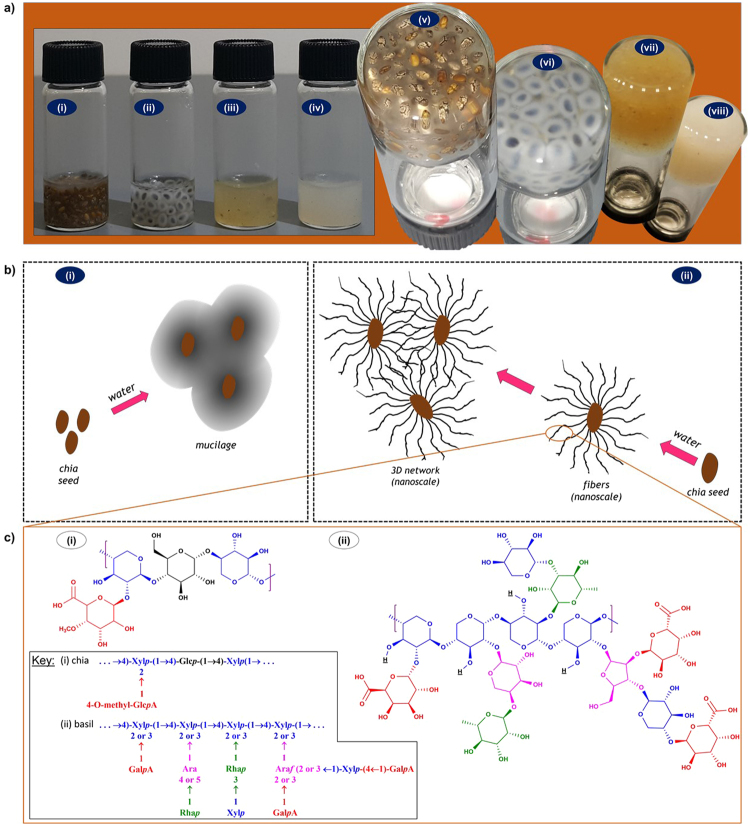
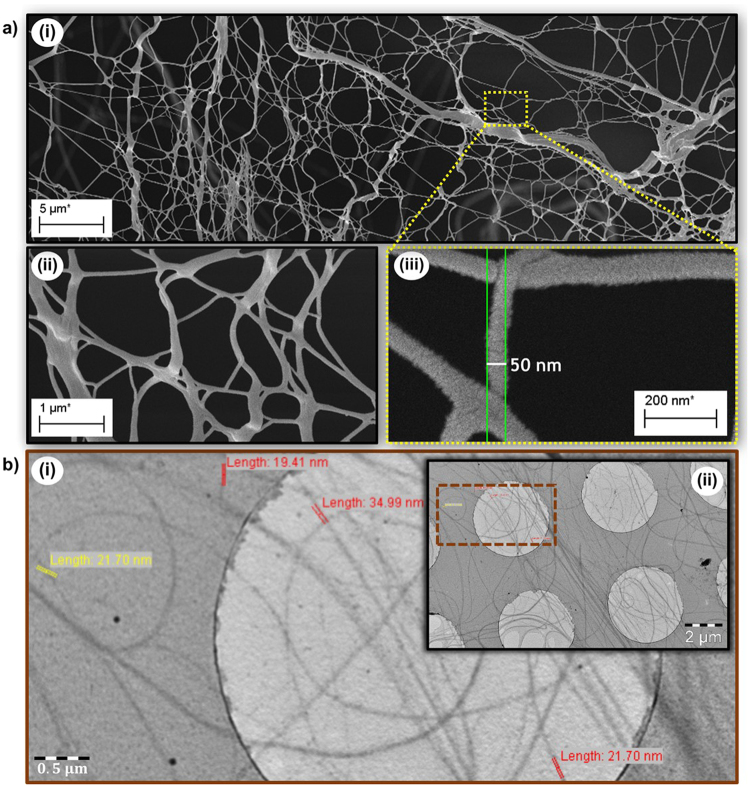
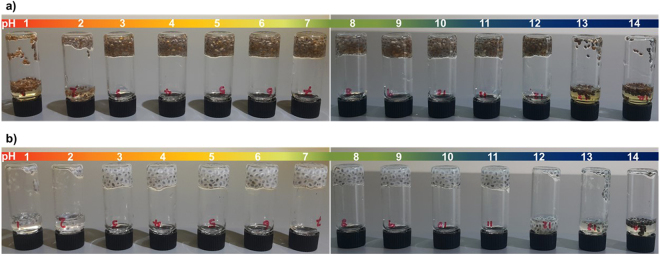
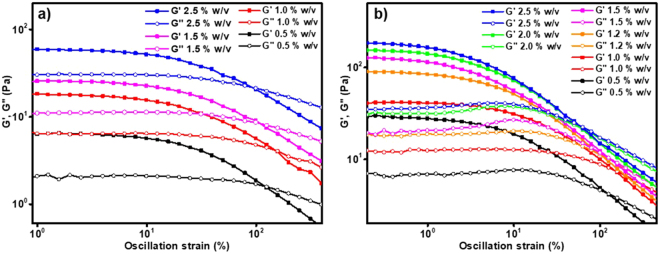
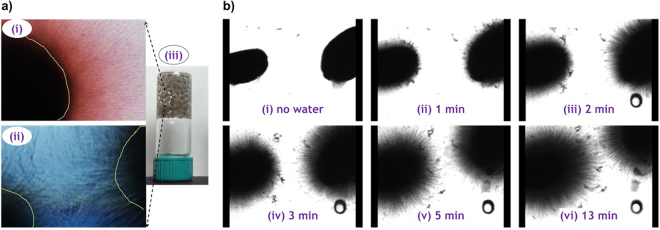
Chia (Salvia hispanica) and basil (Ocimum basilicum) seeds have the intrinsic ability to form a hydrogel concomitant with moisture-retention, slow releasing capability and proposed health benefits such as curbing diabetes and obesity by delaying digestion process. However, the underlying mode of gelation at nanoscopic level is not clearly explained or explored. The present study elucidates and corroborates the hypothesis that the gelling behavior of such seeds is due to their nanoscale 3D-network formation. The preliminary study revealed the influence of several conditions like polarity, pH and hydrophilicity/hydrophobicity on fiber extrusion from the seeds which leads to gelation. Optical microscopic analysis clearly demonstrated bundles of fibers emanating from the seed coat while in contact with water, and live growth of fibers to form 3D network. Scanning electron microscope (SEM) and transmission electron microscope (TEM) studies confirmed 3D network formation with fiber diameters ranging from 20 to 50 nm.
奇亚(Salvia hispanica)和罗勒(Ocimum basilicum)种子具有内在的形成水凝胶的能力,同时具有保湿、缓慢释放能力,并具有抑制糖尿病和肥胖等健康益处,方法是通过延迟消化过程。然而,纳米级凝胶化的基本模式尚未得到明确解释或探索。本研究阐明并证实了这样的假设,即这些种子的胶凝行为是由于其纳米级 3D 网络的形成。初步研究表明,极性、pH 值和亲水性/疏水性等多种条件对种子中纤维挤出的影响,从而导致凝胶形成。光学显微镜分析清楚地表明,在与水接触时,种子外皮会产生纤维束,并且纤维会生长形成 3D 网络。扫描电子显微镜(SEM)和透射电子显微镜(TEM)研究证实了具有 20 至 50nm 纤维直径的 3D 网络形成。