University Hospital of Child and Adolescent Psychiatry and Psychotherapy, University of Bern, Bern, Switzerland.
Institute of Pharmacology and Toxicology, University of Zurich, Zurich, Switzerland.
Sci Rep. 2018 May 9;8(1):7334. doi: 10.1038/s41598-018-25590-7.
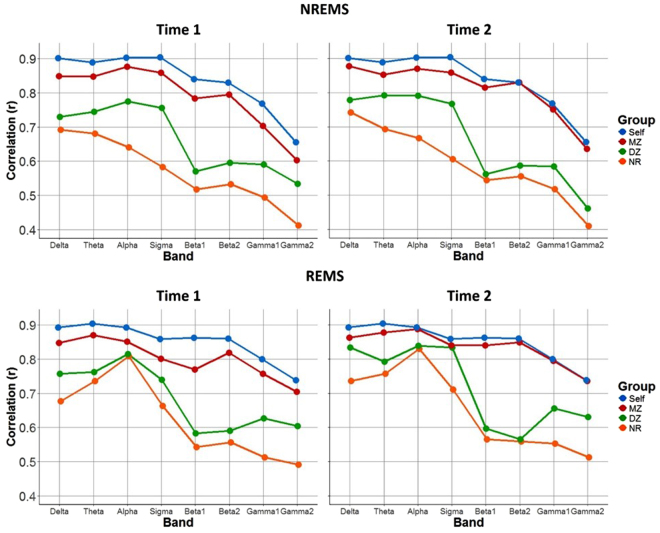
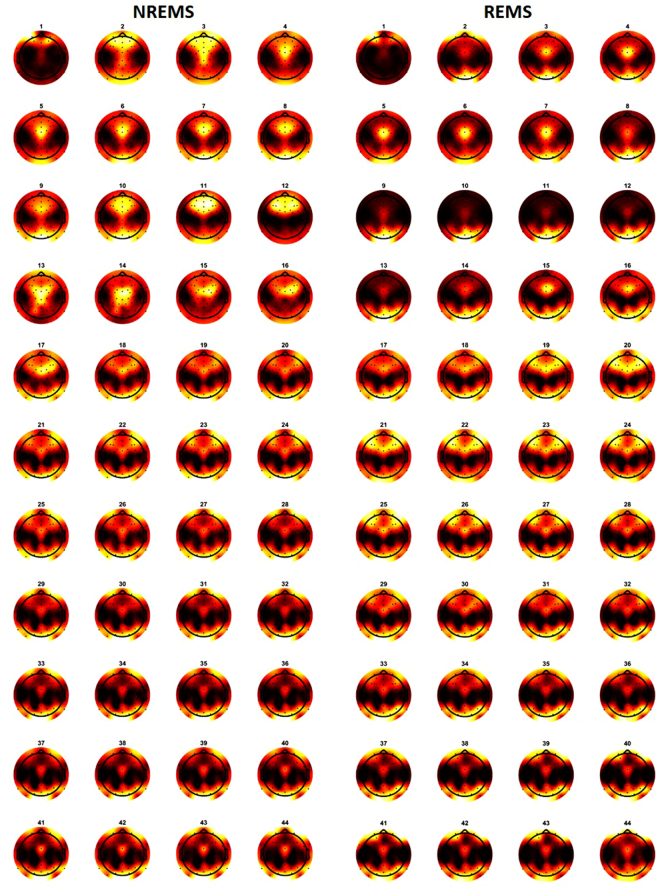
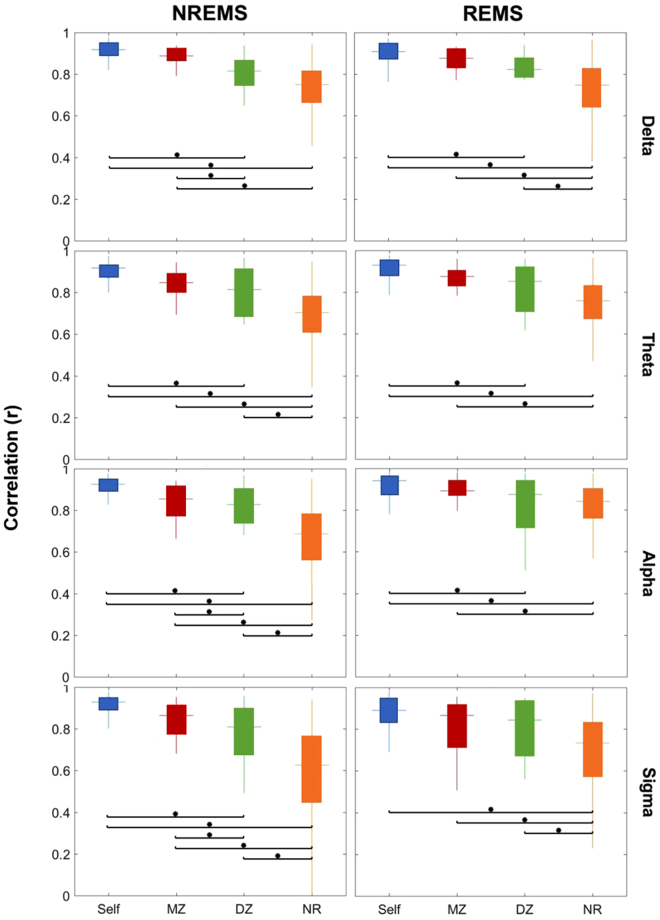
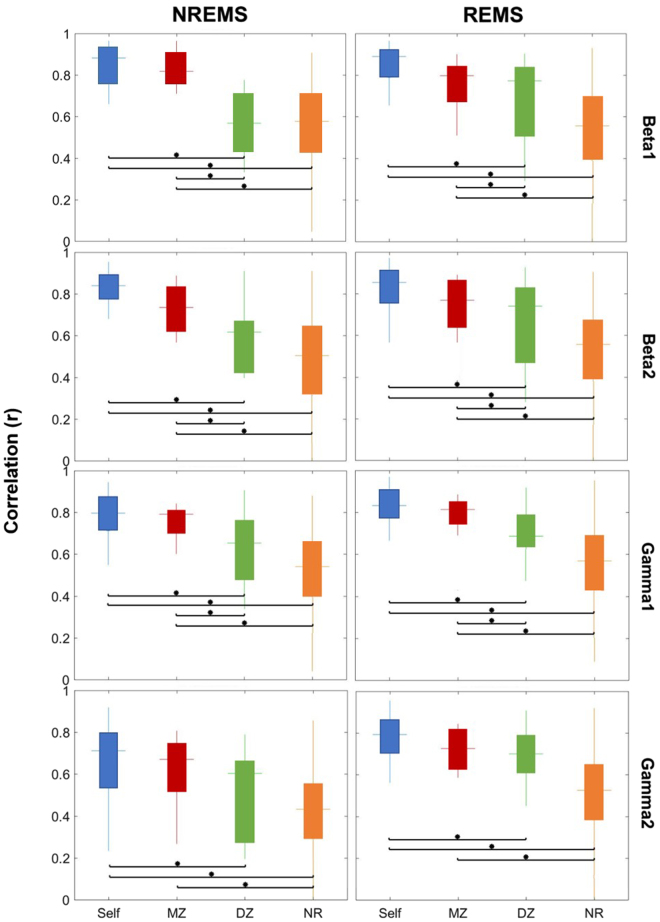
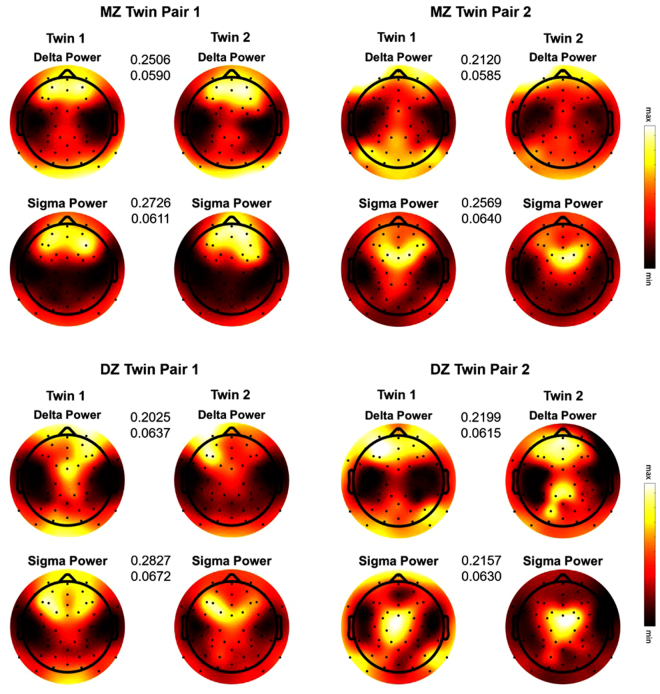
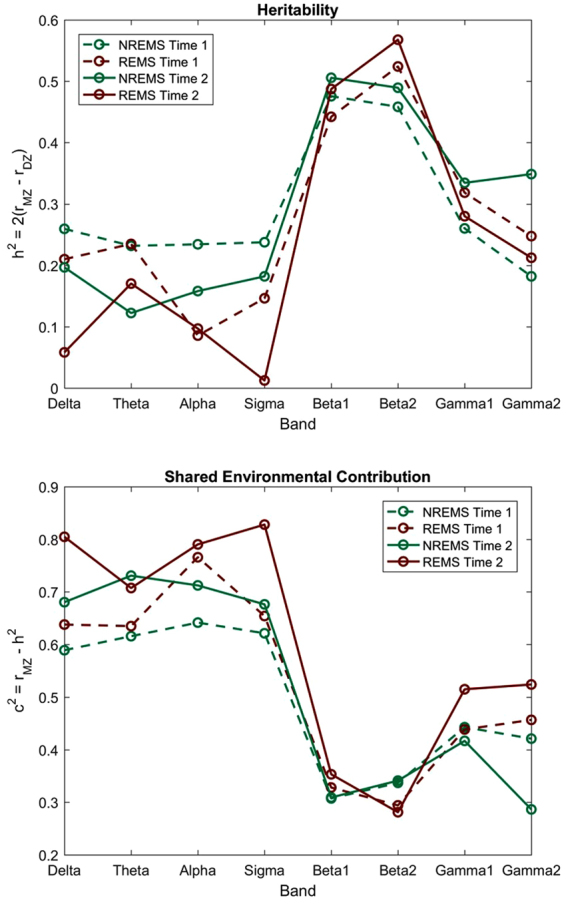
The topographic distribution of sleep EEG power is a reflection of brain structure and function. The goal of this study was to examine the degree to which genes contribute to sleep EEG topography during adolescence, a period of brain restructuring and maturation. We recorded high-density sleep EEG in monozygotic (MZ; n = 28) and dizygotic (DZ; n = 22) adolescent twins (mean age = 13.2 ± 1.1 years) at two time points 6 months apart. The topographic distribution of normalized sleep EEG power was examined for the frequency bands delta (1-4.6 Hz) to gamma 2 (34.2-44 Hz) during NREM and REM sleep. We found highest heritability values in the beta band for NREM and REM sleep (0.44 ≤ h ≤ 0.57), while environmental factors shared amongst twin siblings accounted for the variance in the delta to sigma bands (0.59 ≤ c ≤ 0.83). Given that both genetic and environmental factors are reflected in sleep EEG topography, our results suggest that topography may provide a rich metric by which to understand brain function. Furthermore, the frequency specific parsing of the influence of genetic from environmental factors on topography suggests functionally distinct networks and reveals the mechanisms that shape these networks.
睡眠脑电图功率的地形分布反映了大脑的结构和功能。本研究旨在探讨基因在青少年时期(大脑重构和成熟的时期)对睡眠脑电图地形的影响程度。我们在相隔 6 个月的两个时间点记录了 28 对同卵(MZ)和 22 对异卵(DZ)青少年双胞胎(平均年龄 13.2±1.1 岁)的高密度睡眠脑电图。在 NREM 和 REM 睡眠期间,我们检查了归一化睡眠 EEG 功率在 delta(1-4.6 Hz)到 gamma 2(34.2-44 Hz)频段的地形分布。我们发现 NREM 和 REM 睡眠的 beta 频段具有最高的遗传率(0.44≤h≤0.57),而双胞胎兄弟姐妹之间共享的环境因素则解释了 delta 到 sigma 频段的方差(0.59≤c≤0.83)。鉴于遗传和环境因素都反映在睡眠脑电图地形中,我们的结果表明地形可能提供了一种理解大脑功能的丰富指标。此外,对遗传和环境因素对地形影响的频率特异性解析表明存在功能上不同的网络,并揭示了塑造这些网络的机制。