Department of Medical Microbiology, Academic Medical Center, 1105 AZ, Amsterdam, The Netherlands.
Hubrecht Institute, Royal Netherlands Academy of Arts and Sciences (KNAW), University Medical Center Utrecht and Cancer Genomics Netherlands, 3584 CT, Utrecht, The Netherlands.
Emerg Microbes Infect. 2018 May 9;7(1):84. doi: 10.1038/s41426-018-0077-2.
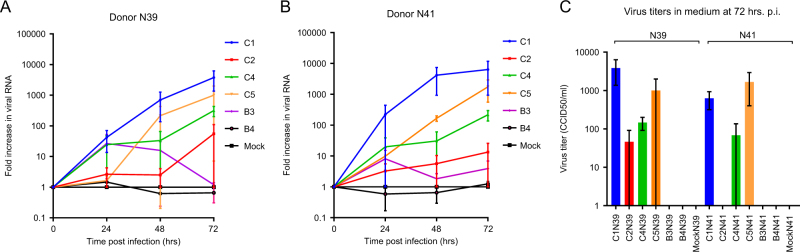
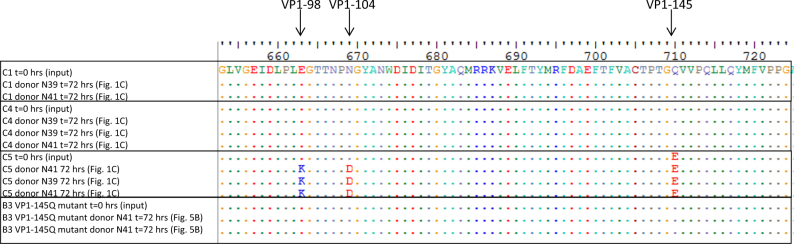
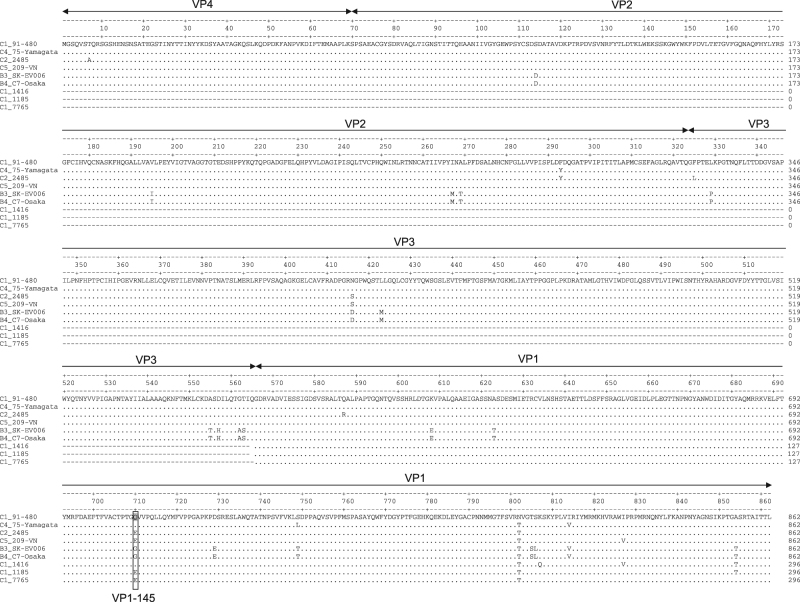
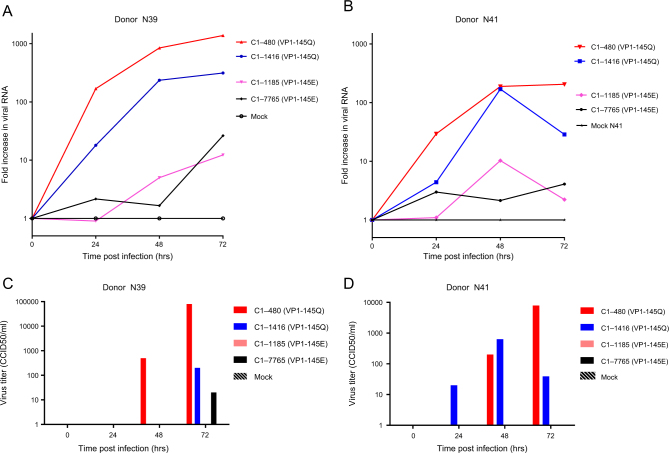
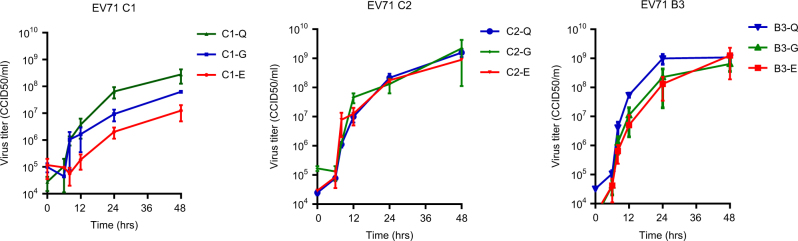
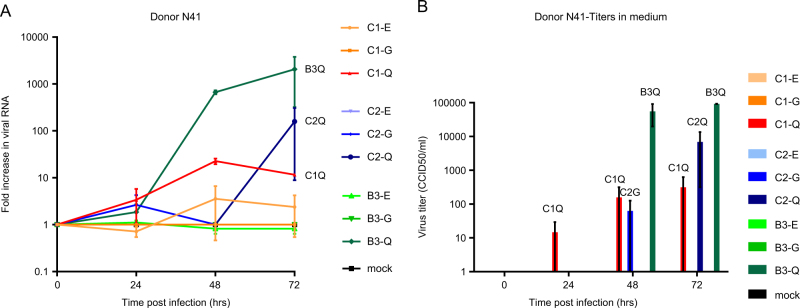
Human enteroviruses frequently cause severe diseases in children. Human enteroviruses are transmitted via the fecal-oral route and respiratory droplets, and primary replication occurs in the gastro-intestinal and respiratory tracts; however, how enteroviruses infect these sites is largely unknown. Human intestinal organoids have recently proven to be valuable tools for studying enterovirus-host interactions in the intestinal tract. In this study, we demonstrated the susceptibility of a newly developed human airway organoid model for enterovirus 71 (EV71) infection. We showed for the first time in a human physiological model that EV71 replication kinetics are strain-dependent. A glutamine at position 145 of the VP1 capsid protein was identified as a key determinant of infectivity, and residues VP1-98K and VP1-104D were identified as potential infectivity markers. The results from this study provide new insights into EV71 infectivity in the human airway epithelia and demonstrate the value of organoid technology for virus research.
人类肠道病毒经常导致儿童重病。人类肠道病毒通过粪-口途径和呼吸道飞沫传播,主要在胃肠道和呼吸道复制;然而,肠道病毒如何感染这些部位在很大程度上是未知的。人类肠道类器官最近被证明是研究肠道中肠道病毒-宿主相互作用的有用工具。在这项研究中,我们证明了新开发的人类气道类器官模型对肠道病毒 71(EV71)感染的易感性。我们首次在人类生理模型中表明,EV71 复制动力学是依赖于毒株的。VP1 衣壳蛋白位置 145 上的一个谷氨酰胺被确定为感染性的关键决定因素,并且 VP1-98K 和 VP1-104D 残基被确定为潜在的感染性标志物。这项研究的结果为 EV71 在人呼吸道上皮中的感染性提供了新的见解,并证明了类器官技术在病毒研究中的价值。