do Nascimento Paulo César Xavier, Amaral André Maltez, de Almeida João Ricardo Maltez
Biomedical Professional, Graduate Student in Bioimaging at the Escola Bahiana de Medicina e Saúde Pública, Salvador, BA, Brazil.
MD, Radiologist at the Clínica de Assistência à Mulher - CAM, Salvador, BA, Brazil.
Radiol Bras. 2018 Mar-Apr;51(2):81-86. doi: 10.1590/0100-3984.2016.0226.
To compare the pain expected to that effectively caused by magnetic resonance arthrography of the shoulder and, secondarily, to describe a simplified approach to the technique for articular access.
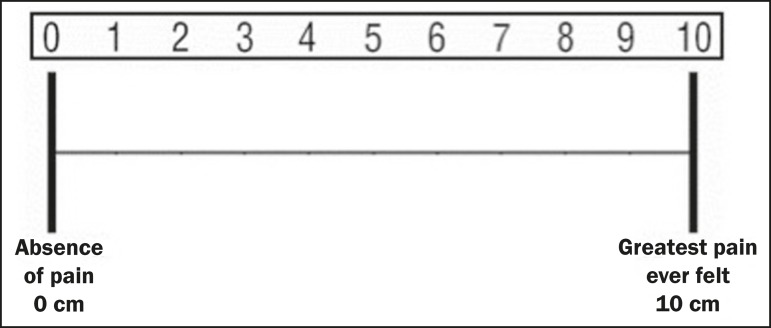
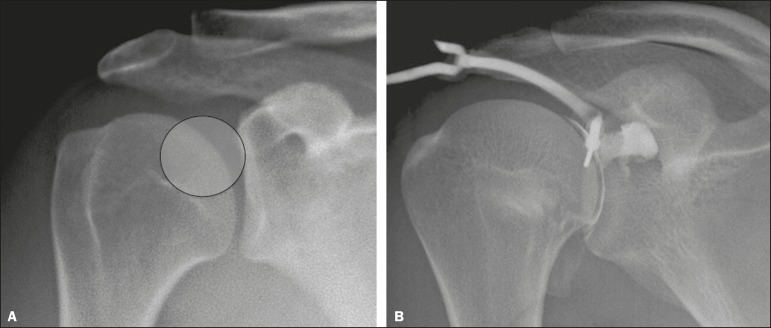
We prospectively evaluated 40 participants who used a visual analog scale and a simplified categorical scale to indicate the level of pain expected and that experienced after the procedure, comparing the two with the Wilcoxon matched-pairs test. We also determined gender-related differences in pain conditions using the Mann-Whitney U test. In addition, we described a modified technique involving radiographic localization and the use of standard puncture needles for articular access.
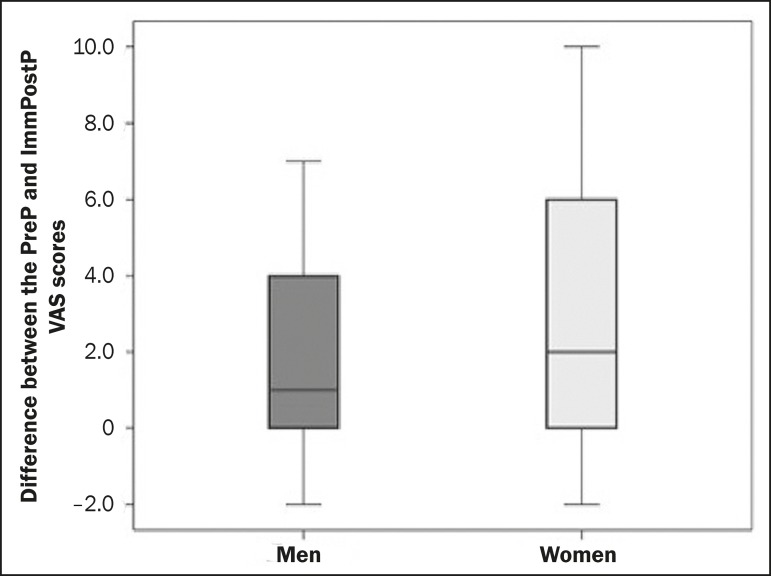
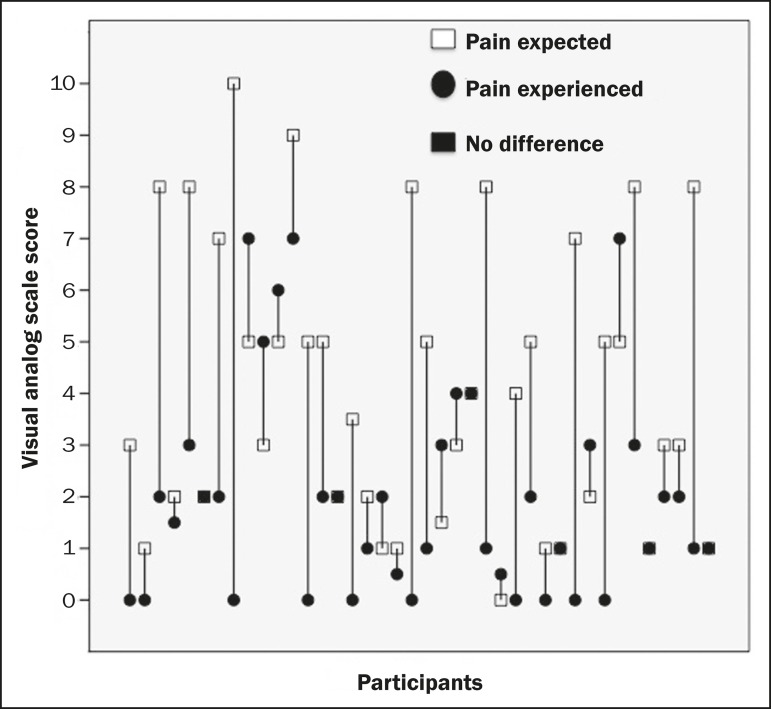
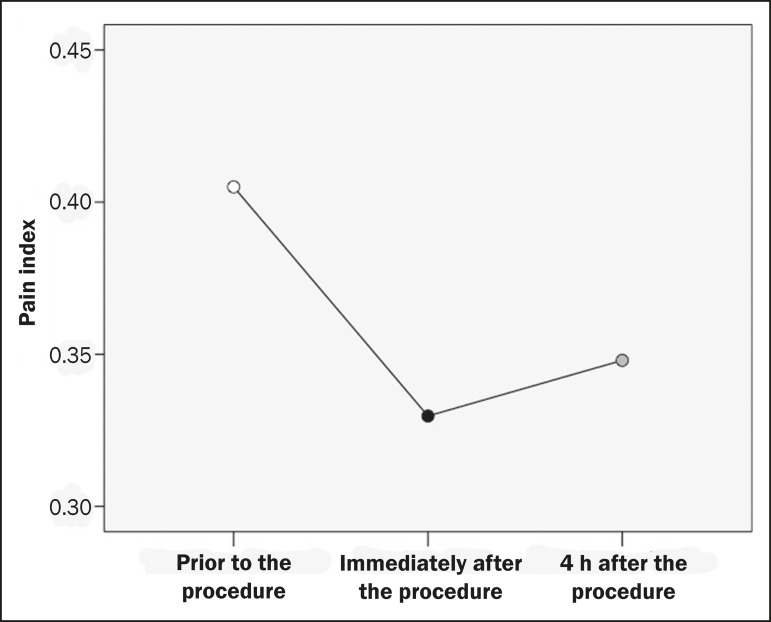
Analysis of the visual analog scales showed that the pain experienced was less than had been expected, with median scores of 1.75 and 3.75, respectively ( < 0.001). The level of pain expected was higher among women than among men, with median scores of 8.0 and 3.0, respectively ( = 0.014), as was the level of pain experienced, with median scores of 3.0 and 1.5, respectively ( = 0.139). The overall categorical evaluation corroborated that difference ( = 0.03). Articular access with the modified technique was successful in all patients.
Magnetic resonance arthrography of the shoulder is less painful than patients expect. In addition, digital radiographic guidance combined with the use of standard puncture needles appears to improve the efficiency of the method.
比较肩部磁共振关节造影预期疼痛与实际有效引起的疼痛,其次描述一种简化的关节穿刺技术方法。
我们前瞻性评估了40名参与者,他们使用视觉模拟量表和简化分类量表来指出预期疼痛水平和操作后经历的疼痛水平,使用Wilcoxon配对检验对两者进行比较。我们还使用Mann-Whitney U检验确定疼痛情况的性别差异。此外,我们描述了一种改良技术,包括放射学定位和使用标准穿刺针进行关节穿刺。
视觉模拟量表分析显示,实际经历的疼痛小于预期,中位数分别为1.75和3.75(<0.001)。预期疼痛水平女性高于男性,中位数分别为8.0和3.0(=0.014),实际经历的疼痛水平也是如此,中位数分别为3.0和1.5(=0.139)。总体分类评估证实了这种差异(=0.03)。改良技术的关节穿刺在所有患者中均成功。
肩部磁共振关节造影的疼痛程度低于患者预期。此外,数字放射学引导结合标准穿刺针的使用似乎提高了该方法的效率。