Centre for Translational and Chemical Biology, School of Biological Sciences, University of Edinburgh, Michael Swann Building, Max Born Crescent, Edinburgh EH9 3BF, U.K.
Cell Signalling Unit, p53 Signal Transduction Laboratories, Institute of Genetics and Molecular Medicine, University of Edinburgh Cancer Research Centre, Edinburgh EH4 2XR, U.K.
Biochem J. 2018 May 31;475(10):1821-1837. doi: 10.1042/BCJ20180171.
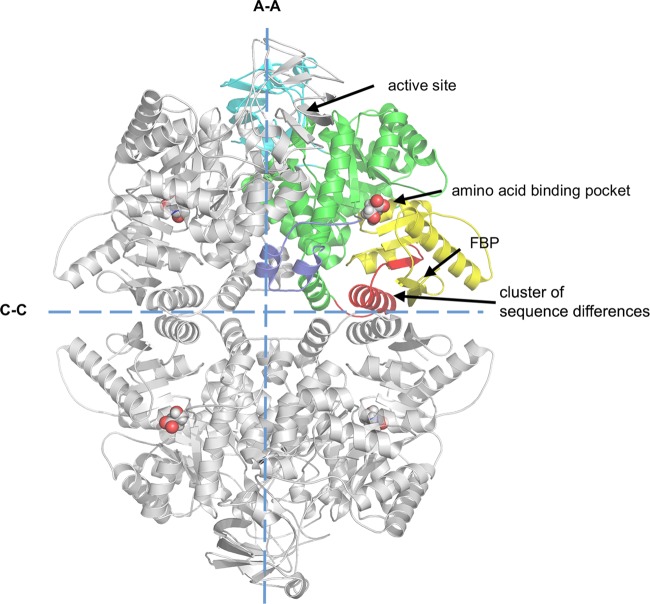
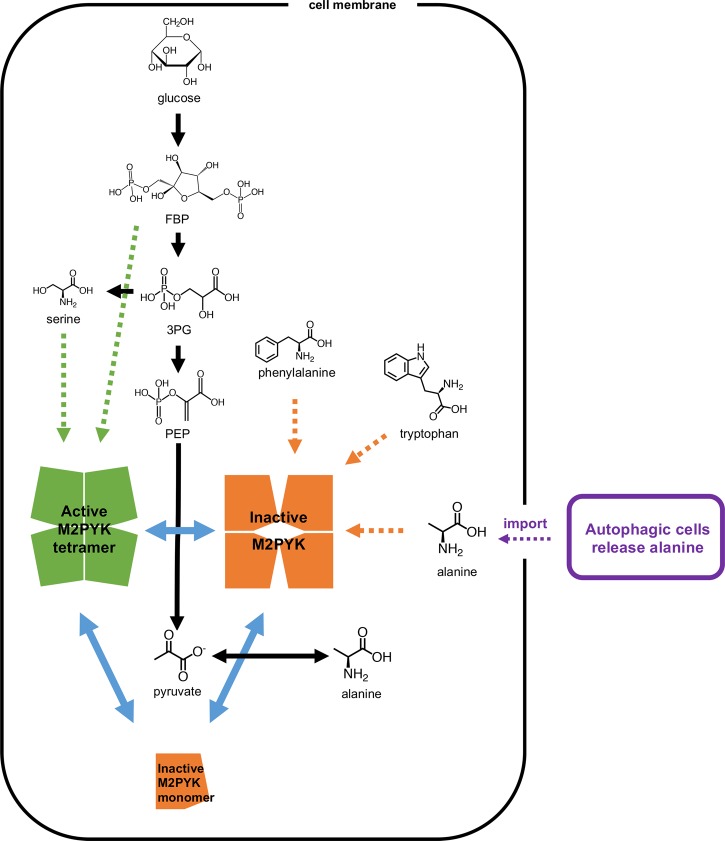
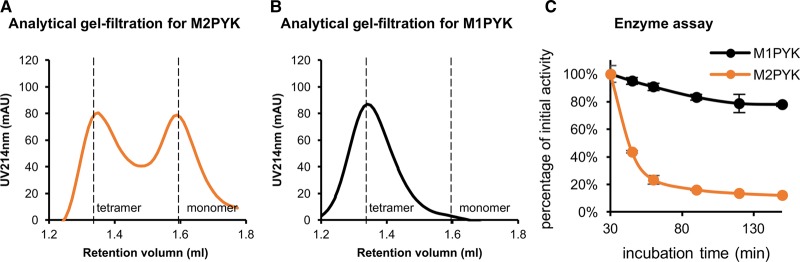
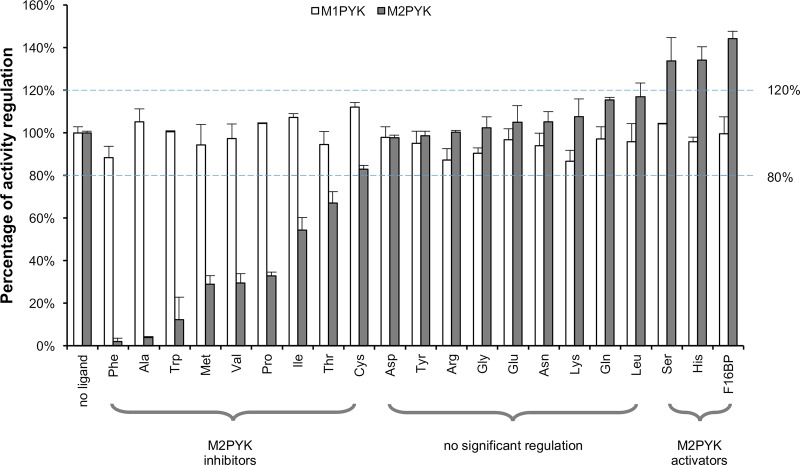
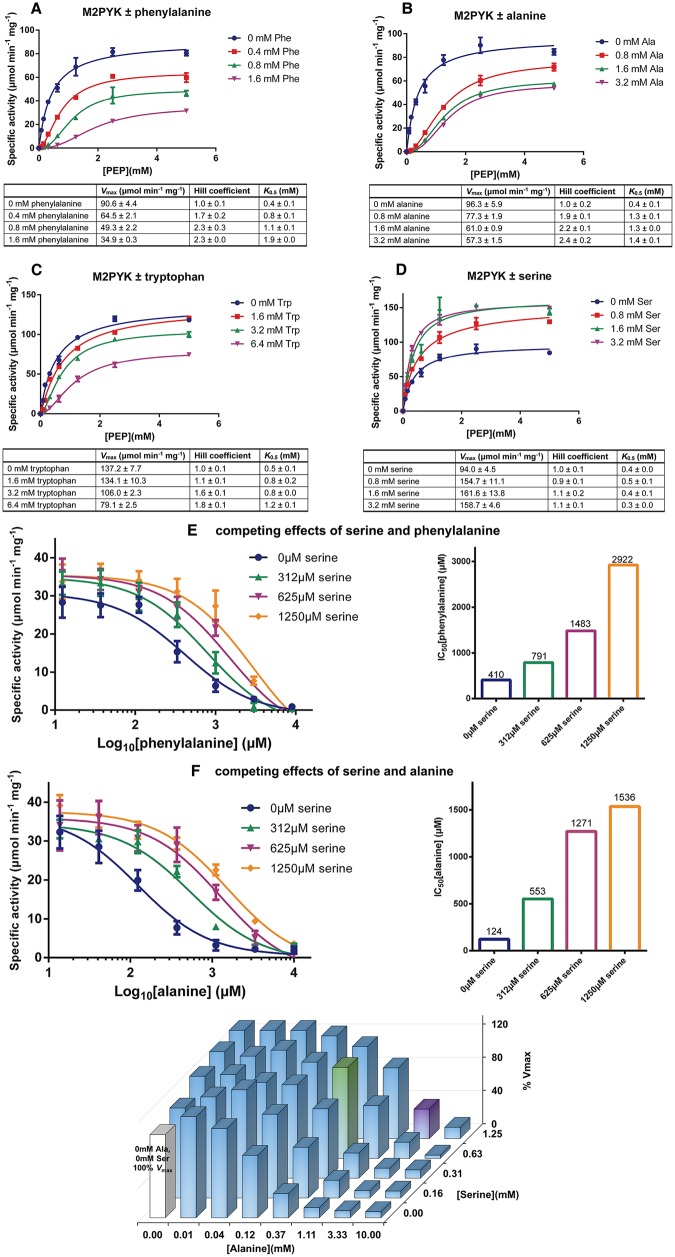
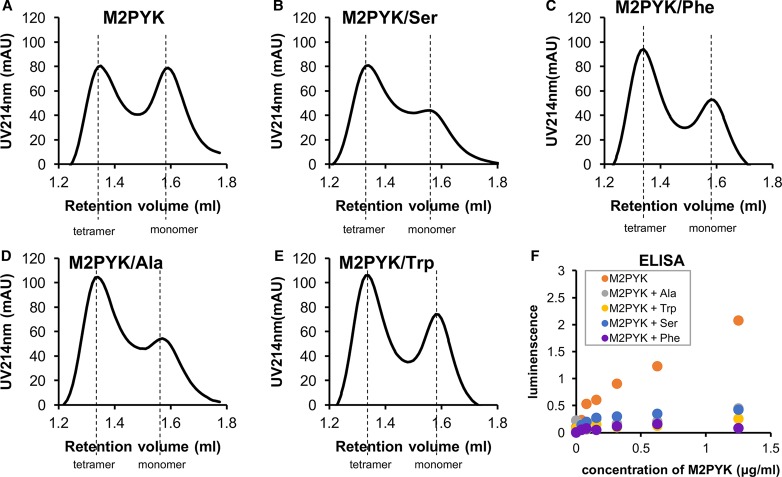
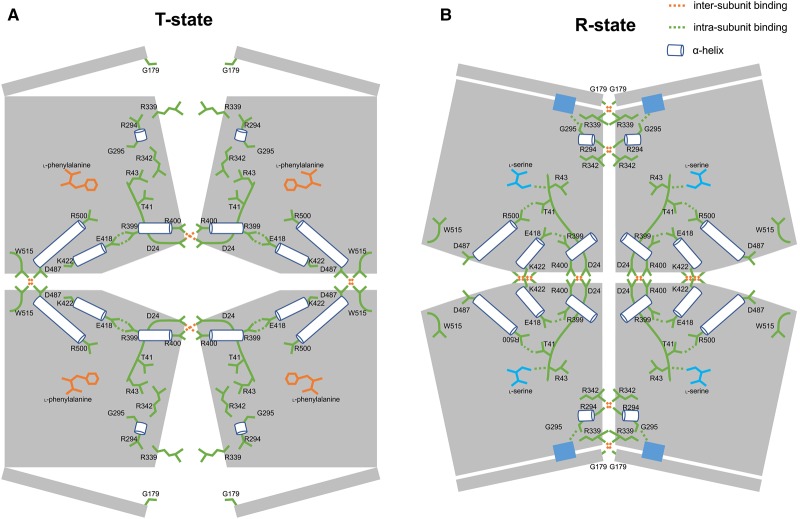
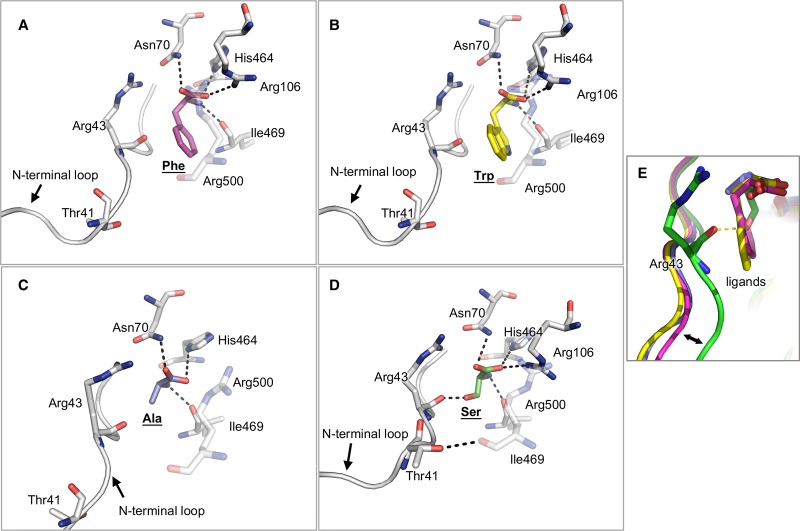
We have tested the effect of all 20 proteinogenic amino acids on the activity of the M2 isoenzyme of pyruvate kinase (M2PYK) and show that, within physiologically relevant concentrations, phenylalanine, alanine, tryptophan, methionine, valine, and proline act as inhibitors, while histidine and serine act as activators. Size exclusion chromatography has been used to show that all amino acids, whether activators or inhibitors, stabilise the tetrameric form of M2PYK. In the absence of amino-acid ligands an apparent tetramer-monomer dissociation is estimated to be ∼0.9 µM with a slow dissociation rate (∼15 min). X-ray structures of M2PYK complexes with alanine, phenylalanine, and tryptophan show the M2PYK locked in an inactive T-state conformation, while activators lock the M2PYK tetramer in the active R-state conformation. Amino-acid binding in the allosteric pocket triggers rigid body rotations (11°) stabilising either T or R states. The opposing inhibitory and activating effects of the non-essential amino acids serine and alanine suggest that M2PYK could act as a rapid-response nutrient sensor to rebalance cellular metabolism. This competition at a single allosteric site between activators and inhibitors provides a novel regulatory mechanism by which M2PYK activity is finely tuned by the relative (but not absolute) concentrations of activator and inhibitor amino acids. Such 'allostatic' regulation may be important in metabolic reprogramming and influencing cell fate.
我们测试了 20 种蛋白氨基酸对丙酮酸激酶 M2 同工酶(M2PYK)活性的影响,结果表明,在生理相关浓度范围内,苯丙氨酸、丙氨酸、色氨酸、甲硫氨酸、缬氨酸和脯氨酸为抑制剂,组氨酸和丝氨酸为激活剂。凝胶过滤层析已被用于证明所有氨基酸,无论是激活剂还是抑制剂,都能稳定 M2PYK 的四聚体形式。在没有氨基酸配体的情况下,四聚体-单体的解离 被估计为约 0.9μM,解离速率较慢(约 15 分钟)。M2PYK 与丙氨酸、苯丙氨酸和色氨酸复合物的 X 射线结构显示,M2PYK 被锁定在无活性的 T 态构象中,而激活剂将 M2PYK 四聚体锁定在活性的 R 态构象中。变构口袋中的氨基酸结合触发刚性体旋转(11°),稳定 T 态或 R 态。非必需氨基酸丝氨酸和丙氨酸的抑制和激活作用相反,表明 M2PYK 可以作为一种快速反应的营养传感器,重新平衡细胞代谢。这种在单个变构位点上的激活剂和抑制剂之间的竞争提供了一种新的调节机制,通过相对(但不是绝对)浓度的激活剂和抑制剂氨基酸来精细调节 M2PYK 的活性。这种“适应”调节可能在代谢重编程和影响细胞命运中很重要。