Medical Research Council Brain Network Dynamics Unit at the University of Oxford, Oxford OX1 3TH, United Kingdom,
Nuffield Department of Clinical Neurosciences, John Radcliffe Hospital, University of Oxford, Oxford OX3 9DU, United Kingdom.
J Neurosci. 2018 May 30;38(22):5111-5121. doi: 10.1523/JNEUROSCI.3596-17.2018. Epub 2018 May 14.
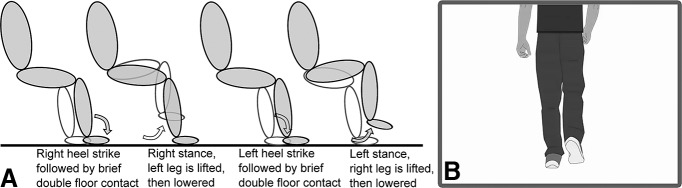
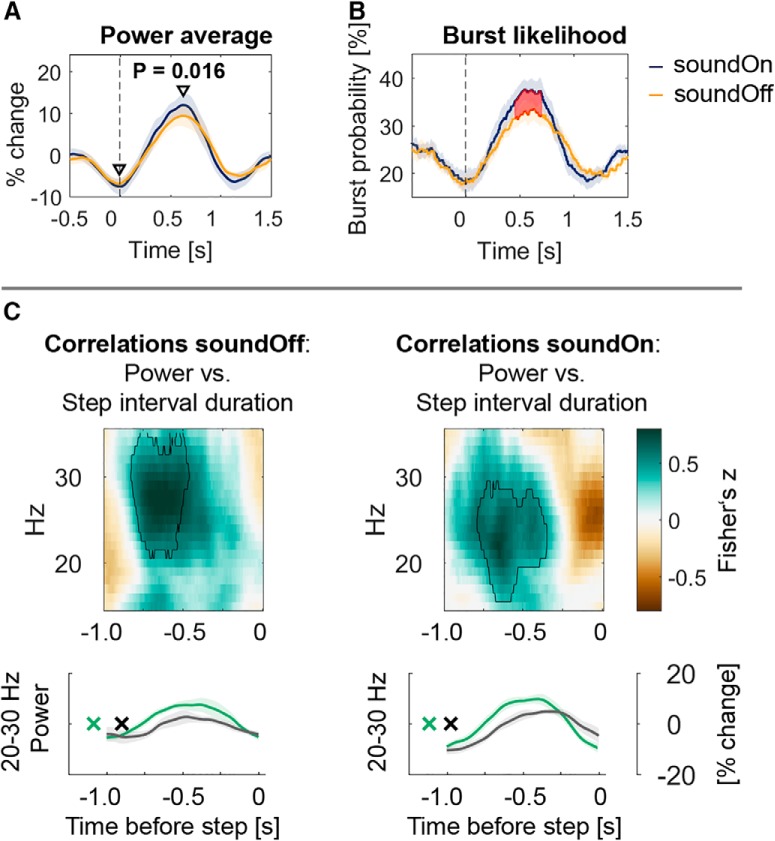
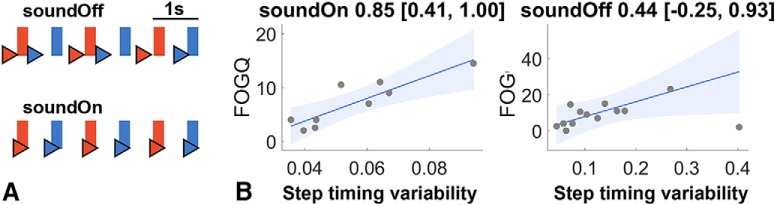
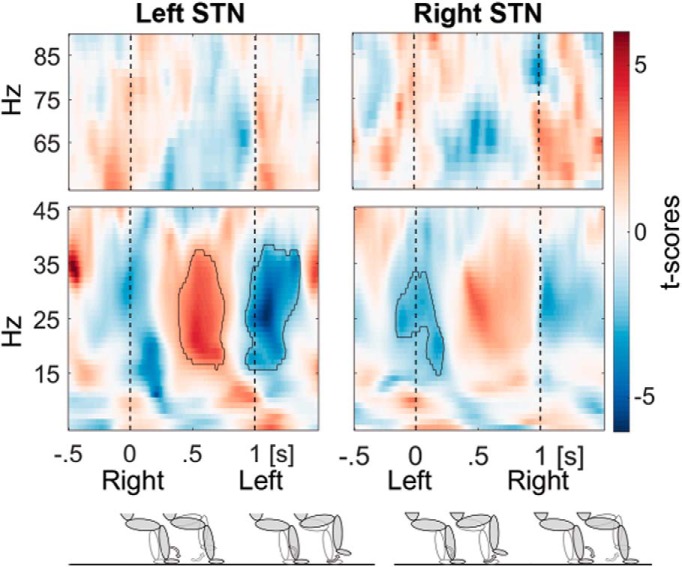
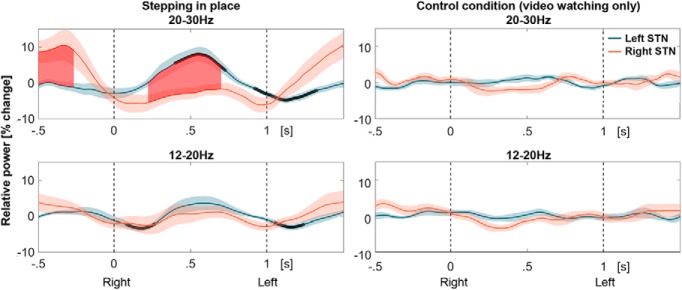
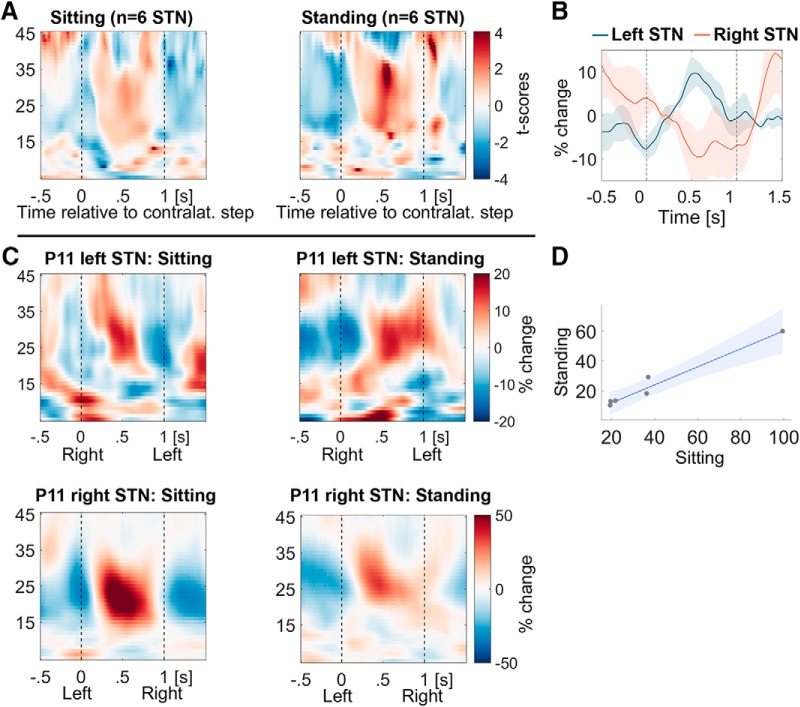
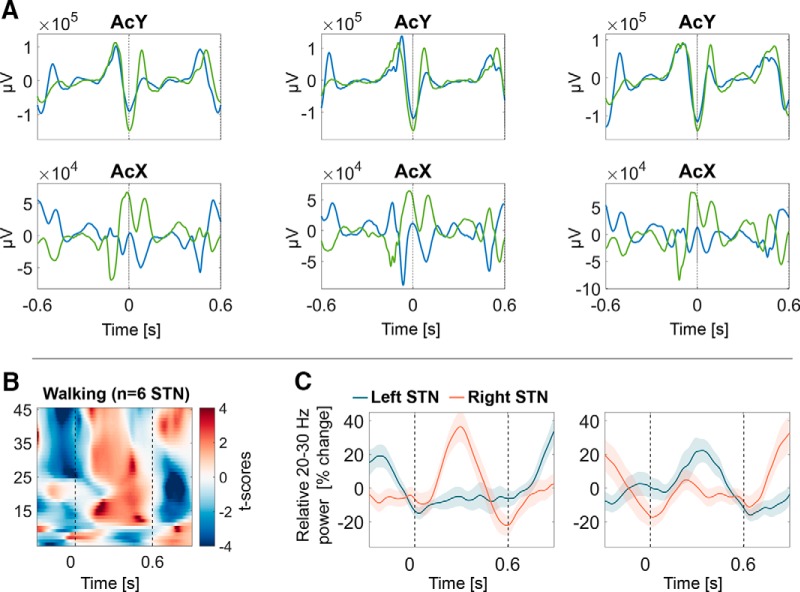
Gait disturbances in Parkinson's disease are commonly refractory to current treatment options and majorly impair patient's quality of life. Auditory cues facilitate gait and prevent motor blocks. We investigated how neural dynamics in the human subthalamic nucleus of Parkinsons's disease patients (14 male, 2 female) vary during stepping and whether rhythmic auditory cues enhance the observed modulation. Oscillations in the beta band were suppressed after ipsilateral heel strikes, when the contralateral foot had to be raised, and reappeared after contralateral heel strikes, when the contralateral foot rested on the floor. The timing of this 20-30 Hz beta modulation was clearly distinct between the left and right subthalamic nucleus, and was alternating within each stepping cycle. This modulation was similar, whether stepping movements were made while sitting, standing, or during gait, confirming the utility of the stepping in place paradigm. During stepping in place, beta modulation increased with auditory cues that assisted patients in timing their steps more regularly. Our results suggest a link between the degree of power modulation within high beta frequency bands and stepping performance. These findings raise the possibility that alternating deep brain stimulation patterns may be superior to constant stimulation for improving parkinsonian gait. Gait disturbances in Parkinson's disease majorly reduce patients' quality of life and are often refractory to current treatment options. We investigated how neural activity in the subthalamic nucleus of patients who received deep brain stimulation surgery covaries with the stepping cycle. 20-30 Hz beta activity was modulated relative to each step, alternating between the left and right STN. The stepping performance of patients improved when auditory cues were provided, which went along with enhanced beta modulation. This raises the possibility that alternating stimulation patterns may also enhance beta modulation and may be more beneficial for gait control than continuous stimulation, which needs to be tested in future studies.
帕金森病患者的步态障碍通常对当前的治疗选择有抗性,并且主要会降低患者的生活质量。听觉提示有助于改善步态并防止运动障碍。我们研究了帕金森病患者(14 名男性,2 名女性)的丘脑底核中的神经动力学在迈步时如何变化,以及节奏性听觉提示是否会增强观察到的调制。当对侧脚必须抬起时,同侧脚跟撞击后,β频段的振荡被抑制,当对侧脚放在地板上时,β频段的振荡再次出现。这种 20-30 Hz 的β调制的时间明显区分了左右丘脑底核,并且在每个迈步周期内交替出现。这种调制无论是在坐姿、站立还是在步态中进行时,都非常相似,这证实了原地踏步的实用性。在原地踏步时,听觉提示可以帮助患者更规律地调整步伐,β调制会增加。我们的结果表明,高β频段内功率调制的程度与踏步表现之间存在联系。这些发现增加了交替深部脑刺激模式可能优于持续刺激以改善帕金森步态的可能性。帕金森病患者的步态障碍严重降低了患者的生活质量,并且通常对当前的治疗选择有抗性。我们研究了接受深部脑刺激手术的患者的丘脑底核中的神经活动如何与踏步周期相关。20-30 Hz 的β活动与每个步相对调制,在左右 STN 之间交替。当提供听觉提示时,患者的踏步表现得到改善,这伴随着β调制的增强。这增加了交替刺激模式也可能增强β调制的可能性,并且可能比连续刺激更有益于步态控制的可能性,这需要在未来的研究中进行测试。