Division of Infant and Toddler Mental Health, Department of Psychosocial Medicine, National Centre for Child Health and Development, Tokyo, Japan.
Smart Aging International Research Center, IDAC, Tohoku University, Sendai, Japan.
PLoS One. 2018 May 15;13(5):e0196272. doi: 10.1371/journal.pone.0196272. eCollection 2018.
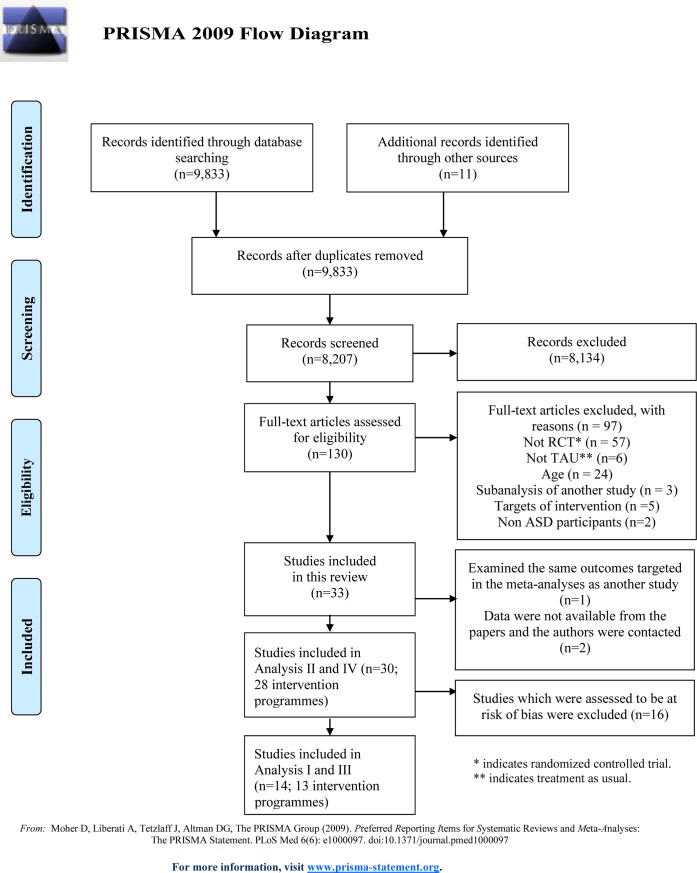
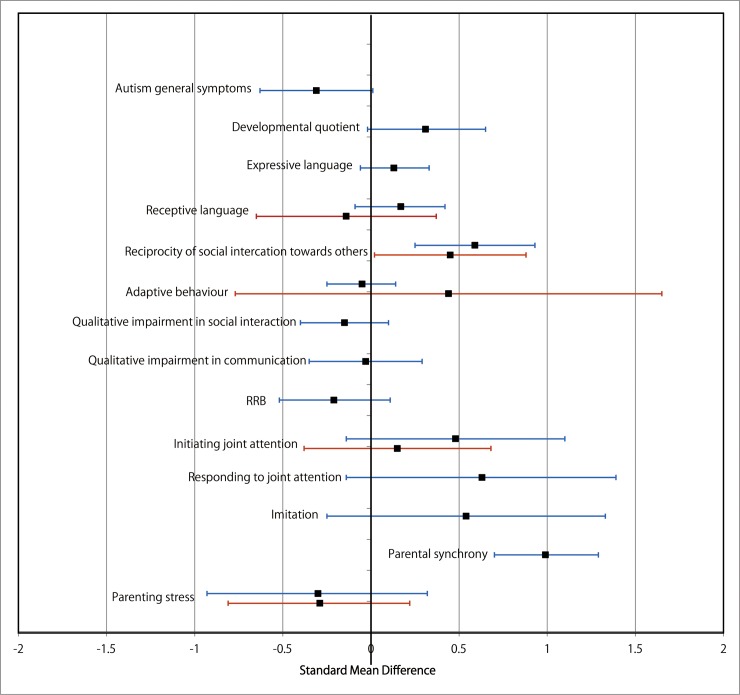
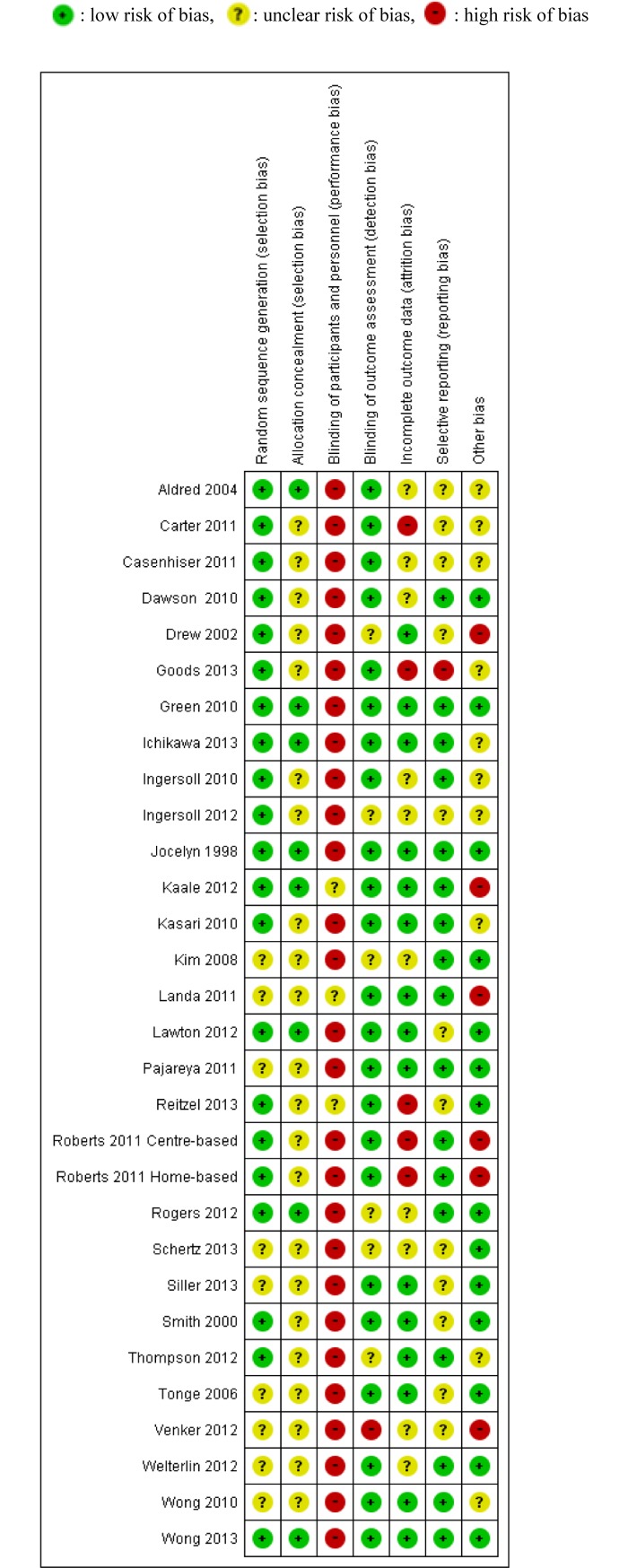
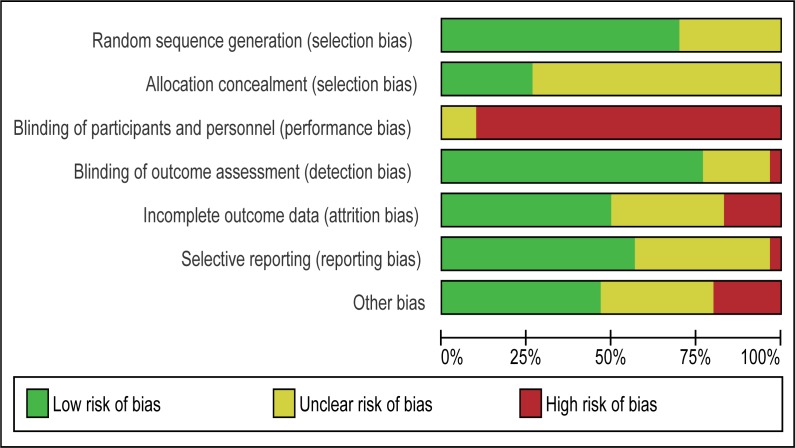
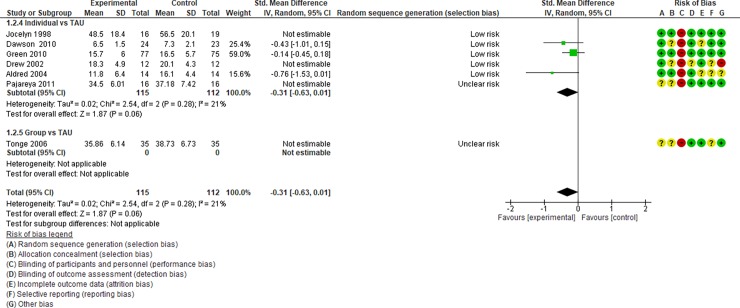
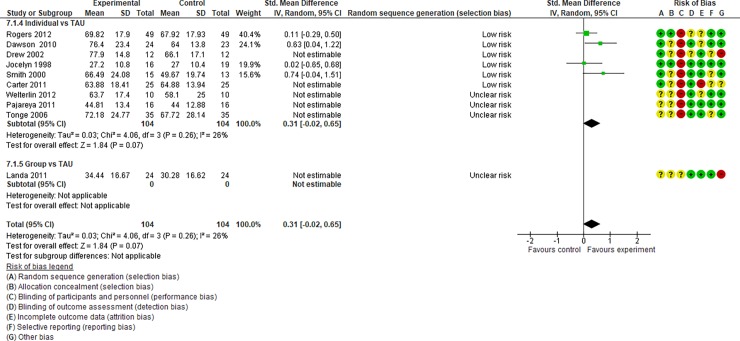
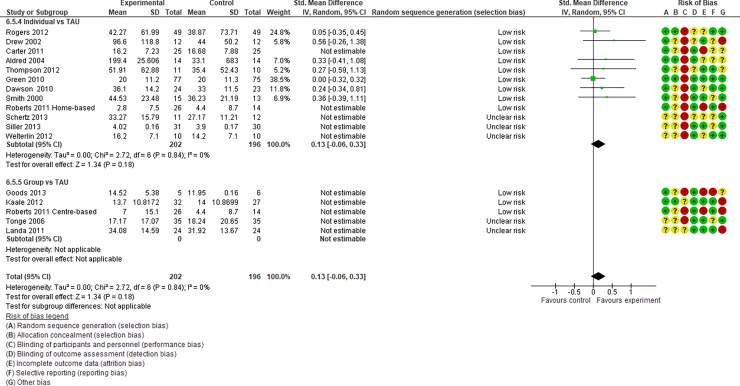
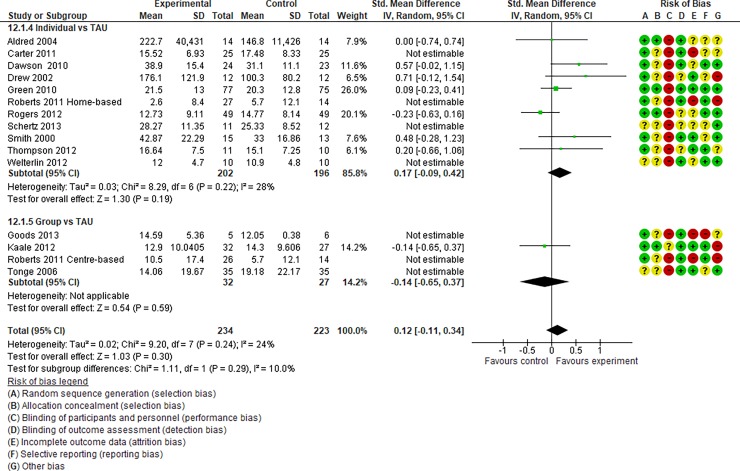
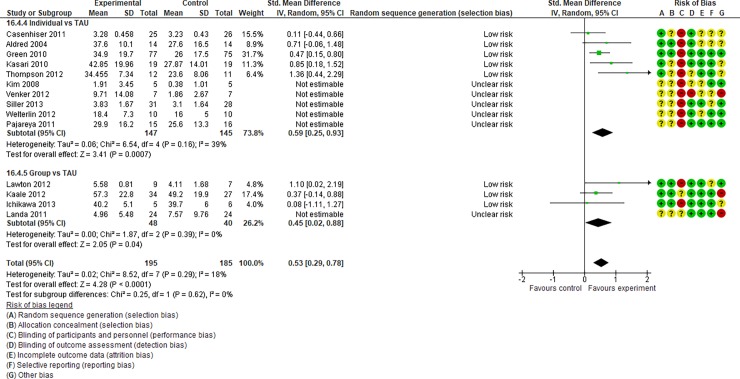
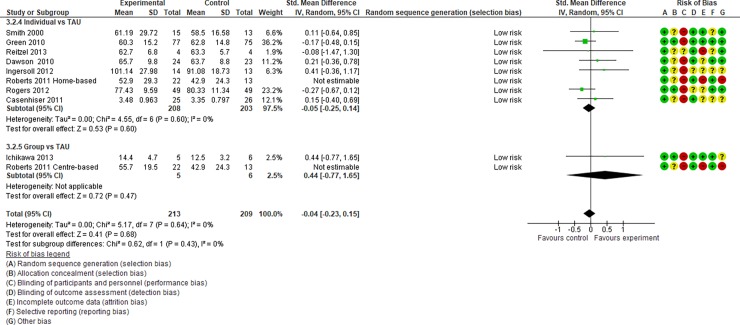
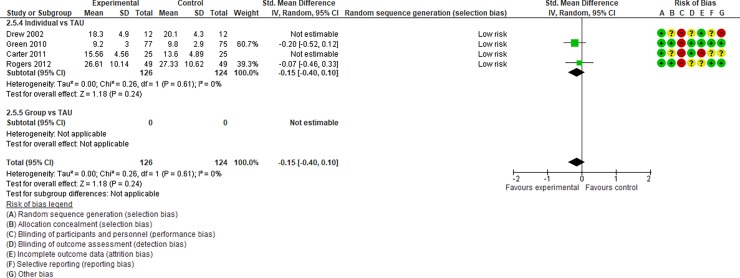
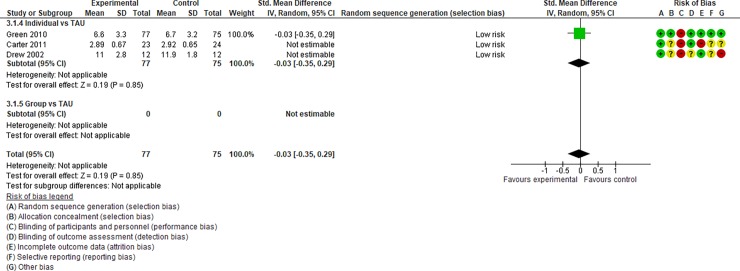
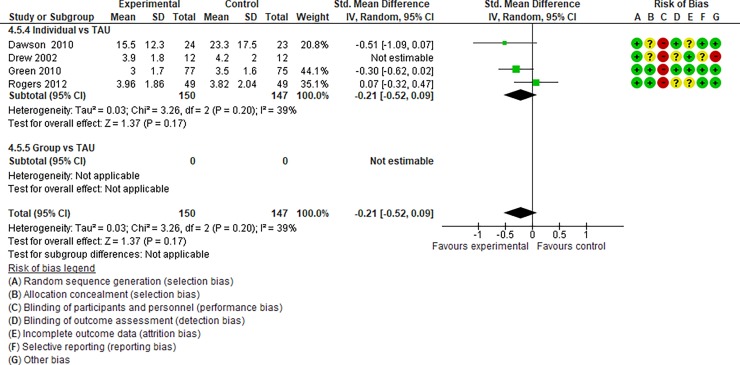
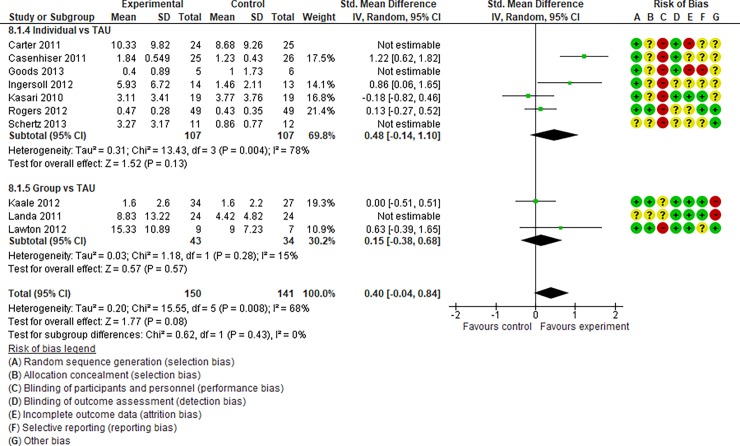
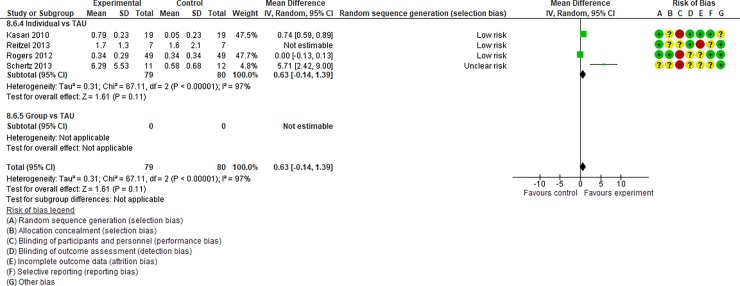
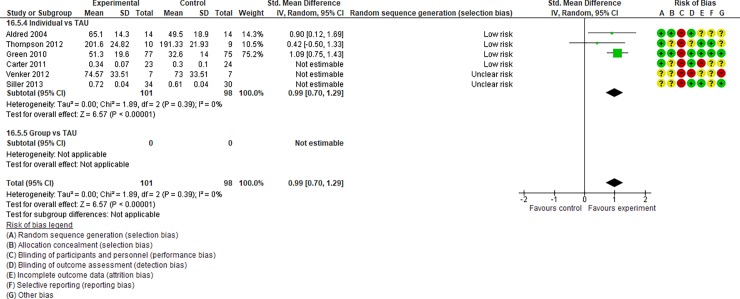
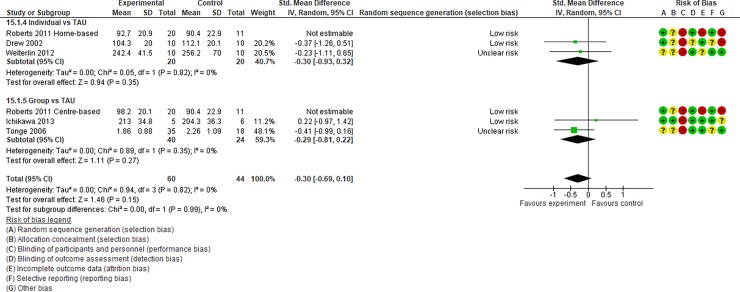
There is little evidence regarding the effects of individual and group intervention for children with autism spectrum disorder (ASD) on important outcomes. We performed meta-analyses using a random effects model to investigate the effectiveness of the individual and group intervention studies and to compare the effectiveness of these two types if possible. The main analysis which excluded studies at a high risk of bias (Analysis I) included 14 randomised controlled trials targeting children with ASD≤6 years of age (594 children). The results suggested that both individual and group interventions showed significant effects compared to the control condition on "reciprocity of social interaction towards others" (standard mean difference[SMD] [95%confidence interval{CI}] = 0.59[0.25, 0.93], p = 0.16; 0.45[0.02, 0.88], p = 0.39, respectively). Only individual interventions showed significant effects compared to the control condition on "parental synchrony" (SMD [95%CI] = 0.99 [0.70, 1.29], p<0.01). Our results showed no significant differences between individual and group interventions in effects on "autism general symptoms" (no study available for group intervention), "developmental quotient" (no study available for group intervention), "expressive language" (p = 0.56), "receptive language" (p = 0.29), "reciprocity of social interaction towards others" (p = 0.62), or "adaptive behaviour" (p = 0.43). We also performed sensitivity analyses including studies that had been excluded due to being at a high risk of potential bias (Analysis II). The results suggested that "reciprocity of social interactions towards others" showed significant effects for individual intervention compared to the control condition (0.50[0.31,0.69], p<0.001) but not for group intervention (0.23[-0.33, 0.78], p = 0.42). Individual intervention also showed significant effects on "parental synchrony" (0.98[0.30,1.66], p = 0.005) in the sensitivity analysis. The results also suggested no significant difference on all the outcomes between the individual and group interventions. We also reanalysed the data using cluster-robust standard errors as sensitivity analyses (Analysis III). Analysis III showed no significant effects in the intervention condition compared to the control condition on all the outcomes for both individual and group interventions. When Analysis II was reanalysed using cluster-robust standard errors (Analysis IV), individual interventions showed significant effects compared to the control condition on "reciprocity of social interaction towards others" and "parental synchrony" (mean estimate[95%CI], robust standard error, p = 0.50[0.20, 0.81], 0.13, 0.006; and 1.06[0.08, 2.05], 0.42, 0.04, respectively), and none of the outcomes showed significant effects under the intervention condition compared to the control condition for group interventions. The discrepancies in the results between the main analysis (Analysis I) and the sensitivity analyses (Analyses II, III, and IV) may be due to the small number of included studies. Since the outcome of "reciprocity of social interaction towards others" can be a dependent variable that is usually measured in a context-bound setting with the child's parent, we cannot conclude that individual interventions for pre-school children with ASD have significant effects on generalised skills for engaging in reciprocal interactions with others, even if the interventions have significant effects on the outcome. However, the outcomes of "reciprocity of social interaction towards others" may be promising targets for both individual and group interventions involving pre-school children with ASD. "Parental synchrony" may also be a promising target for individual interventions.
(CRD42011001349).
本研究旨在采用随机效应模型进行荟萃分析,以调查个体化和团体干预研究对自闭症谱系障碍(ASD)儿童重要结局的有效性,并尽可能比较这两种干预类型的效果。主要分析(排除高偏倚风险的研究,分析 I)纳入了 14 项针对≤6 岁 ASD 儿童的随机对照试验(594 名儿童)。结果表明,个体化和团体干预均与对照组相比,在“对他人的社会互动互惠性”方面具有显著效果(标准化均数差[SMD] [95%置信区间{CI}] = 0.59[0.25, 0.93],p = 0.16;0.45[0.02, 0.88],p = 0.39)。仅个体化干预与对照组相比,在“父母同步性”方面具有显著效果(SMD [95%CI] = 0.99 [0.70, 1.29],p<0.01)。我们的结果显示,个体化和团体干预在“自闭症一般症状”(无团体干预研究可用)、“发育商数”(无团体干预研究可用)、“表达性语言”(p = 0.56)、“接受性语言”(p = 0.29)、“对他人的社会互动互惠性”(p = 0.62)或“适应性行为”(p = 0.43)方面的效果没有显著差异。我们还进行了敏感性分析,纳入了由于高潜在偏倚风险而被排除的研究(分析 II)。结果表明,与对照组相比,个体化干预在“对他人的社会互动互惠性”方面具有显著效果(0.50[0.31,0.69],p<0.001),但团体干预无显著效果(0.23[-0.33, 0.78],p = 0.42)。个体化干预在敏感性分析中也对“父母同步性”具有显著效果(0.98[0.30,1.66],p = 0.005)。结果还表明,个体化和团体干预在所有结局上均无显著差异。我们还使用聚类稳健标准误差作为敏感性分析重新分析了数据(分析 III)。分析 III 表明,个体化和团体干预在所有结局上与对照组相比均无显著效果。当使用聚类稳健标准误差重新分析分析 II 时(分析 IV),个体化干预与对照组相比,在“对他人的社会互动互惠性”和“父母同步性”方面具有显著效果(平均估计值[95%CI],稳健标准误差,p = 0.50[0.20, 0.81],0.13,0.006;1.06[0.08, 2.05],0.42,0.04),而团体干预在干预条件下与对照组相比,没有任何结局具有显著效果。主要分析(分析 I)和敏感性分析(分析 II、III 和 IV)之间的结果差异可能是由于纳入研究的数量较少。由于“对他人的社会互动互惠性”的结果可能是一个因变量,通常在有儿童父母参与的情境中进行测量,因此,即使干预对该结果有显著效果,我们也不能得出个体化干预对学前 ASD 儿童具有与他人进行互惠互动的一般技能的显著效果的结论。然而,“对他人的社会互动互惠性”的结果可能是个体化和团体干预涉及学前 ASD 儿童的有希望的目标。“父母同步性”也可能是个体化干预的有希望的目标。
(CRD42011001349)。