Farming Systems Ecology, Wageningen University & Research, Wageningen, The Netherlands.
Plant Production Systems, Wageningen University & Research, Wageningen, The Netherlands.
PLoS One. 2018 May 15;13(5):e0194757. doi: 10.1371/journal.pone.0194757. eCollection 2018.
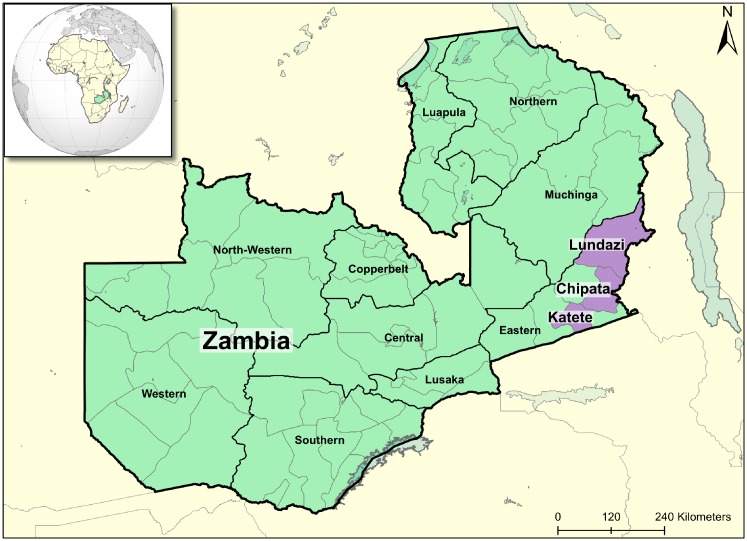
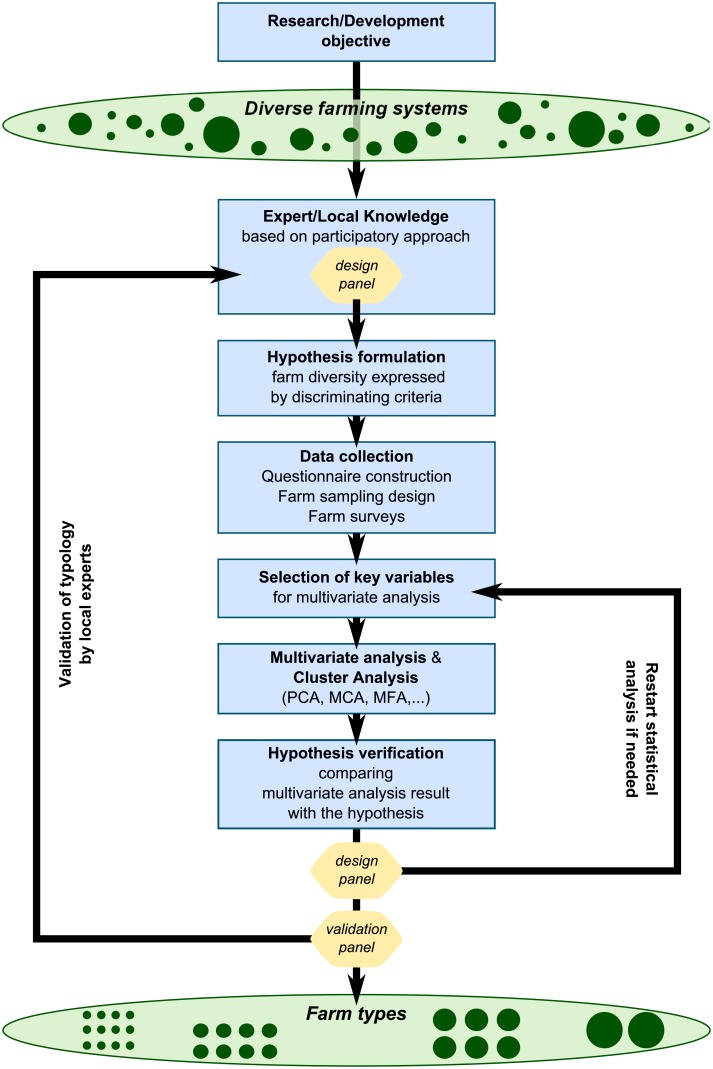
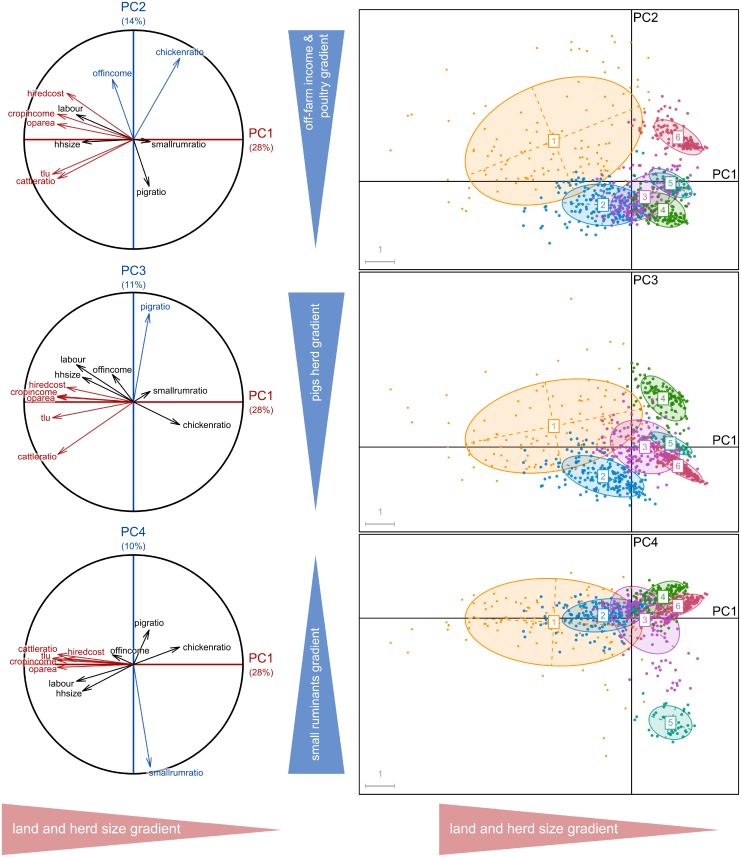
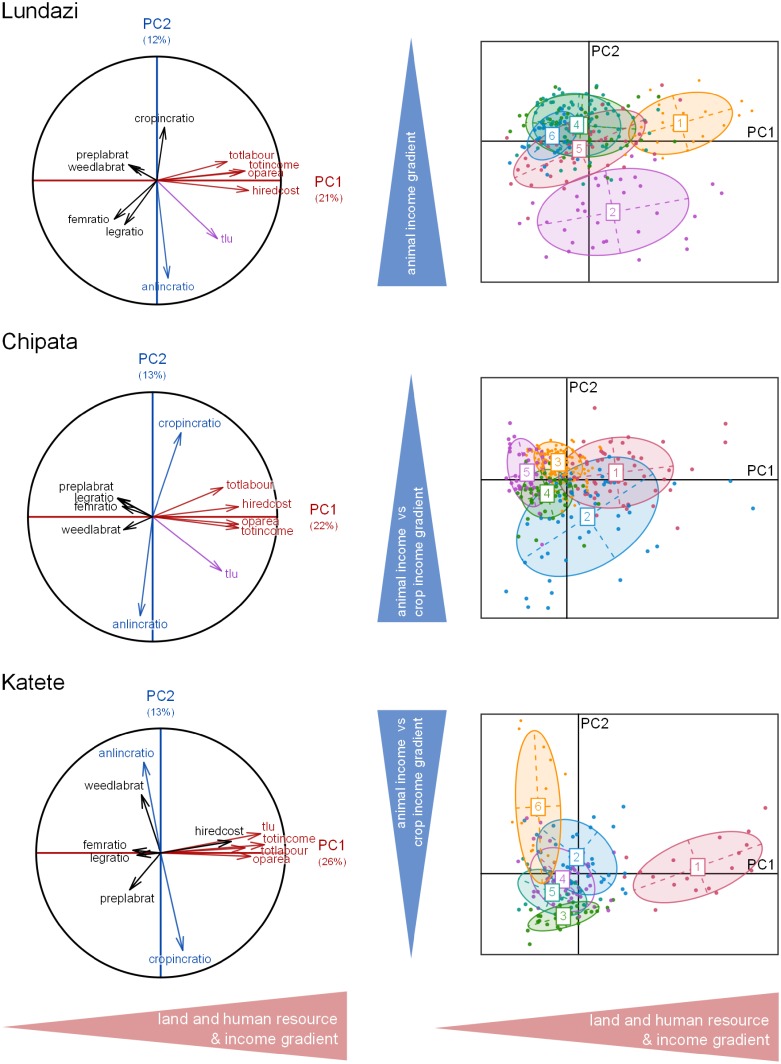
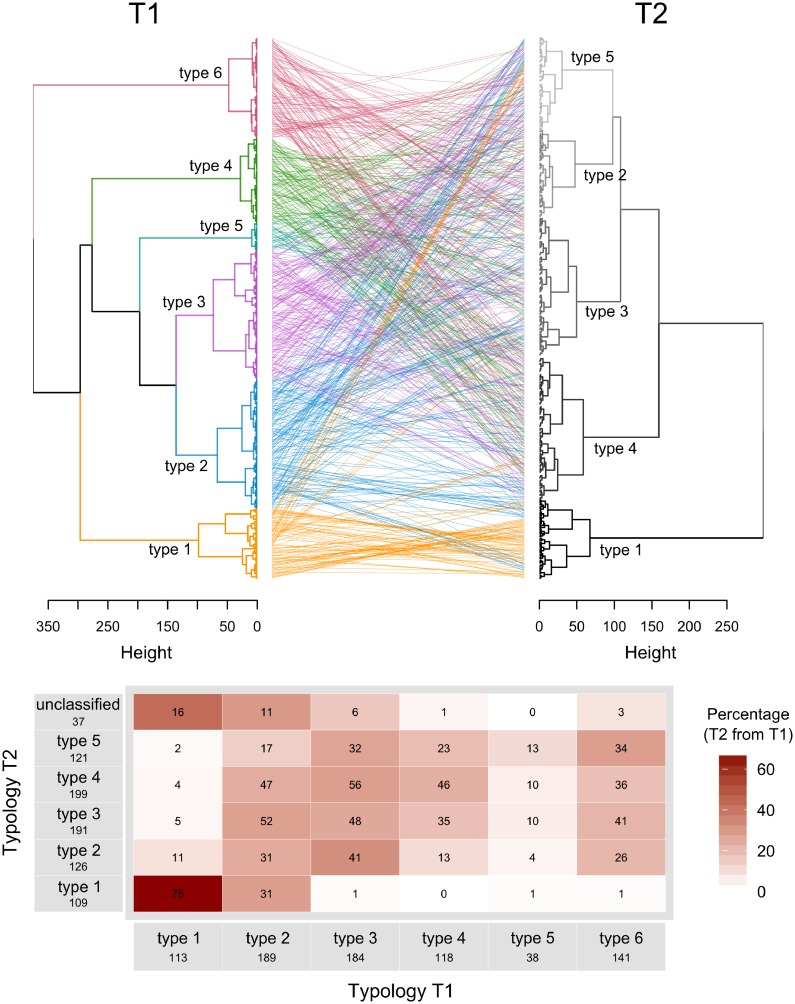
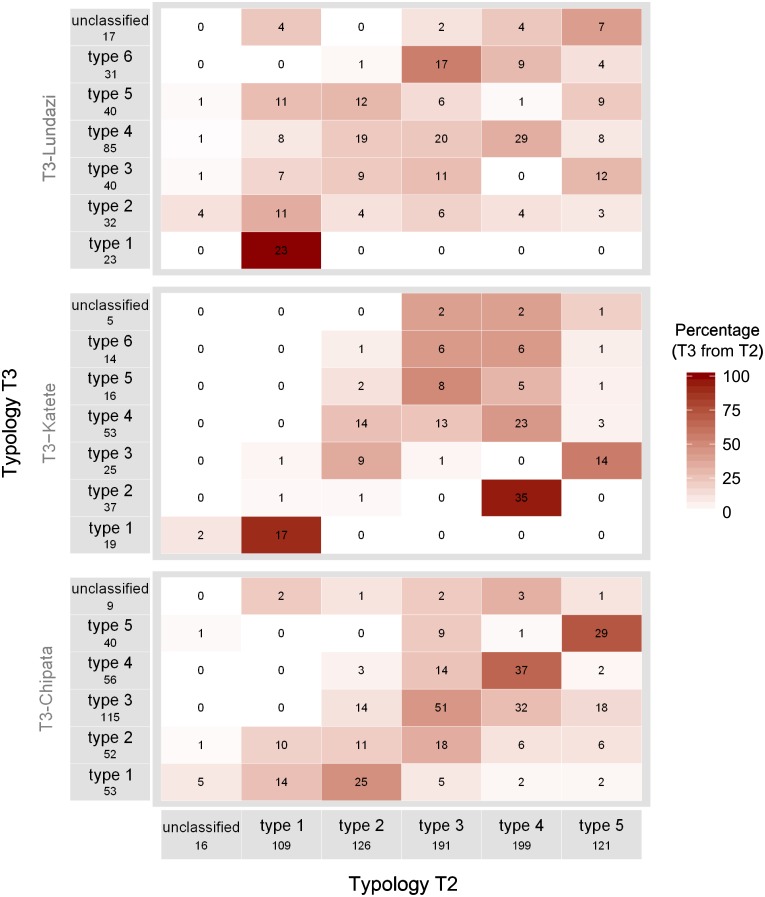
Creating typologies is a way to summarize the large heterogeneity of smallholder farming systems into a few farm types. Various methods exist, commonly using statistical analysis, to create these typologies. We demonstrate that the methodological decisions on data collection, variable selection, data-reduction and clustering techniques can bear a large impact on the typology results. We illustrate the effects of analysing the diversity from different angles, using different typology objectives and different hypotheses, on typology creation by using an example from Zambia's Eastern Province. Five separate typologies were created with principal component analysis (PCA) and hierarchical clustering analysis (HCA), based on three different expert-informed hypotheses. The greatest overlap between typologies was observed for the larger, wealthier farm types but for the remainder of the farms there were no clear overlaps between typologies. Based on these results, we argue that the typology development should be guided by a hypothesis on the local agriculture features and the drivers and mechanisms of differentiation among farming systems, such as biophysical and socio-economic conditions. That hypothesis is based both on the typology objective and on prior expert knowledge and theories of the farm diversity in the study area. We present a methodological framework that aims to integrate participatory and statistical methods for hypothesis-based typology construction. This is an iterative process whereby the results of the statistical analysis are compared with the reality of the target population as hypothesized by the local experts. Using a well-defined hypothesis and the presented methodological framework, which consolidates the hypothesis through local expert knowledge for the creation of typologies, warrants development of less subjective and more contextualized quantitative farm typologies.
创建类型学是将小农系统的大量异质性总结为少数几种农场类型的一种方法。存在各种方法,通常使用统计分析来创建这些类型学。我们证明,在数据收集、变量选择、数据缩减和聚类技术方面的方法决策会对类型学结果产生重大影响。我们通过赞比亚东部省的一个例子来说明,从不同角度分析多样性、使用不同的类型学目标和不同的假设对类型学创建的影响。使用主成分分析(PCA)和层次聚类分析(HCA),基于三个不同的专家知情假设,创建了五个独立的类型学。在较大、较富裕的农场类型中,类型学之间的重叠最大,但对于其余的农场,类型学之间没有明显的重叠。基于这些结果,我们认为类型学的发展应该以关于当地农业特征以及农业系统分化的驱动因素和机制的假设为指导,例如生物物理和社会经济条件。该假设基于类型学目标以及该研究区域中农场多样性的先前专家知识和理论。我们提出了一个方法框架,旨在整合基于假设的参与性和统计方法来构建类型学。这是一个迭代过程,其中统计分析的结果与当地专家假设的目标人群的实际情况进行比较。使用明确的假设和提出的方法框架,通过当地专家知识为类型学的创建巩固假设,有助于开发出较少主观和更具背景的定量农场类型学。