Leeds Institute of Cardiovascular and Metabolic Medicine, School of Medicine, University of Leeds, Leeds, LS2 9JT, UK.
Sci Rep. 2018 May 15;8(1):7569. doi: 10.1038/s41598-018-25853-3.
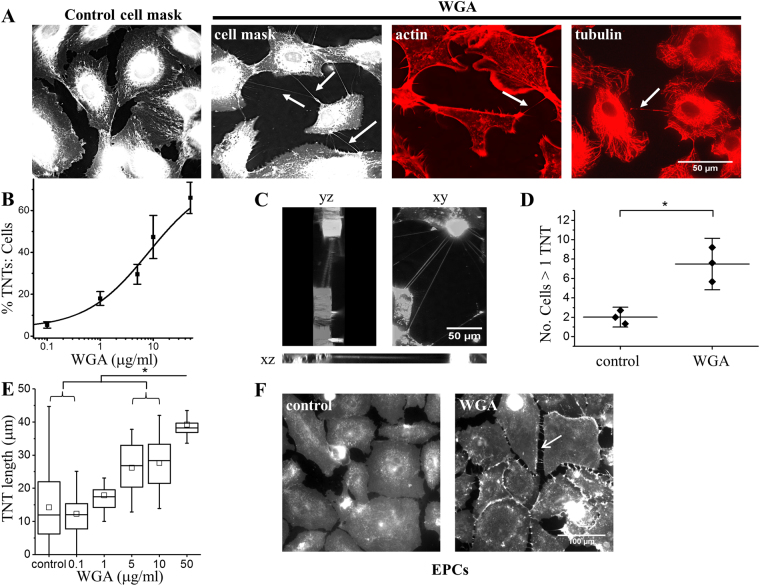
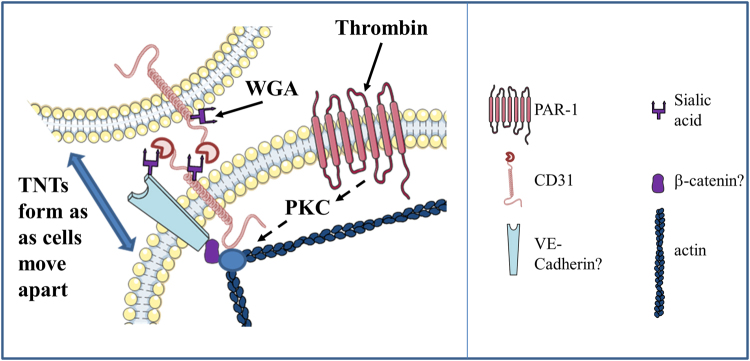
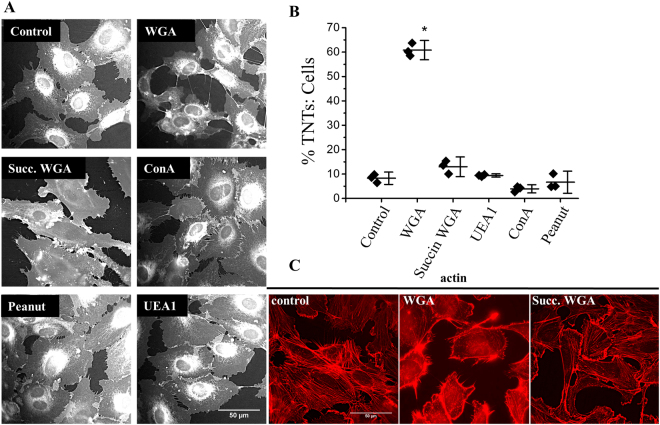
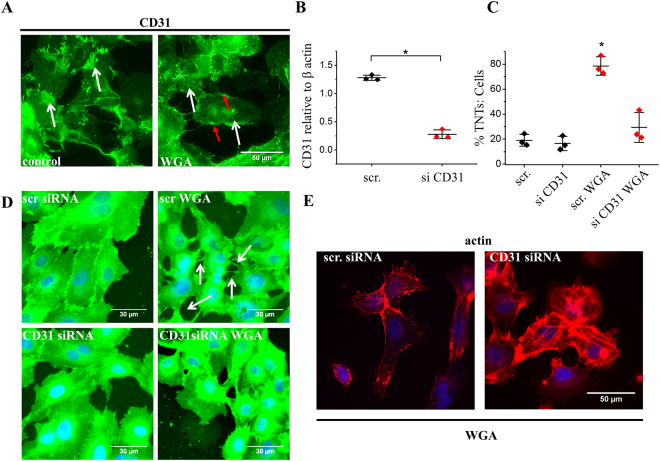
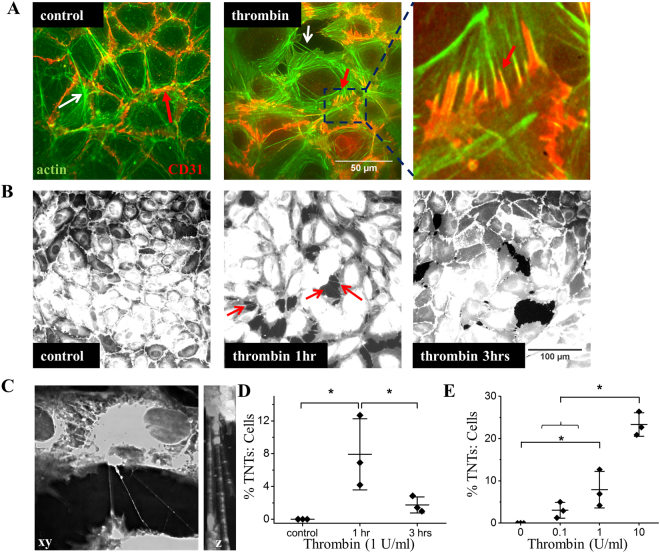
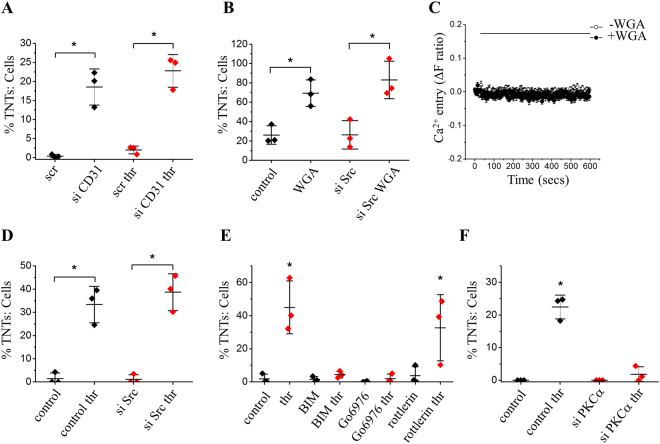
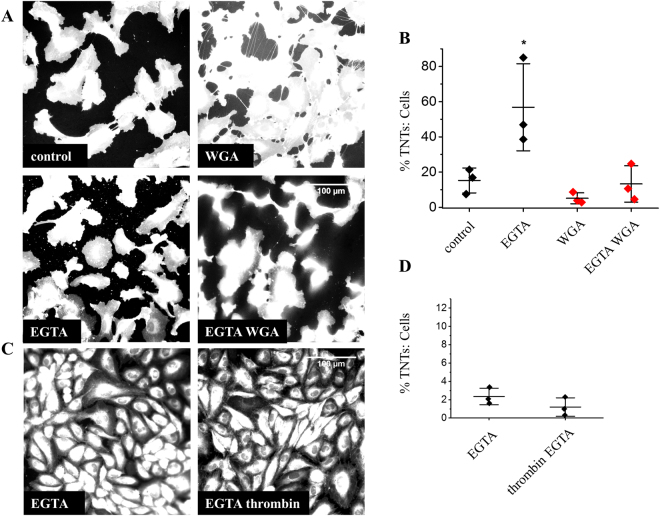
Endothelial barrier formation is maintained by intercellular communication through junctional proteins. The mechanisms involved in maintaining endothelial communication subsequent to barrier disruption remain unclear. It is known that low numbers of endothelial cells can be interconnected by homotypic actin-driven tunneling nanotubes (TNTs) which could be important for intercellular transfer of information in vascular physiology. Here we sought insight into the triggers for TNT formation. Wheat germ agglutinin, a C-type lectin and known label for TNTs, unexpectedly caused striking induction of TNTs. A succinylated derivative was by contrast inactive, suggesting mediation by a sialylated protein. Through siRNA-mediated knockdown we identified that this protein was likely to be CD31, an important sialylated membrane protein normally at endothelial cell junctions. We subsequently considered thrombin as a physiological inducer of endothelial TNTs because it reduces junctional contact. Thrombin reduced junctional contact, redistributed CD31 and induced TNTs, but its effect on TNTs was CD31-independent. Thrombin-induced TNTs nevertheless required PKCα, a known mediator of thrombin-dependent junctional remodelling, suggesting a necessity for junctional proteins in TNT formation. Indeed, TNT-inducing effects of wheat germ agglutinin and thrombin were both correlated with cortical actin rearrangement and similarly Ca-dependent, suggesting common underlying mechanisms. Once formed, Ca signalling along TNTs was observed.
内皮屏障的形成是通过细胞间连接蛋白的通讯来维持的。内皮细胞间通讯在屏障破坏后的维持机制尚不清楚。已知,低数量的内皮细胞可以通过同质肌动蛋白驱动的隧道纳米管(TNTs)相互连接,这对于血管生理学中的细胞间信息传递可能很重要。在这里,我们试图深入了解 TNT 形成的触发因素。麦胚凝集素是一种 C 型凝集素,也是 TNTs 的已知标记物,它出人意料地引起了 TNTs 的强烈诱导。相比之下,琥珀酰化衍生物没有活性,这表明它是通过唾液酸化蛋白介导的。通过 siRNA 介导的敲低,我们发现这种蛋白可能是 CD31,一种重要的唾液酸化膜蛋白,通常位于内皮细胞连接处。随后,我们考虑凝血酶作为内皮 TNTs 的生理诱导剂,因为它会减少细胞连接的接触。凝血酶减少了细胞连接的接触,重新分配了 CD31 并诱导了 TNTs,但它对 TNTs 的影响是不依赖于 CD31 的。然而,凝血酶诱导的 TNTs仍然需要 PKCα,它是凝血酶依赖性细胞连接重塑的已知介质,这表明细胞连接蛋白在 TNT 形成中是必需的。事实上,麦胚凝集素和凝血酶诱导 TNTs 的作用都与皮质肌动蛋白的重排相关,并且同样依赖于 Ca2+,这表明存在共同的潜在机制。一旦形成,就可以观察到 TNTs 中的 Ca2+信号。