Luterstein Elaine, Cao Minsong, Lamb James, Raldow Ann C, Low Daniel A, Steinberg Michael L, Lee Percy
Department of Radiation Oncology, University of California, Los Angeles.
Cureus. 2018 Mar 14;10(3):e2324. doi: 10.7759/cureus.2324.
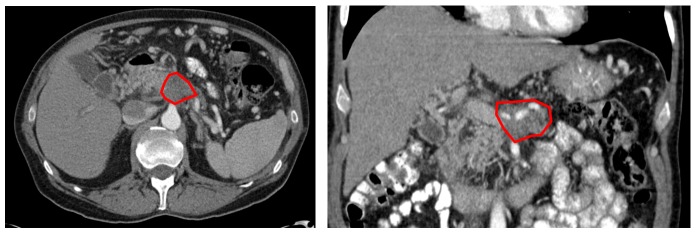
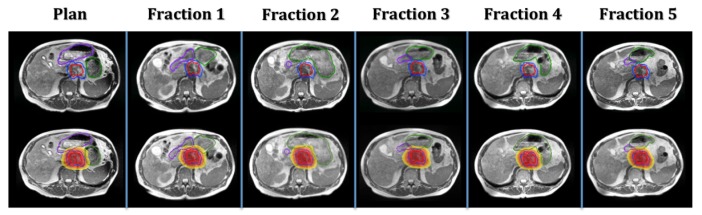
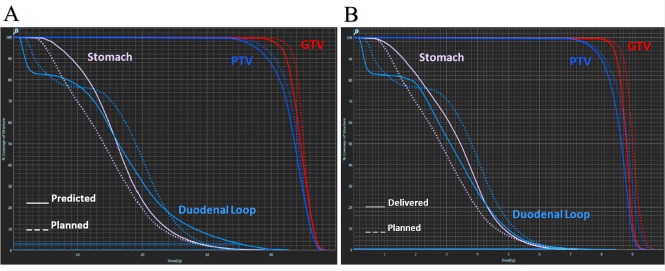
Locally advanced pancreatic cancer (LAPC) is characterized by poor prognosis and low response durability with standard-of-care chemotherapy or chemoradiotherapy treatment. Stereotactic body radiation therapy (SBRT), which has a shorter treatment course than conventionally fractionated radiotherapy and allows for better integration with systemic therapy, may confer a survival benefit but is limited by gastrointestinal toxicity. Stereotactic MRI-guided adaptive radiation therapy (SMART) has recently gained attention for its potential to increase treatment precision and thus minimize this toxicity through continuous real-time soft-tissue imaging during radiotherapy. The case presented here illustrates the promising outcome of a 69-year-old male patient with LAPC treated with SMART with daily adaptive planning and respiratory-gated technique.
局部晚期胰腺癌(LAPC)的特点是预后较差,采用标准护理化疗或放化疗治疗时反应持续时间较短。立体定向体部放射治疗(SBRT)的疗程比传统分割放疗短,且能更好地与全身治疗相结合,可能带来生存获益,但受胃肠道毒性限制。立体定向磁共振成像引导的自适应放射治疗(SMART)最近因其有可能提高治疗精度,从而通过放疗期间的连续实时软组织成像将这种毒性降至最低而受到关注。本文介绍的病例展示了一名69岁LAPC男性患者采用SMART联合每日自适应计划和呼吸门控技术治疗的良好结果。