Cehajic-Kapetanovic Jasmina, Milosavljevic Nina, Bedford Robert A, Lucas Robert J, Bishop Paul N
Faculty of Biology, Medicine and Health, University of Manchester, Oxford Road, Manchester M13 9PT, UK.
Manchester Royal Eye Hospital, Manchester University NHS Foundation Trust, Manchester Academic Health Sciences Centre, Manchester, UK.
Mol Ther Methods Clin Dev. 2017 Dec 22;9:192-202. doi: 10.1016/j.omtm.2017.12.002. eCollection 2018 Jun 15.
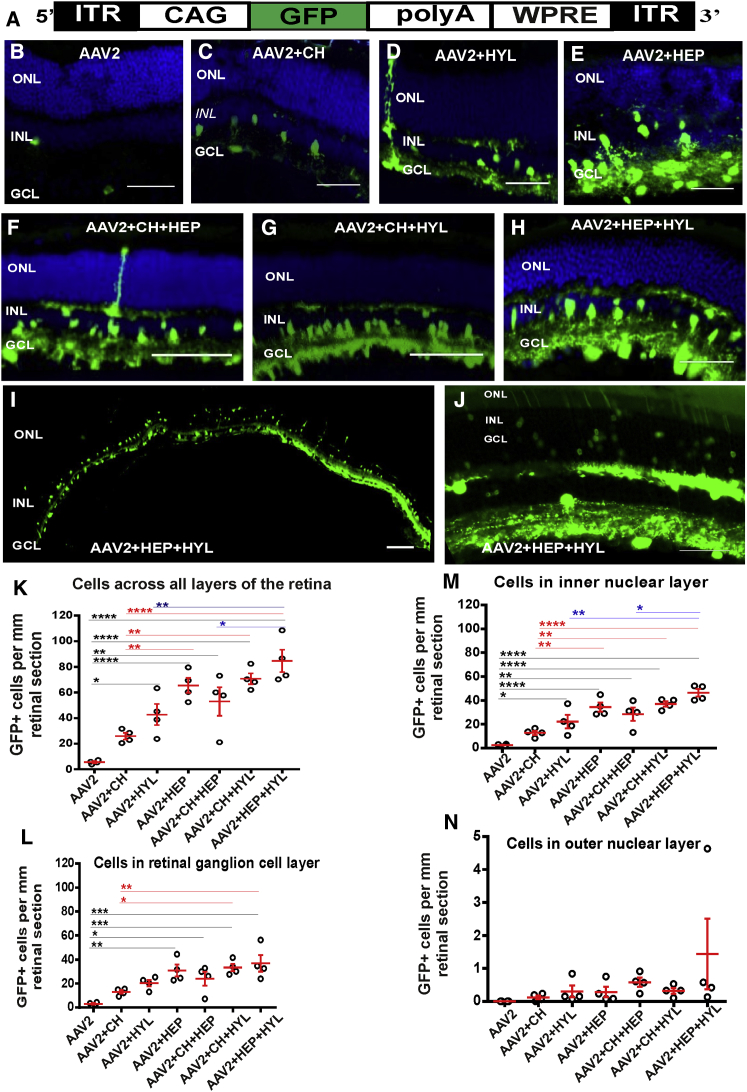
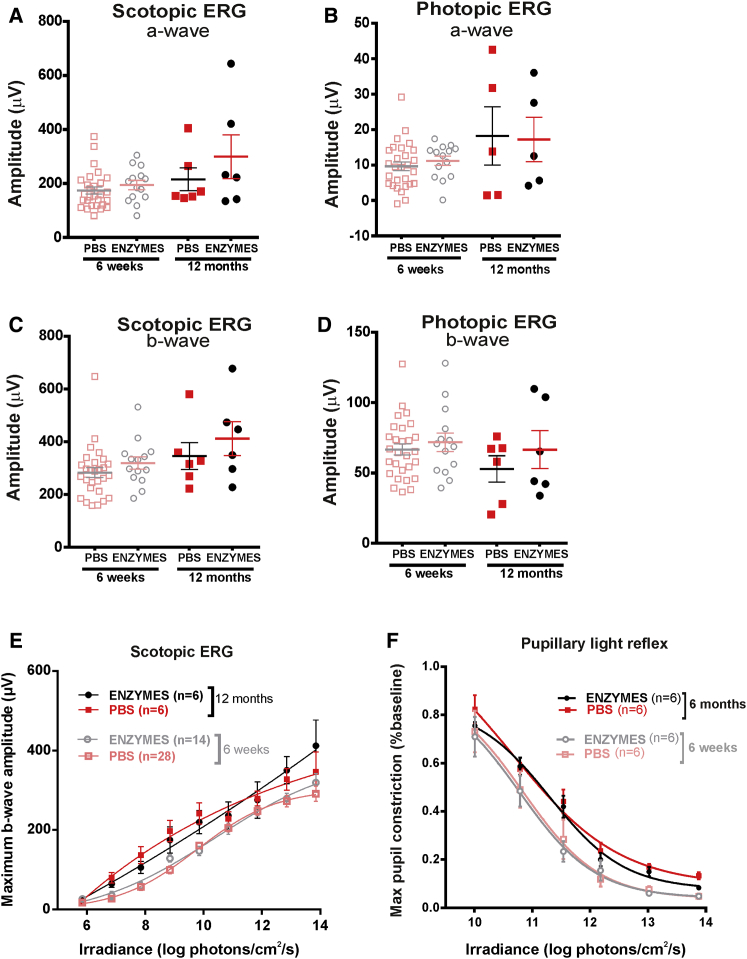
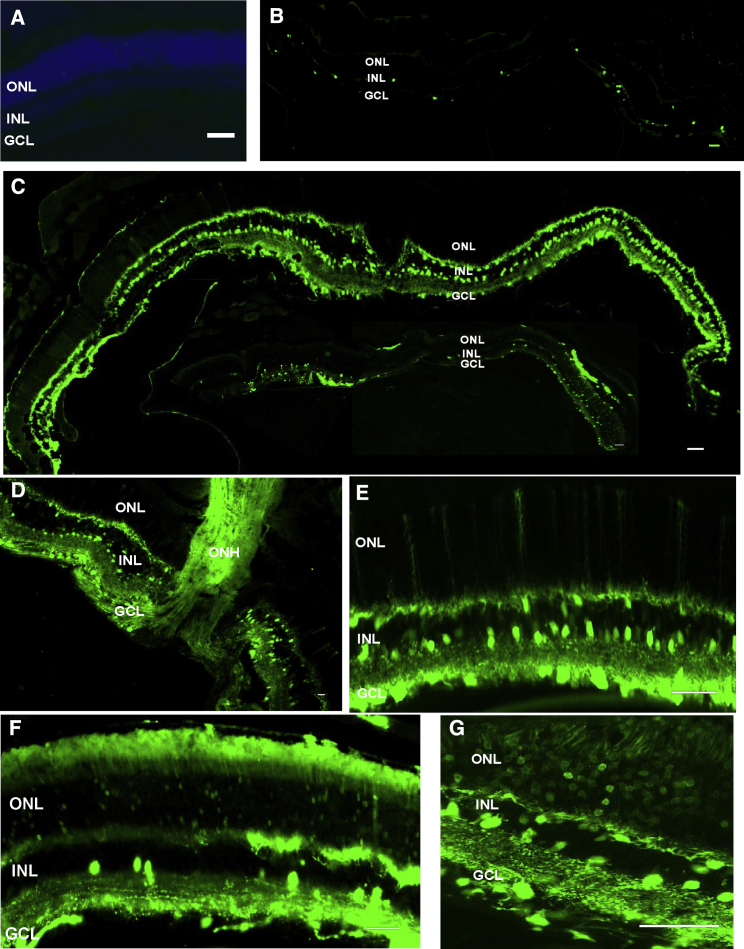
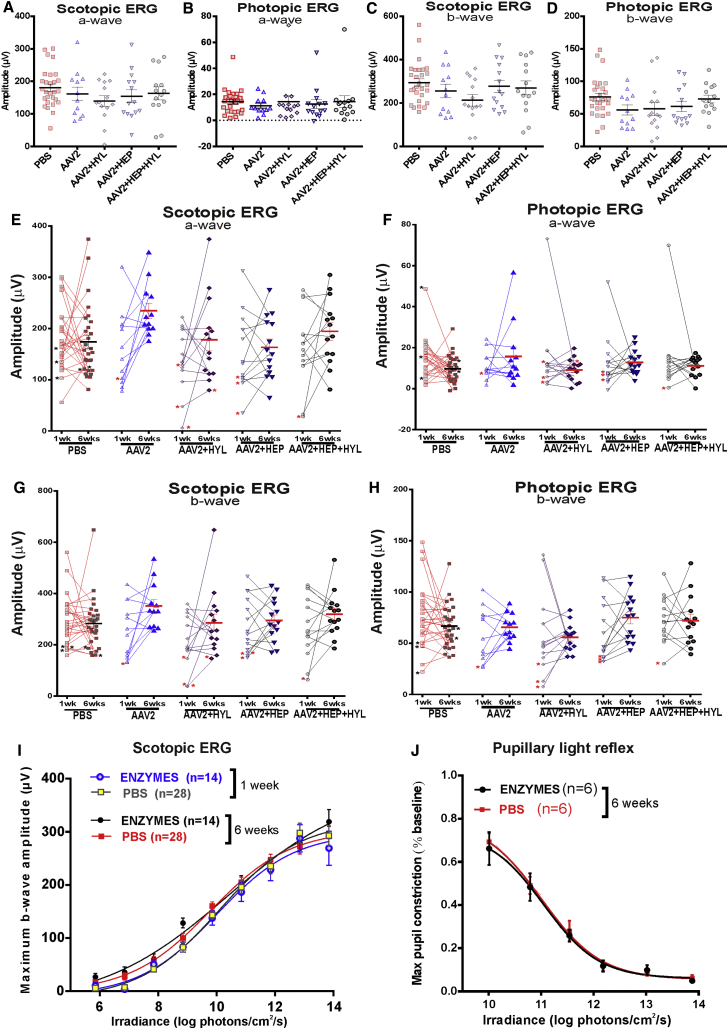
Viral gene delivery is showing great promise for treating retinal disease. Although subretinal vector delivery has mainly been used to date, intravitreal delivery has potential advantages if low retinal transduction efficiency can be overcome. To this end, we investigated the effects of co-injection of glycosaminoglycan-degrading enzymes, singly or in combination, with AAV2 as a method of increasing retinal transduction. Experiments using healthy mice demonstrated that these enzymes enhance retinal transduction. We found that heparinase III produced the greatest individual effect, and this was enhanced further by combination with hyaluronan lyase. In addition, this optimized AAV2-enzyme combination led to a marked improvement in transduction in retinas with advanced retinal degeneration compared with AAV2 alone. Safety studies measuring retinal function by flash electroretinography indicated that retinal function was unaffected in the acute period and at least 12 months after enzyme treatment, whereas pupillometry confirmed that retinal ganglion cell activity was unaffected. Retinal morphology was not altered by the enzyme injection. Collectively these data confirm the efficacy and safety of this intravitreal approach in enhancing retinal transduction efficiency by AAV in rodents. Translating this method into other species, such as non-human primates, or for clinical applications will have challenges and require further studies.
病毒基因递送在治疗视网膜疾病方面显示出巨大的前景。尽管迄今为止主要采用视网膜下注射载体,但如果能克服视网膜转导效率低的问题,玻璃体内注射具有潜在优势。为此,我们研究了单独或联合注射糖胺聚糖降解酶与腺相关病毒2型(AAV2)作为提高视网膜转导的一种方法的效果。使用健康小鼠进行的实验表明,这些酶可增强视网膜转导。我们发现,硫酸乙酰肝素酶III产生的个体效应最大,与透明质酸裂解酶联合使用可进一步增强这种效应。此外,与单独使用AAV2相比,这种优化的AAV2 - 酶组合在晚期视网膜变性的视网膜中转导有显著改善。通过闪光视网膜电图测量视网膜功能的安全性研究表明,在急性期和酶治疗后至少12个月,视网膜功能未受影响,而瞳孔测量证实视网膜神经节细胞活性未受影响。酶注射未改变视网膜形态。总体而言,这些数据证实了这种玻璃体内方法在提高啮齿动物中AAV介导的视网膜转导效率方面的有效性和安全性。将这种方法转化到其他物种,如非人灵长类动物,或用于临床应用将面临挑战,需要进一步研究。