Maston Levi D, Jones David T, Giermakowska Wieslawa, Resta Thomas C, Ramiro-Diaz Juan, Howard Tamara A, Jernigan Nikki L, Herbert Lindsay, Maurice Anna A, Gonzalez Bosc Laura V
Vascular Physiology Group, Department of Cell Biology and Physiology, University of New Mexico Health Sciences Center, Albuquerque, NM, USA.
Pulm Circ. 2018 Jul-Sep;8(3):2045894018780734. doi: 10.1177/2045894018780734. Epub 2018 May 16.
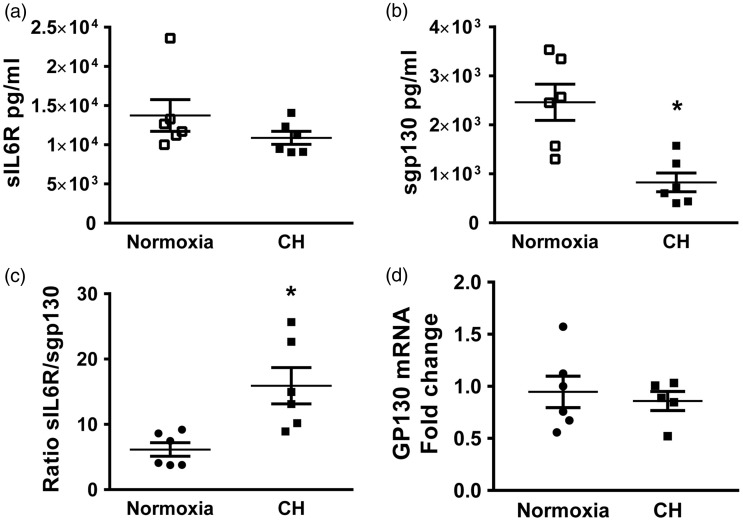
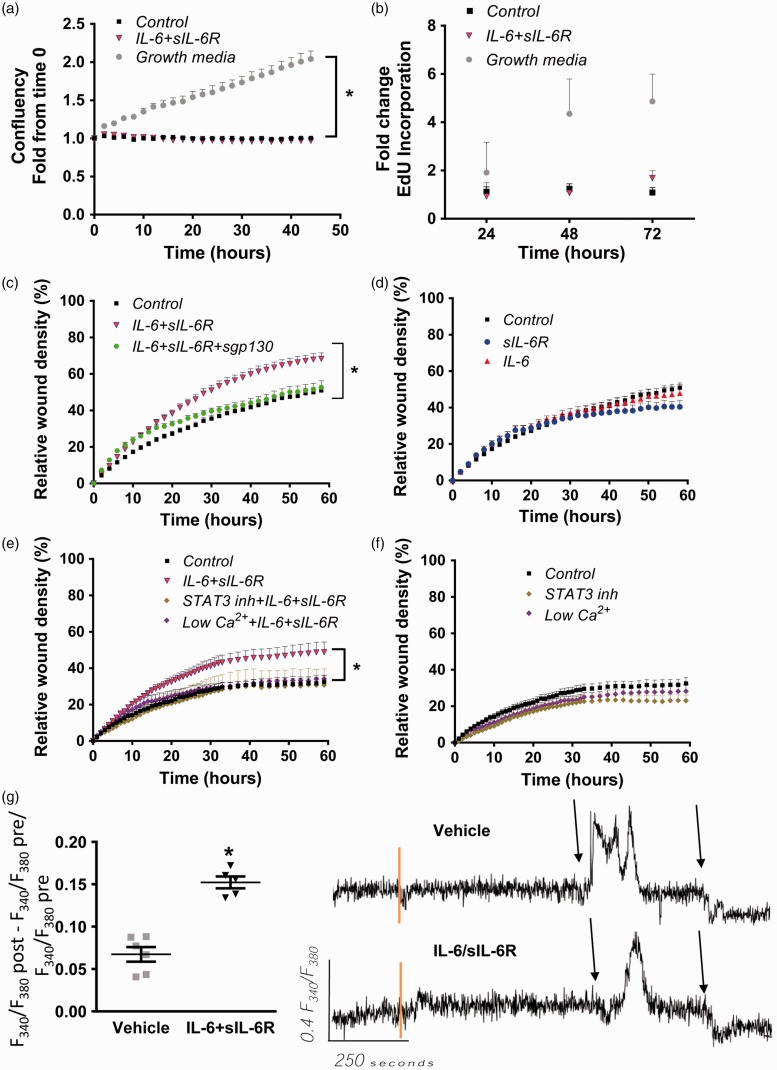
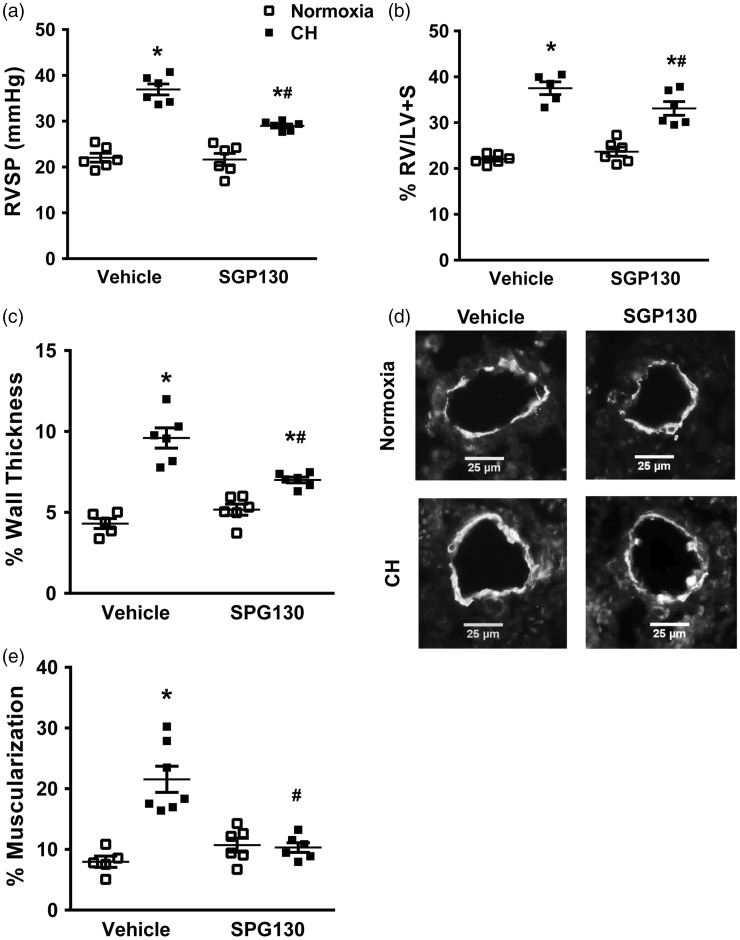
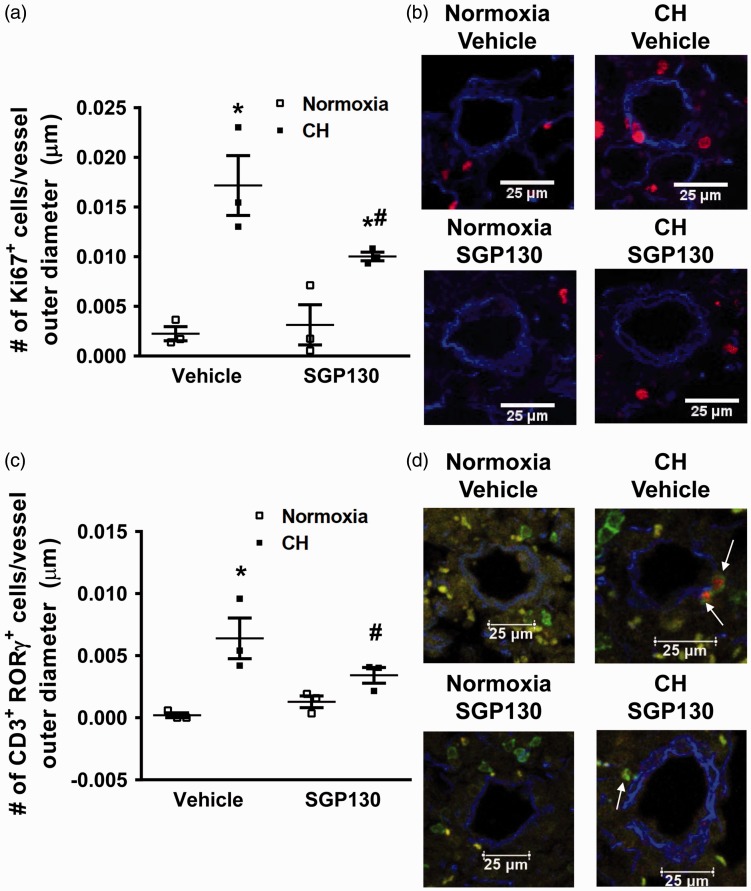
Interleukin-6 (IL-6) is a pleotropic cytokine that signals through the membrane-bound IL-6 receptor (mIL-6R) to induce anti-inflammatory ("classic-signaling") responses. This cytokine also binds to the soluble IL-6R (sIL-6R) to promote inflammation ("trans-signaling"). mIL-6R expression is restricted to hepatocytes and immune cells. Activated T cells release sIL-6R into adjacent tissues to induce trans-signaling. These cellular actions require the ubiquitously expressed membrane receptor gp130. Reports show that IL-6 is produced by pulmonary arterial smooth muscle cells (PASMCs) exposed to hypoxia in culture as well as the medial layer of the pulmonary arteries in mice exposed to chronic hypoxia (CH), and IL-6 knockout mice are protected from CH-induced pulmonary hypertension (PH). IL-6 has the potential to contribute to a broad array of downstream effects, such as cell growth and migration. CH-induced PH is associated with increased proliferation and migration of PASMCs to previously non-muscularized vessels of the lung. We tested the hypothesis that IL-6 trans-signaling contributes to CH-induced PH and arterial remodeling. Plasma levels of sgp130 were significantly decreased in mice exposed to CH (380 mmHg) for five days compared to normoxic control mice (630 mmHg), while sIL-6R levels were unchanged. Consistent with our hypothesis, mice that received the IL-6 trans-signaling-specific inhibitor sgp130Fc, a fusion protein of the soluble extracellular portion of gp130 with the constant portion of the mouse IgG1 antibody, showed attenuation of CH-induced increases in right ventricular systolic pressure, right ventricular and pulmonary arterial remodeling as compared to vehicle (saline)-treated control mice. In addition, PASMCs cultured in the presence of IL-6 and sIL-6R showed enhanced migration but not proliferation compared to those treated with IL-6 or sIL-6R alone or in the presence of sgp130Fc. These results indicate that IL-6 trans-signaling contributes to pulmonary arterial cell migration and CH-induced PH.
白细胞介素-6(IL-6)是一种多效性细胞因子,它通过膜结合型IL-6受体(mIL-6R)发出信号,以诱导抗炎(“经典信号传导”)反应。这种细胞因子还与可溶性IL-6受体(sIL-6R)结合,以促进炎症(“转信号传导”)。mIL-6R的表达仅限于肝细胞和免疫细胞。活化的T细胞将sIL-6R释放到相邻组织中以诱导转信号传导。这些细胞作用需要普遍表达的膜受体gp130。报告显示,培养中暴露于低氧的肺动脉平滑肌细胞(PASMC)以及暴露于慢性低氧(CH)的小鼠肺动脉中层会产生IL-6,并且IL-6基因敲除小鼠可免受CH诱导的肺动脉高压(PH)。IL-6有可能促成广泛的下游效应,如细胞生长和迁移。CH诱导的PH与PASMC向肺中先前无肌化血管增加的增殖和迁移有关。我们检验了IL-6转信号传导促成CH诱导的PH和动脉重塑这一假说。与常氧对照小鼠(630 mmHg)相比,暴露于CH(380 mmHg)五天的小鼠血浆sgp130水平显著降低,而sIL-6R水平未变。与我们的假说一致,接受IL-6转信号传导特异性抑制剂sgp130Fc(gp130可溶性细胞外部分与小鼠IgG1抗体恒定部分的融合蛋白)的小鼠,与用载体(盐水)处理的对照小鼠相比,CH诱导的右心室收缩压升高、右心室和肺动脉重塑得到减轻。此外,与单独用IL-6或sIL-6R处理或在sgp130Fc存在下处理的细胞相比,在IL-6和sIL-6R存在下培养的PASMC显示出增强的迁移但没有增殖。这些结果表明,IL-6转信号传导促成肺动脉细胞迁移和CH诱导的PH。