Shenoda Botros B, Tian Yuzhen, Alexander Guillermo M, Aradillas-Lopez Enrique, Schwartzman Robert J, Ajit Seena K
Pharmacology and Physiology, Drexel University College of Medicine, Philadelphia, PA, USA.
Neurology, Drexel University College of Medicine, Philadelphia, PA, USA.
J Pain Res. 2018 May 8;11:935-945. doi: 10.2147/JPR.S159458. eCollection 2018.
Evidence is overwhelming for sex differences in pain, with women representing the majority of the chronic pain patient population. There is a need to explore novel avenues to elucidate this sex bias in the development of chronic inflammatory pain conditions. Complex regional pain syndrome (CRPS) is a chronic neuropathic pain disorder, and the incidence of CRPS is greater in women than in men by ~4:1. Since neurogenic inflammation is a key feature of CRPS, dysregulation of inflammatory responses can be a factor in predisposing women to chronic pain.
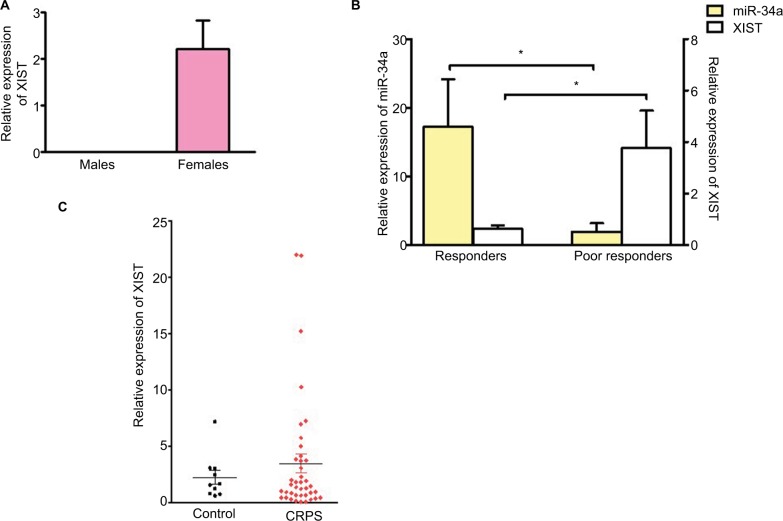
Our studies investigating alterations in circulating microRNAs (miRNAs) in whole blood from female CRPS patients showed significant differential expression of miRNAs between responders and poor responders to ketamine treatment. Several of these miRNAs are predicted to target the long noncoding RNA, X-inactive-specific transcript (XIST). XIST mediates X-chromosome inactivation and is essential for equalizing the expression of X-linked genes between females and males. Based on the well-established role in inflammatory process, we focused on miR-34a, one of the miRNAs predicted to target , and downregulated in CRPS patients responding poorly to ketamine.
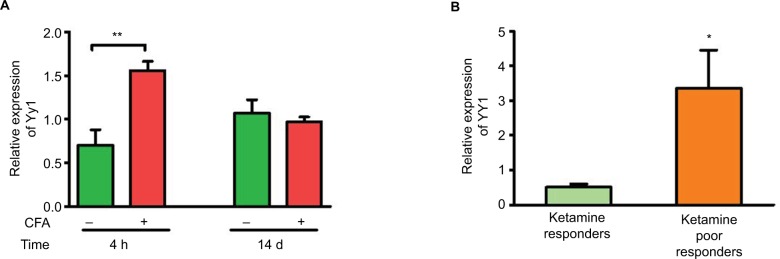
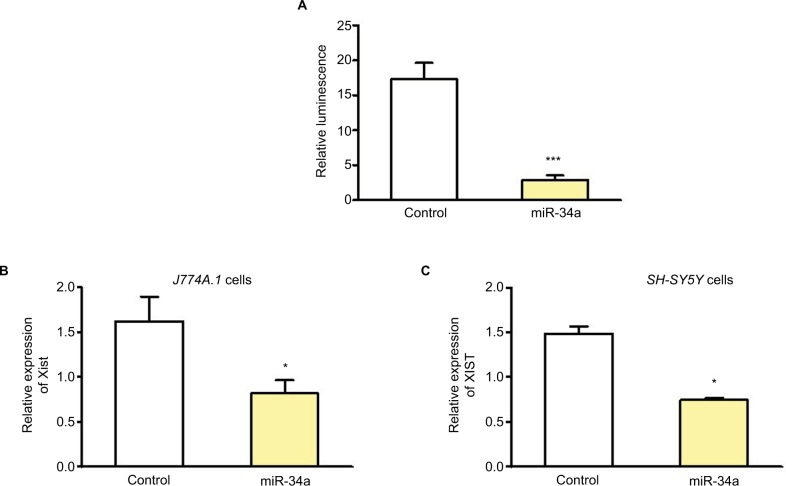
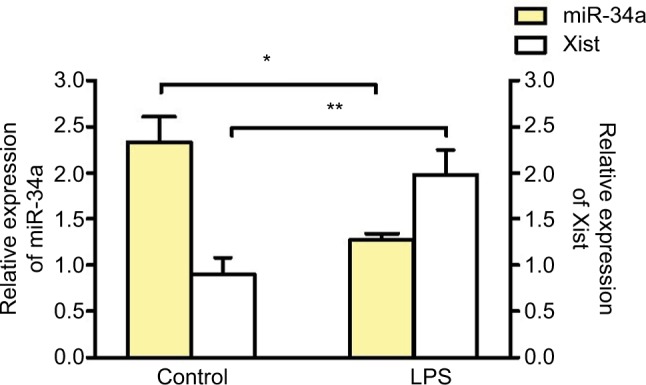
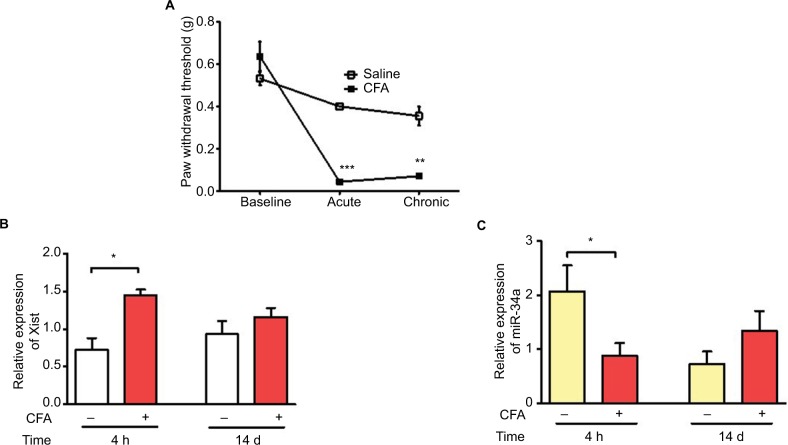
Our in vitro and in vivo models of acute inflammation and data from patients with CRPS showed that miR-34a can regulate under inflammation directly, and through pro-inflammatory transcription factor Yin-Yang 1 (YY1). was significantly upregulated in a subset of CRPS patients responding poorly to ketamine.
Since dysregulation of XIST can result in genes escaping inactivation or reactivation in female cells, further investigations on the role of XIST in the predominance of chronic inflammatory and pain disorders in women is warranted.
疼痛方面存在性别差异的证据确凿,女性占慢性疼痛患者群体的大多数。有必要探索新途径来阐明慢性炎症性疼痛疾病发展中的这种性别偏见。复杂性区域疼痛综合征(CRPS)是一种慢性神经性疼痛疾病,女性CRPS的发病率比男性高约4:1。由于神经源性炎症是CRPS的一个关键特征,炎症反应失调可能是女性易患慢性疼痛的一个因素。
我们对女性CRPS患者全血中循环微小RNA(miRNA)变化的研究表明,氯胺酮治疗的反应者与反应不佳者之间miRNA存在显著差异表达。其中几种miRNA预计靶向长链非编码RNA X染色体失活特异性转录本(XIST)。XIST介导X染色体失活,对于平衡雌性和雄性之间X连锁基因的表达至关重要。基于其在炎症过程中已确立的作用,我们聚焦于miR-34a,它是预计靶向且在对氯胺酮反应不佳的CRPS患者中下调的miRNA之一。
我们的急性炎症体外和体内模型以及CRPS患者的数据表明,miR-34a可直接在炎症状态下以及通过促炎转录因子阴阳1(YY1)调节。在对氯胺酮反应不佳的一部分CRPS患者中显著上调。
由于XIST失调可导致女性细胞中的基因逃避失活或重新激活,因此有必要进一步研究XIST在女性慢性炎症和疼痛疾病优势中的作用。