Duke University, Durham, NC, USA.
King Abdulaziz University, Jeddah, Saudi Arabia.
J Youth Adolesc. 2018 Aug;47(8):1755-1770. doi: 10.1007/s10964-018-0860-3. Epub 2018 May 17.
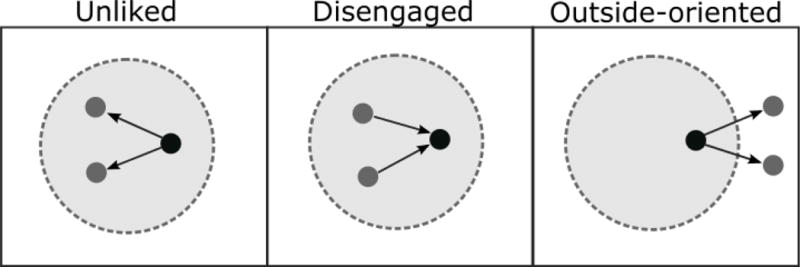
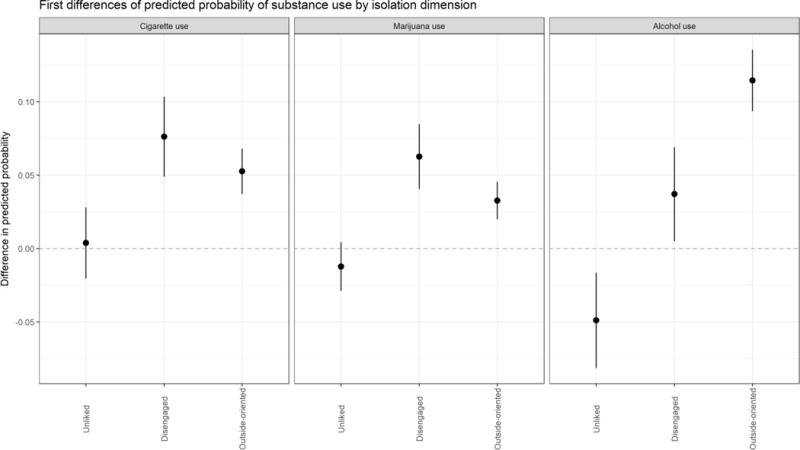
Social isolation is broadly associated with poor mental health and risky behaviors in adolescence, a time when peers are critical for healthy development. However, expectations for isolates' substance use remain unclear. Isolation in adolescence may signal deviant attitudes or spur self-medication, resulting in higher substance use. Conversely, isolates may lack access to substances, leading to lower use. Although treated as a homogeneous social condition for teens in much research, isolation represents a multifaceted experience with structurally distinct network components that present different risks for substance use. This study decomposes isolation into conceptually distinct dimensions that are then interacted to create a systematic typology of isolation subtypes representing different positions in the social space of the school. Each isolated position's association with cigarette, alcohol, and marijuana use is tested among 9 grade students (n = 10,310, 59% female, 83% white) using cross-sectional data from the PROSPER study. Different dimensions of isolation relate to substance use in distinct ways: unliked isolation is associated with lower alcohol use, whereas disengagement and outside orientation are linked to higher use of all three substances. Specifically, disengagement presents risks for cigarette and marijuana use among boys, and outside orientation is associated with cigarette use for girls. Overall, the adolescents disengaged from their school network who also identify close friends outside their grade are at greatest risk for substance use. This study indicates the importance of considering the distinct social positions of isolation to understand risks for both substance use and social isolation in adolescence.
社交孤立与青少年时期的心理健康和危险行为广泛相关,而此时同龄人对健康发展至关重要。然而,对于孤立者的物质使用期望仍不清楚。青少年时期的孤立可能表明态度异常或刺激自我治疗,从而导致更高的物质使用。相反,孤立者可能无法获得物质,导致使用量较低。尽管在许多研究中,隔离被视为青少年的同质社会状况,但隔离代表了一种具有不同结构网络成分的多方面体验,这些成分对物质使用具有不同的风险。本研究将隔离分解为概念上不同的维度,然后相互作用,创建一个隔离亚型的系统分类法,代表学校社交空间中的不同位置。使用来自 PROSPER 研究的横断面数据,对 9 年级学生(n=10310,59%女性,83%白人)进行了每个孤立位置与香烟、酒精和大麻使用的关联测试。隔离的不同维度以不同的方式与物质使用相关:不受欢迎的孤立与较低的酒精使用相关,而脱离和外向性与所有三种物质的使用较高相关。具体而言,脱离会增加男孩吸烟和大麻使用的风险,而外向性与女孩吸烟有关。总体而言,与学校网络脱离并在年级之外识别亲密朋友的青少年面临最大的物质使用风险。本研究表明,考虑隔离的不同社会地位对于理解青少年时期物质使用和社会隔离的风险非常重要。